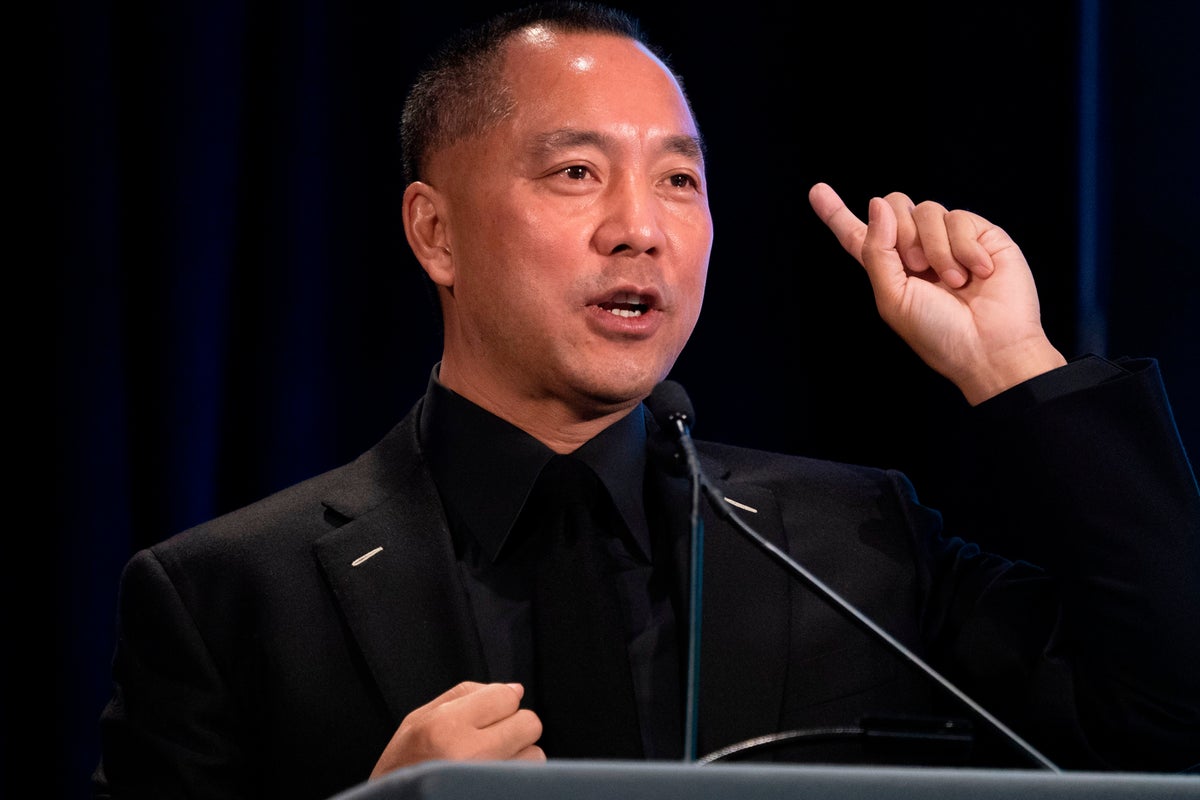
Miles Guo spent years selling a dream of resistance, but it ended with a 30-year prison sentence. On June 29, 2026, a federal court in Manhattan finally put a number on one of the most audacious financial scams in recent history. The self-exiled Chinese billionaire, who built a massive online following by promising to take down the Chinese Communist Party, was ordered to spend three decades behind bars. Judge Analisa Torres didn't hold back, calling out Guo for preying on thousands of his own supporters to fund a lifestyle of grotesque luxury.
This wasn't just a simple case of corporate embezzlement. It was a masterclass in affinity fraud, where a charismatic leader weaponizes political trauma to pick the pockets of the people who trust him most. For years, Guo presented himself as Beijing's public enemy number one. His followers saw him as a savior. The U.S. justice system saw him for what he actually is: a thief.
The Shocking Fall of a Fake Freedom Fighter
Guo didn't start out as an internet celebrity. He made his fortune in the hyper-competitive world of Chinese real estate, climbing the ranks to become one of the wealthiest men in China. By 2014, things changed. A massive anti-corruption sweep by President Xi Jinping started ensnaring high-level officials, including some close to Guo. Sensing the walls closing in, Guo fled the country. He eventually landed in New York, filed for political asylum, and completely reinvented himself.
He didn't just hide out in his luxury penthouse. He went on the offensive. Guo started broadcasting daily on social media, launching wild, often unverified attacks against top Chinese officials. He claimed to have insider secrets. He positioned himself as the leader of a true resistance movement. For the Chinese diaspora, many of whom desperately wanted to see democratic reform in their homeland, Guo became a beacon of hope.
That built-in trust became his ultimate weapon. He cultivated an intensely loyal base of followers who hung on his every word. They didn't see a billionaire protecting his own interests. They saw a brave dissident risking everything. When he asked them to start investing in his various business ventures, they lined up.
Inside the Billion Dollar Illusion
The scale of the Miles Guo fraud scheme is hard to comprehend. Between 2018 and 2023, Guo managed to raise more than $1 billion from his followers. He did this through a dizzying web of entities, including GTV Media Group, the Himalaya Farm Alliance, and a cryptocurrency platform called the Himalaya Exchange.
He didn't just pitch these as business investments. He pitched them as a way to build an alternative ecosystem completely free from the reach of the Chinese government. He told people on livestreams that if they put their money into his projects, they couldn't lose. He literally promised them that he would personally cover any financial losses.
It was a total lie. While his followers were mortgaging their homes and emptying their retirement accounts, Guo was using their money as a personal piggy bank. Prosecutors tracked the funds directly to an array of absurdly expensive luxury assets.
Your money didn't go toward funding a revolution. It bought a 50,000-square-foot mansion in Connecticut. It bought a $1 million red Lamborghini for his son. It maintained a $37 million luxury yacht named the Lady May. It paid for ultra-expensive Persian rugs, a $62,000 television, and two $36,000 mattresses. Guo was living like royalty on the backs of working-class immigrants who genuinely believed they were contributing to a historic political movement.
The Bannon Connection and the Hunt for Credibility
Guo knew that to keep the money flowing, he needed mainstream Western validation. He found exactly what he wanted in America’s right-wing political circles. His most high-profile alliance was with Steve Bannon, the former White House strategist and political advisor to Donald Trump.
The two became inseparable online. They appeared together in dozens of videos, amplifying each other's anti-Beijing rhetoric. In 2020, they took things a step further by announcing the "New Federal State of China," a shadow government meant to replace the ruling regime in Beijing. This alliance gave Guo an instant coat of armor. To his followers, a partnership with a high-profile American political operative meant Guo was legitimate. It meant the U.S. government was implicitly backing him.
The absurdity of the relationship peaked in August 2020. Federal agents arrested Bannon on federal fraud charges related to an entirely separate crowdfunding campaign. Where did they find him? He was lounging on deck chairs aboard Guo's $37 million yacht off the coast of Connecticut. Even after that public embarrassment, Guo’s core followers refused to believe anything was wrong. They bought into the narrative that the deep state was simply trying to silence their leaders.
How the Scam Targeted Heartbroken Dissidents
The true tragedy of this case is the specific demographic Guo targeted. This wasn't a standard crypto scam aimed at tech bros looking to get rich quick. Guo ran an affinity fraud that weaponized cultural identity and political trauma.
Many of his victims were first-generation immigrants who had fled political persecution themselves. They had a deep, emotional desire to see change in China. Guo looked into his webcam, spoke their language, and told them exactly what they wanted to hear. He built an echo chamber where questioning his financial products was treated as treason against the anti-communist cause.
During the trial, victims came forward to share how Guo’s manipulation shattered their lives. A woman named Jenny Li testified that she took out a second mortgage on her house to invest $100,000 into Guo's media ventures. She lost everything, eventually receiving only a partial refund from the Securities and Exchange Commission. Another victim, Wei Chen, stood up at the sentencing hearing and explained how her family was pushed deep into debt. She told the court that the fraud completely destroyed their peace of mind and took away the best years of their lives.
Even as these stories came to light, Guo remained completely unrepentant. He spent the morning of his sentencing attempting to delay the proceedings, claiming he was suffering from severe health issues and vomiting blood. Prosecutors called it a desperate act of malingering. When he finally showed up in court five hours late, he still refused to take responsibility, insisting his actions caused no harm.
What Happens to the Victims Now
The legal saga has reached its conclusion, but the financial cleanup is going to take years. Alongside the 30-year prison sentence, Judge Torres hit Guo with a massive $889 million forfeiture and restitution order. His chief of staff, Yvette Wang, was already sentenced to 10 years in prison for her role in organizing the network of scams.
The U.S. government has seized hundreds of millions of dollars from bank accounts tied to Guo, but clawing back the full amount is an uphill battle. The money is scattered across shell companies, overseas accounts, and physical luxury items that need to be liquidated.
If you or someone you know invested in the Himalaya Exchange, GTV Media Group, or any of the Himalaya Farm initiatives, don't expect a quick fix. Your immediate next step is to stay connected with the official victim notification program managed by the Department of Justice and the SEC. Ensure your claims are formally filed and up to date.
The biggest takeaway here doesn't involve court filings or asset seizures. It's a stark reminder that charisma is not a substitute for due diligence. When someone tells you that a financial investment is also a moral crusade, walk away. When someone guarantees that an investment has zero risk, they're lying to you. Miles Guo built an empire on political anger and blind trust, and it took a federal judge three decades of prison time to finally tear it down.