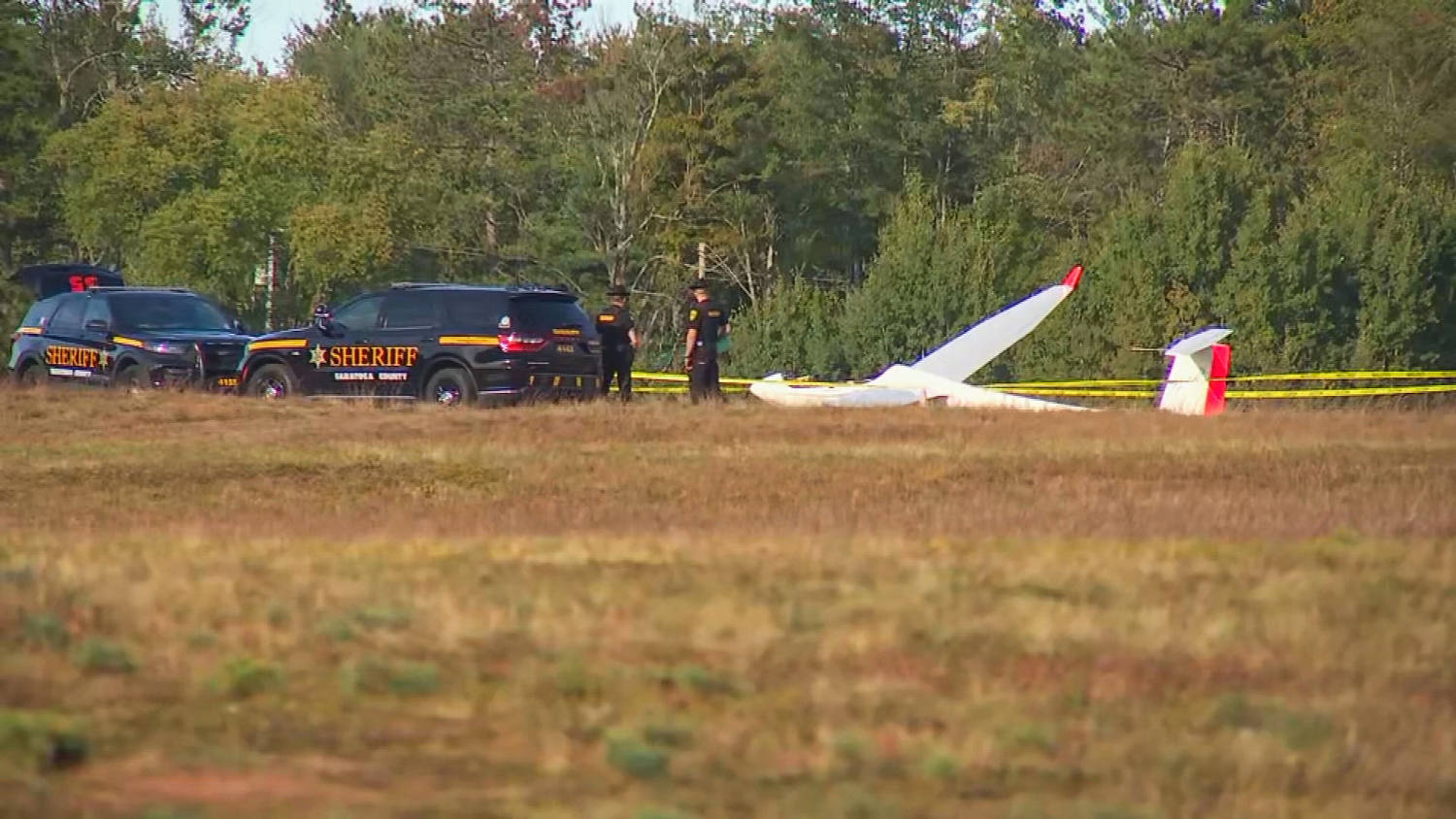
Midair collisions involving unpowered gliders represent a distinct failure mode within general aviation safety, driven by the unique flight dynamics, visual scan limitations, and operational density characteristic of soaring environments. When New York authorities initiate search and recovery operations following a glider collision, the operational response highlights the inherent vulnerabilities of low-inertia aircraft operating in uncontrolled or semi-controlled airspace. To deconstruct such events beyond standard reporting, one must examine the governing variables: closing speeds, field-of-view obstructions in canopy-dominant aircraft, thermal clustering, and the systemic limits of visual flight rules see-and-avoid protocols.
The Kinematics of Closure and Visual Limitations
The primary technical challenge in soaring safety is the closure rate between converging aircraft. Gliders frequently operate in proximity due to thermal clustering—atmospheric columns of rising air that multiple pilots target simultaneously to gain altitude. When two aircraft circle within the same thermal core, they often orbit in opposing directions or at varying radii, creating high relative velocity vectors. For another look, read: this related article.
The structural geometry of high-performance gliders introduces severe visual blind spots. Modern sailplanes feature extensive acrylic canopies designed to maximize peripheral vision upward and laterally, but structural elements such as the nose, instrument panel, wing roots, and overhead canopy frames create hard blind spots. More critically, human physiological limitations dictate that a stationary object on a collision course—meaning it maintains a constant bearing angle within the pilot's field of view—does not generate relative motion against the background. Without lateral or vertical displacement across the retina, the human eye fails to trigger peripheral motion detection, rendering the converging aircraft nearly invisible until the angular size expands rapidly just seconds before impact.
The Operational Cost Function of Thermal Clustering
Soaring operations rely heavily on localized meteorological phenomena. Because lift is invisible, pilots must infer the presence and strength of updrafts through cloud formations, terrain features, and instrumentation like total energy variometers. This creates an economic pressure system within the local airspace: multiple pilots converging on a single high-yield thermal. Related analysis on this matter has been shared by USA Today.
This dynamic can be modeled through a spatial density function where the concentration of aircraft increases exponentially near the center of lift, while the margin of error decreases linearly.
- Spatial Compression: As lift strength increases, the radius of the optimal turn decreases, forcing gliders into tighter proximity.
- Attention Division: Pilots must simultaneously manage flight path optimization, traffic scanning, radio communications, and altitude tracking, leading to cognitive saturation.
- Descent Vectors: Once altitude is optimized, gliders transition into high-speed cross-country transit mode, crossing active thermal zones where ascending traffic may be operating at slower speeds.
When these vectors intersect without electronic collision avoidance augmentation—such as Flarm or ADS-B transceivers designed for low-altitude aviation—the safety margin depends entirely on visual separation, a methodology recognized by safety boards as insufficient for high-density environments.
Search and Recovery Logistics in Complex Terrain
When a midair collision occurs, the search and recovery phase presents severe logistical hurdles distinct from powered aircraft incidents. Gliders are constructed primarily of lightweight composite materials—fiberglass, carbon fiber, and epoxy resins—which exhibit high structural energy absorption upon impact. Rather than leaving a concentrated metallic debris field, a composite airframe disintegrates into widespread, lightweight fragments that can be carried by localized winds or obscured by heavy forest canopy and rugged topography.
The search methodology requires an algorithmic grid sweep accounting for ballistic trajectories post-collision. Because gliders lack engine thrust, the remaining components often follow uncontrolled aerodynamic decay paths, separating the fuselage from the wings and empennage prior to ground impact. Authorities must deploy ground search and rescue units alongside aerial assets equipped with thermal imaging and radar tracking of transponder returns, assuming a functioning unit was active onboard.
Systemic Safety Evolution and Structural Interventions
Mitigating the risk of midair collisions in soaring requires moving beyond passive visual scanning toward active technological integration. The implementation of specialized proximity warning systems tailored for sailplanes addresses the blind spot and cognitive saturation variables. Unlike standard aviation transponders, glider-specific collision warning devices calculate intercept trajectories specifically accounting for the low stall speeds and high turn rates characteristic of unpowered flight.
Airspace design must also evolve to incorporate designated soaring corridors in regions with high sailplane density, separating cross-country transit traffic from local thermal-soaring operations. By formally mapping these high-density interaction zones, aviation authorities can reduce the probability of high-velocity closure events and establish clearer priority rules for aircraft operating within shared meteorological structures.