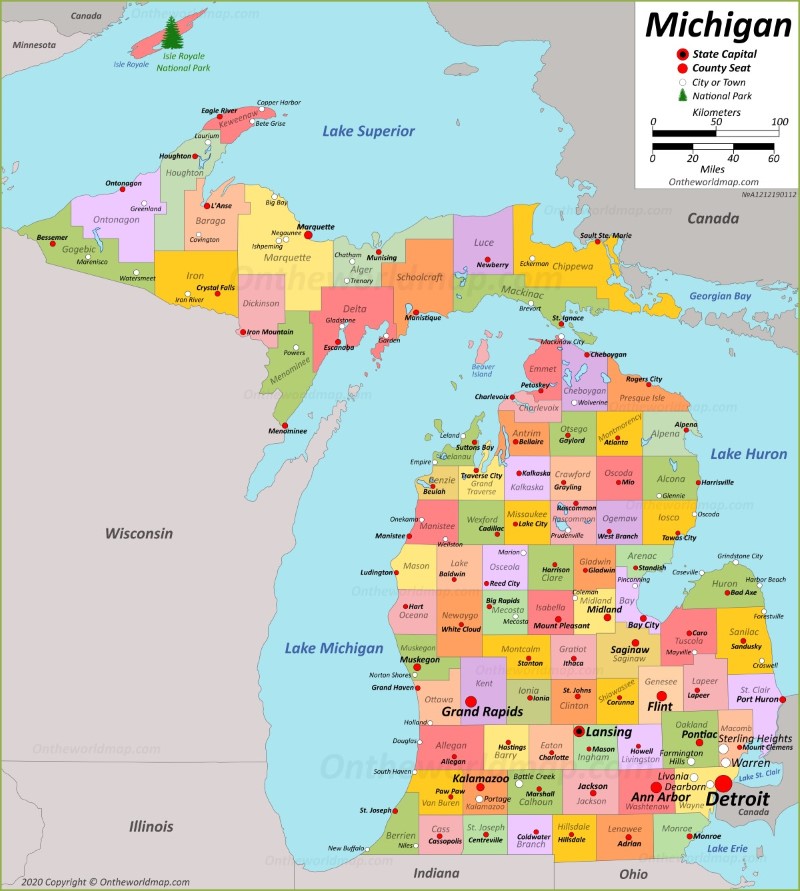
The coffee in a Macomb County diner goes cold fast when someone says the quiet part out loud.
Outside, the November wind rattles the plate-glass windows along Van Dyke Avenue, carrying the sharp, metallic chill that precedes a Michigan winter. Inside, two regulars—let’s call them Arthur, a retired tool-and-die maker with forty years of UAW dues stamped into his memory, and Elena, a suburban nurse who voted straight-ticket blue in three consecutive cycles—are staring at a local headline on a cracked smartphone screen. A prominent Michigan Democrat has just endorsed a Republican in a Senate race that could decide who controls the upper chamber of Congress. Discover more on a similar issue: this related article.
Betrayal. That is the first word Arthur uses, his voice dropping an octave so the booth behind them doesn't catch it. Strategy, Elena counters, though her thumb hovers uncertainly over the glass.
In Washington, pundits treat a cross-party endorsement like a chess move on a glowing electoral map. They talk about ticket-splitting, moderate appeal, and margin-of-error calculus. They reduce a human fracture to a spreadsheet cell. Yet in Michigan, a state where political identity is often forged on assembly lines, around union hall tables, and across deeply divided kitchen islands, a Democrat backing a Republican in a critical Senate contest is never just a press release. It is an earthquake under a house that was already resting on shifting sand. More analysis by NBC News explores comparable views on this issue.
The Architecture of a Political Rupture
To understand why this single endorsement sent shockwaves through both party headquarters in Lansing and Washington, you have to understand the peculiar gravity of Michigan politics. For decades, Michigan has functioned as the ultimate bellwether—a place where industrial populism meets suburban pragmatism, and where elections are routinely decided by margins thinner than a coat of primer on a Detroit sedan.
In recent cycles, statewide races in Michigan have swung on razor-thin thresholds. In 2016, the presidential margin was barely ten thousand votes. By 2020 and 2022, Democrats had rebuilt what looked like an ironclad firewall, capturing the governorship, both chambers of the state legislature, and key federal seats. Party unity became a point of pride, almost a religion. You did not break ranks. You did not hand ammunition to the opposition.
Until someone did.
When a recognizable Democratic figure steps up to a microphone and tells voters to cast their ballot for the Republican Senate nominee, the immediate effect is not merely the loss of a single surrogate. It is the shattering of a carefully constructed consensus. Party operatives in Washington immediately began calculating the blast radius. In a Senate map where a single seat can flip the gavel—and with it, judicial confirmations, committee chairmanships, and the fate of federal legislation—Michigan is not a luxury. It is a load-bearing wall.
Think of a modern Senate campaign like a suspension bridge built during a hurricane. Every endorsement, union backing, and local mayor’s nod is another steel cable anchoring the deck against the wind. Most cables bear modest weight on their own. When one snaps unexpectedly, however, the sudden shift in tension sends violent vibrations through every remaining wire.
Why Voters Rarely Follow Orders, Yet Always Watch the Signals
A common misconception in political journalism is that an endorsement works like a command. Voters do not wake up on a Tuesday morning, read that a former state representative or local official prefers Candidate B over Candidate A, and obediently change their minds. Human beings are far more stubborn—and far more perceptive—than that.
Instead, an endorsement acts as a permission slip.
Consider what happens in the mind of an undecided voter in Kent County or Oakland County—places where college-educated independents and disaffected moderates hold the keys to statewide victory. For months, these voters have been bombarded by thirty-second attack ads painted in grim grayscale. They are tired of being told that the other side represents an existential threat to democracy or the economy. When a Democrat publicly vouches for a Republican, it disrupts the binary. It whispers to the hesitant moderate: You are not crazy for considering the other side. Someone from inside the tent just walked out the front door.
At the same time, the move triggers an intense immune response among the Democratic base. Party loyalists do not see nuance; they see sabotage. Within hours of the announcement, state party chairs, grassroots organizers, and union leaders were forced off their planned messaging. Instead of talking about prescription drug costs, manufacturing investments, or reproductive rights—the issues they spent millions testing in focus groups—they spent precious news cycles explaining why one of their own had gone rogue.
In campaign politics, time is the only non-renewable resource. Every hour spent defending your flank is an hour you are not advancing toward November.
The Invisible Grievances Behind the Curtain
Nobody blows up decades of political relationships on a whim. When a Democrat endorses a Republican in a high-stakes federal race, the public explanation usually revolves around lofty ideals: putting country over party, rejecting extremism, or prioritizing economic pragmatism.
The private reality is almost always messier, rooted in years of accumulated friction that never makes the evening news.
Spend enough time around state capitols and county party meetings, and you start to recognize the anatomy of a slow-motion break. Perhaps a regional official felt ignored when national strategists parachuted into the state with pre-packaged talking points that ignored local economic pain. Maybe a bitter primary fight left scars that never healed, or a policy shift on energy, trade, or public safety alienated a faction of blue-collar Democrats who felt their party had traded work boots for faculty lounges.
I remember sitting in a cramped community center basement in Downriver Detroit during a previous cycle, listening to a third-generation Democrat explain why he was abstaining from a federal race. His voice wasn't angry; it was exhausted. He felt like a guest in a house his grandfather had helped build. When a politician finally breaks ranks publicly, they are rarely inventing a new grievance. They are simply giving voice to a quiet mutiny that has been simmering in diners, VFW halls, and union break rooms for years.
This is what makes the endorsement so dangerous for the Democratic Senate campaign. It validates a narrative the Republican challenger has been trying to sell since day one: that the national Democratic brand has drifted too far from the everyday realities of Michigan families. Coming from a Republican, that accusation is predictable partisan noise. Coming from a Democrat, it lands like a confession.
The Republican Tightrope
Yet celebrating too loudly carries its own traps for the GOP beneficiary.
In today’s polarized climate, accepting the embrace of a prominent Democrat is a delicate dance. A Republican Senate candidate needs those crossover moderates and independents in Grand Rapids, Traverse City, and the Detroit suburbs to win a statewide general election. At the same time, their base voters—energized by populist orthodoxy and deeply suspicious of anything smelling of Washington compromise—watch closely for signs of ideological softening.
If the Republican candidate leans too hard into the endorsement, they risk dampening enthusiasm among staunch conservatives in rural northern Michigan or western counties who want a fighter, not a consensus-builder. If they keep the endorser at arm's length, they squander the very credibility boost that makes a cross-party nod valuable in the first place.
Campaign managers on the Republican side know this balancing act intimately. They will feature the endorsement heavily in targeted digital ads aimed at suburban swing households, framing their candidate as a pragmatic problem-solver capable of bridging divides. Meanwhile, at rallies in conservative strongholds, the talking points will quietly pivot back to border security, inflation, and judicial appointments.
What History Tells Us About Political Defectors
American political history is littered with dramatic aisle-crossings, and their legacy is rarely simple.
In 2004, Democratic Senator Zell Miller of Georgia took the stage at the Republican National Convention and delivered a blistering keynote speech endorsing George W. Bush, accusing his own party of abandoning national security. In 2008, former Democratic Senator Joe Lieberman campaigned tirelessly for John McCain. More recently, figures like Tulsi Gabbard and Robert F. Kennedy Jr. turned party defection into a central pillar of their public identities.
Notice the pattern across every one of those moments. The defector rarely reshapes the entire electorate single-handedly, nor do they permanently merge the two parties. Rather, they become human Rorschach tests. To one half of the country, they are profiles in courage who chose principle over tribal loyalty. To the other half, they are opportunists seeking relevance, settling personal scores, or chasing media oxygen.
In Michigan, where political memory is long and unforgiving, crossing the aisle carries a steep personal price. Former friends stop returning calls. Invitations to annual dinners vanish. Yet for the politician making the leap, that isolation is often factored into the math long before the cameras roll.
The Stakes Beyond the Headlines
Step back from the cable news panels and the frantic fundraising emails, and the true weight of this moment comes into focus.
A U.S. Senate seat in Michigan is not a trophy. It is six years of voting power over the federal judiciary, the tax code, trade agreements that govern the auto industry, and the billions of dollars flowing into Great Lakes infrastructure and clean energy manufacturing. Because the Senate remains perpetually balanced on a knife-edge, a swing of just twenty or thirty thousand votes in Michigan can alter the legislative trajectory of the entire country.
That is why a single endorsement can trigger panic in Washington. When races are won by ten points, an endorsement is a footnote. When races are decided by half a percentage point, everything is existential. Every unforced error, every divided headline, every hesitant voter who decides to leave the Senate bubble blank or cross over for the first time becomes magnified a thousandfold.
Back in that Macomb County diner, the waitress refills the mugs with fresh, steaming coffee. Arthur folds his hands around the ceramic to warm his fingers, still shaking his head at the screen. Elena locks her phone and slips it back into her coat pocket. Neither of them has changed their core beliefs over breakfast. Arthur still believes in collective bargaining; Elena still cares deeply about healthcare access and the future of her kids' public schools.
Yet something subtle has shifted at their table. The certainty that used to make politics simple—us versus them, blue versus red, clear lines drawn in permanent ink—has blurred at the edges. Outside, the November wind keeps blowing down Van Dyke Avenue, indifferent to party labels, carrying the first faint flurries of a long winter toward the polls.



