Luxury real estate writers love a warm, sun-drenched fairy tale. When headlines say Michael Douglas keeps his Mallorca estate as a family retreat, the lazy consensus is simple: a legendary actor fell in love with a historic cliffside compound on the Balearic island, tried to sell it once or twice, and decided sentimental family memories beat a payday.
Cute story. Bad analysis.
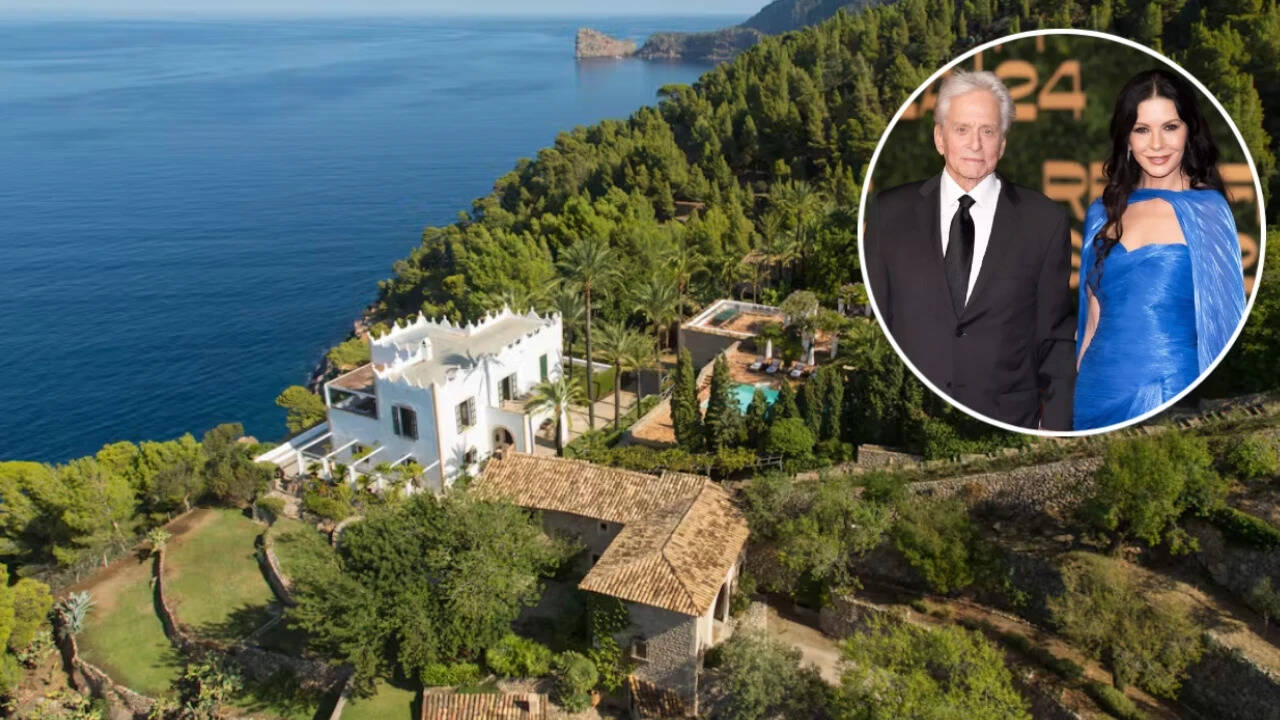
Look closer at the timeline of S'Estaca, sitting on roughly 190 acres along the northwest coast of Mallorca between Valldemossa and Deià. Douglas bought the property in 1990 with his first wife, Diandra Luker, for a reported $3.5 million. Years after their divorce, the couple split time there before Catherine Zeta-Jones bought Luker's share. Then, in 2014, Douglas and Zeta-Jones put the estate on the market with a price tag near $60 million—only to slash the price over the years (dropping toward roughly $32.7 million around 2019), even having Douglas narrate a promotional video about passing the torch, before pulling it off the market.
That is not a story about pure, effortless family bliss. That is a textbook case study in illiquidity, bespoke over-improvement, and a shallow ultra-prime buyer pool masquerading as a romantic choice to stay put.
The Lazy Consensus vs. The Math of Ultra-Prime Trophy Real Estate
Conventional real estate puff pieces treat S'Estaca like a normal vacation home. Buy low in 1990. Watch coastal land appreciate. Host A-list friends like Jack Nicholson, Tom Cruise, Nicole Kidman, and Michelle Pfeiffer. Keep it when you feel like it.
That framing misses how ultra-high-net-worth trophy properties actually trade in the Balearic market.
When a property crosses into eight-figure territory—especially above €25 million or $30 million—you are no longer selling a house. You are selling a bespoke lifestyle commitment to a tiny pool of global buyers. As property analyst Mark Stücklin noted when examining Douglas's price reductions on S'Estaca, the ultra-high-end Spanish segment is thin and volatile. A buyer at that tier does not just compare square footage; they compare global alternatives, tax exposure, maintenance drag, and personal taste.
Douglas bought S'Estaca for $3.5 million and poured millions into renovations and restorations across seven buildings, sprawling grounds, terraces, a wine cellar, gym, spa, cinema room, and private boat access. When an owner custom-builds and custom-curates a compound to match their own eccentricities—reading by the sea, working out in a hybrid space, hitting golf balls on a Trackman setup in the wine cellar—they often price in personal utility and sunk renovation costs that outside buyers refuse to underwrite.
Pulling a stubborn listing off the market after years of price cuts is often framed as "deciding to keep it for the family". Sometimes that is half true. Often, it is also an admission that the market refused to clear the asking price, so keeping the asset becomes the cleanest way to avoid taking a haircut or admitting defeat.
What People Also Ask About Celebrity Estates Like S'Estaca
Did Michael Douglas keep S'Estaca just because he loves Mallorca?
Love of place is real—Douglas has spoken for decades about his deep connection to the island and splitting time between Spain, New York, and Canada. Still, treating affection for a property as the sole reason it stayed off the market ignores the listing history. You do not put a 190-acre estate on the market for near-$60 million, lower the ask years later, film a promotional pitch saying it is time for someone else to enjoy the privilege and adventure of S'Estaca, and then casually pretend selling was never the serious plan. Sentimentality and market resistance met in the middle.
Is buying a historic estate like S'Estaca a smart investment?
Not if you define "smart investment" the way a public-equity investor or commercial landlord does. Historic estates dating back to the 1860s under Archduke Ludwig Salvator of Austria carry heavy upkeep. Stone masonry, coastal salt air, mountain terrain in the Serra de Tramuntana, off-the-grid systems like wells and generators, agricultural plots, and multi-building maintenance create relentless carrying costs.
I have seen wealthy buyers blow millions chasing "one-of-a-kind" heritage properties only to discover that heritage comes with municipal restrictions, specialist labor headaches, and years-long holding periods if they ever try to exit. A trophy estate can be a spectacular consumption asset—a place to live, host, and recharge. Calling it a clean financial investment confuses lifestyle spending with return on capital.
Why do ultra-luxury homes sit unsold for years even in hot destinations?
Because price discovery breaks down at the top end. Below a certain threshold, comparable sales ("comps") anchor expectations. At €25 million to €55 million on a sprawling rural-coastal estate, every property is apples-to-oranges. A billionaire buyer looking in Mallorca might ask why they should pay tens of millions for a vast, high-maintenance estate when they could buy a sleeker, newer villa or a smaller neighboring property at a fraction of the price. Without a bidding war between at least two deeply smitten buyers, high asking prices stall.
A Thought Experiment: The Two-Buyer Trap
Imagine a scenario where two billionaires both fall in love with the Serra de Tramuntana coast in the exact same quarter. Buyer A wants ultra-modern minimalism, zero historic preservation friction, and a lock-up-and-leave footprint near Palma. Buyer B wants 190 acres of history, sea views, privacy, and space for twenty guests, but balks at the price cut history or prefers building from scratch. Neither pushes the price to peak ambition. Even in a gorgeous market, the seller either compromises on price or keeps the keys. That dynamic explains half the "sentimental retention" stories in luxury real estate.
The Real Lesson for Buyers and Sellers
To be fair to my own contrarian lens, there is a genuine upside to holding onto a long-owned compound once the selling pressure stops. Once an owner stops trying to force a liquidity event, the emotional friction drops. Resolving past co-ownership tangles—such as after a divorce—and letting the current household make the space their own can turn a headache into a genuine sanctuary.
Still, if you are buying or selling high-end property, stop falling for romanticized press releases. Use these rules instead:
- Separate lifestyle value from exit value. Price a bespoke estate around how many years you will enjoy using it, not what you hope a future buyer will pay for your taste.
- Audit carrying costs before falling in love. Acres, outbuildings, coastal exposure, and historic features multiply annual operating expenses. Ask for real multi-year maintenance numbers, not brochure highlights.
- Watch out for anchoring on peak valuations. A high initial asking price is a wish, not a market clearing price. If the market pushes back, face the math early instead of drifting for years.
- Buy for your own routine, not clout. A home works when it fits how you actually live—whether that means quiet mornings, family visits, or hosting friends—not when it flatters your ego.
Stop mistaking an unsold trophy listing for a pure love letter, and start judging luxury real estate by the math that actually governs it.