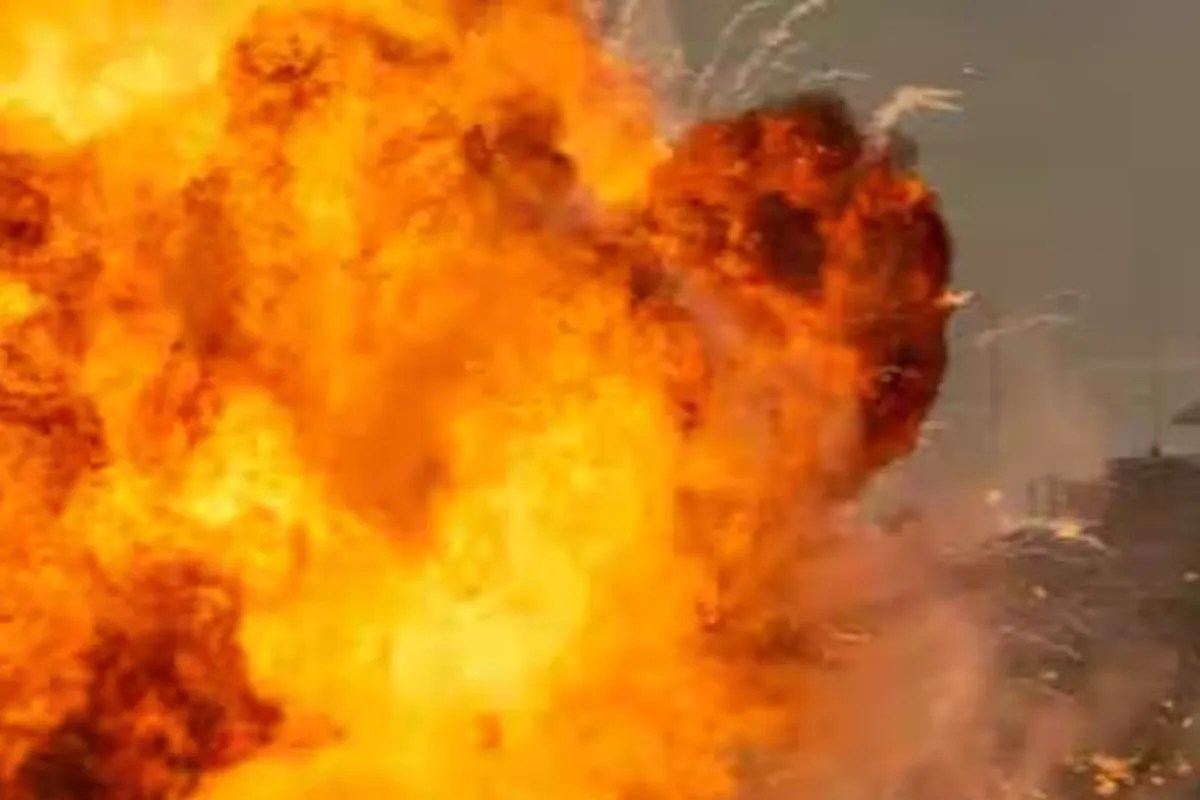
Cable news loves a radioactive headline. Say the words "dirty bomb" and "Washington, D.C." in the same sentence, and chyron writers immediately reach for the biggest red font in their graphics package.
That is precisely what happened following leaks alleging Iranian intelligence is drafting contingency plans to detonate a radiological dispersal device—a dirty bomb—or deploy chemical agents in the U.S. capital. Predictably, President Donald Trump fired back while traveling in Asia, warning that Tehran would "pay a price the likes of which no country has ever paid before" if such a plot materialized. Mainstream outlets dutifully transcribed the exchange, framing the story as a binary countdown to nuclear-adjacent Armageddon on the National Mall.
Here is the problem with that framing: it is fundamentally illiterate about how radiological weapons actually work, how deterrence operates during an active war, and why intelligence leaks happen in the first place.
If you are losing sleep over a radiological device exploding near the White House, you are falling for the exact psychological trap dirty bombs are designed to spring. Worse, you are ignoring the far cheaper, quieter, and already active asymmetric warfare campaign that Tehran is actually winning.
The Radiological Myth That Keeps Editors Employed
Let us strip away the Hollywood sci-fi nonsense and look at the physics. A dirty bomb—formally known as a radiological dispersal device (RDD)—is not a nuclear weapon. It does not split atoms. It does not produce a mushroom cloud, vaporize city blocks, or generate an electromagnetic pulse.
An RDD is simply conventional high explosives—dynamite, C-4, or ammonium nitrate—packed alongside radioactive isotopes commonly found in civilian hospitals, universities, or industrial radiography gauges, such as cesium-137, cobalt-60, or strontium-90.
When it detonates, the blast kills people the exact same way a standard car bomb does. The radioactive material does not cause immediate mass death from radiation sickness. According to decades of modeling by the U.S. Nuclear Regulatory Commission (NRC) and the Federation of American Scientists (FAS), dispersing powdered isotopes over an urban grid dilutes the radiation dose rapidly. Outside the immediate blast radius, the radiological exposure is generally too low to cause acute radiation syndrome.
So why do intelligence agencies track RDD plots so aggressively? Because a dirty bomb is a weapon of mass disruption, not mass destruction.
- The Economic Bleed: Imagine a scenario where a van packed with C-4 and medical-grade cesium-137 detonates at a major intersection in downtown Washington. The physical blast kills a dozen people. The radiological contamination, however, forces the evacuation of fifty city blocks. Property values collapse. Federal agencies scatter. Decontamination crews spend billions of dollars sandblasting granite facades and ripping up asphalt over three years because public fear demands zero detectable radiation, even when levels pose minimal statistical cancer risk.
- The Psychological Multiplier: People understand bullets and shrapnel. They do not understand millirems and sieverts. Invisible contamination triggers primal panic, overwhelming emergency rooms with thousands of unexposed "worried well" patients and paralyzing urban commerce.
When mainstream articles treat an RDD plot as interchangeable with a nuclear strike, they do Tehran’s propaganda work for free. Panic is the payload. Without public hysteria, a dirty bomb is just an expensive, logistically nightmare-prone pipe bomb.
Contingency Planning Is Not Imminent Execution
The lazy consensus in breaking news coverage assumes that if a foreign intelligence service draws up a target list, an attack is five minutes from launch. That is complete fiction.
Every major military and intelligence apparatus on earth—including the Pentagon, Langley, Moscow, Beijing, and Tehran—maintains binders full of extreme, worst-case contingency plans. In intelligence parlance, there is a canyon-sized gap between capability, intent, and operational execution.
Look closely at the actual reporting behind the leak. Even the U.S. officials who briefed journalists admitted the intelligence pointed to Tehran developing options—identifying potential targets and locations in case the regime believes its survival is on the line—rather than evidence of an imminent strike. Meanwhile, the White House explicitly stated there were "no credible threats to the homeland".
I have spent years watching national security reporters get played by selective intelligence leaks during protracted conflicts. When a war drags on, approval ratings sag, and lawmakers start asking uncomfortable questions about exit strategies, leaking raw, unvetted "doomsday contingency" intelligence serves an immediate political function. It reminds a war-weary public why the adversary is monstrous. It rallies domestic support around executive authority. And it gives the White House a convenient rhetorical hammer to wave during high-stakes diplomatic summits abroad.
That does not mean the intelligence was fabricated. Iranian planners almost certainly wargamed asymmetric retaliation inside the continental United States after American strikes degraded their nuclear infrastructure. Any competent general staff facing an existential war would explore asymmetric options. Treating a contingency file as a ticking time bomb, however, is journalistic malpractice.
The Deterrence Trap Neither Side Wants to Spring
Let us apply basic game theory to what happens if Iran actually detonates a radiological device in Washington, D.C.
Iranian leadership is ruthless, ideological, and frequently miscalculates—but it is not suicidal. The defining obsession of the Islamic Republic since 1979 has been regime survival. Every proxy war, every missile salvo, every maritime blockade in the Strait of Hormuz is calibrated to impose costs on adversaries without crossing the threshold that guarantees the total annihilation of the ruling clerical and military establishment.
Detonating a dirty bomb in the U.S. capital obliterates that firewall.
In U.S. nuclear and strategic doctrine, radiological and chemical attacks against the American homeland occupy a deliberately ambiguous gray zone—one that invites overwhelming conventional or even nuclear retaliation. Trump’s vow that Iran would "pay a price the likes of which no country has ever paid before" is not mere campaign-style bluster; it reflects the inescapable political reality any U.S. president would face after an unconventional strike on Washington. No American commander-in-chief could survive politically without dismantling the Iranian state’s energy grid, leadership compounds, and military infrastructure in response.
For Tehran, pulling the trigger on a Washington RDD achieves zero strategic objectives:
- It does not stop U.S. airpower. Irradiating three square miles of D.C. does not ground a single stealth bomber or sink an aircraft carrier.
- It vaporizes diplomatic off-ramps. International mediators, economic partners, and domestic critics of the war in Washington would instantly unite behind total escalation.
- It guarantees regime decapitation. Tehran trades a localized urban cleanup problem in America for the certain destruction of its own government.
That is why U.S. intelligence assessments themselves note that Iranian officials understand the catastrophic retaliation an RDD strike would trigger—and why such an attack remains a desperate "Samson option" reserved only for the moment Tehran believes the regime is already doomed.
What Iran Is Actually Doing While You Watch Washington
Obsessing over a Hollywood-style dirty bomb plot blinds the public to the asymmetric warfare campaign Iran is executing right now—with far lower risk and far higher return on investment.
If you want to understand Tehran’s real playbook, stop looking at radiological isotopes and start looking at low-cost hybrid operations and economic chokepoints.
1. Outsourced Proxy Sabotage
Instead of risking the smuggling of radioactive materials across heavily monitored U.S. borders—where radiation portal monitors scan shipping containers and border crossings 24/7—Iranian intelligence relies on criminal networks, recruited proxies, and disposable operatives in Europe and North America. Recent security assessments from European intelligence agencies and the International Institute for Strategic Studies highlight a surge in low-cost arson, surveillance, and sabotage operations targeting Western military bases, financial institutions, and dissidents. These operations cost tens of thousands of dollars, maintain plausible deniability, and force Western militaries to disperse aircraft and harden bases without triggering full-scale retaliation.
2. Strategic Maritime Chokepoints
Why smuggle a dirty bomb into D.C. when closing or harassing shipping lanes in the Strait of Hormuz spikes global energy prices, fuels inflation, and erodes public support for the war in Western democracies? Economic attrition hits every voter at the gas pump without crossing the red line of mass-casualty terrorism on U.S. soil.
3. Cyber and Influence Operations
Spear-phishing journalists, compromising former officials' accounts, and amplifying domestic political divisions require zero radioactive isotopes and carry virtually zero risk of kinetic retaliation.
The Questions You Should Actually Be Asking
When headlines scream about dirty bombs, readers naturally ask the wrong questions. Let us dismantle the most common ones.
"Can a dirty bomb be stopped at the U.S. border?"
The premise is flawed. A dirty bomb is not assembled abroad and shipped intact in a wooden crate like a movie prop. The conventional explosives are sourced locally, and the radiological material—usually a tiny cylinder the size of a pencil eraser—would either be stolen from a domestic medical or industrial facility or smuggled in shielded lead casing. Radiation portal monitors at ports and borders detect unshielded gamma emitters well, but heavily shielded alpha or beta sources—or materials acquired domestically—bypass border checkpoints entirely. Security depends on domestic facility tracking and human intelligence, not border walls.
"Does Trump’s 'pay a price' threat actually deter Iran?"
Only if Tehran believes restraint buys survival. Deterrence works when an adversary fears the punishment of acting more than the consequences of not acting. If U.S. military pressure convinces Iranian leaders that they will be killed or overthrown regardless of what they do, deterrence collapses. Threatening total destruction works brilliantly to keep a war limited—right up until the moment your enemy decides they have nothing left to lose.
"What should civilians actually do if a dirty bomb goes off?"
Ignore every instinct to flee in your car. If an explosion occurs near you and authorities suspect radiological contamination, getting into gridlocked traffic traps you outdoors in the dust plume. Walk inside the nearest solid building, close windows, shut off HVAC systems, remove outer clothing (which eliminates up to 90 percent of external radioactive dust), and wash exposed skin with soap and water. A dirty bomb is survived with basic hygiene and shelter-in-place discipline, not iodine pills—potassium iodide only protects the thyroid against radioactive iodine from a nuclear reactor meltdown, doing nothing against cesium or cobalt.
The Contrarian Reality Check
To be completely candid, dismissing a threat as "unlikely" carries an inherent analytical risk. Intelligence history is littered with experts who proved beyond a shadow of a doubt why an adversary would never launch a mathematically irrational attack—right up until Pearl Harbor, the Yom Kippur War, or September 11. Rogue commanders, misread signals, or the fog of an escalating war can push rational actors into catastrophic blunders. Vigilance by counterterrorism teams and radiation detection units is non-negotiable.
What is optional—and deeply destructive—is allowing breathless media coverage to turn an unexecuted contingency file into public hysteria.
Stop reading nuclear apocalypse into every intelligence leak. Track the Strait of Hormuz, watch the proxy sabotage arrests across European airbases, and pay attention to domestic security expenditures. Iran does not need a dirty bomb to make Washington bleed—and the sooner the public stops flinching at radioactive ghosts, the harder it becomes for either side to manipulate a war through fear.