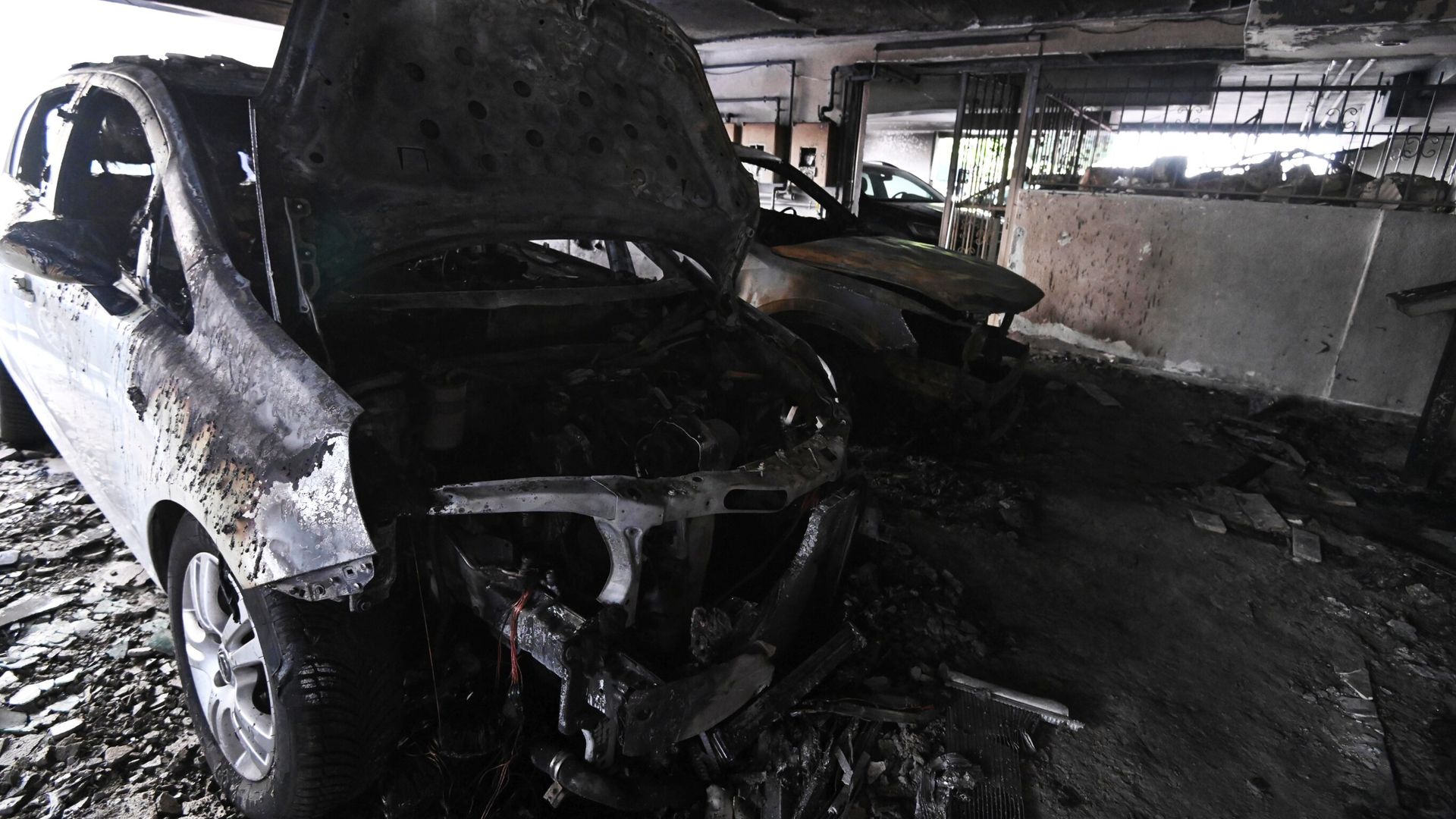
Political violence within highly polarized democracies operates on a predictable operational calculus. When fringe domestic actors escalate from symbolic material destruction to actions yielding civilian casualties, it signals a structural shift in their risk tolerance and tactical execution. The three coordinated, pre-dawn firebomb attacks on July 1, 2026, in the northern Greek port city of Thessaloniki provide a clear case study in this escalating threat matrix. Targeting the residences of figures affiliated with the governing center-right New Democracy party, the operation resulted in five hospitalizations, shifting the classification of these acts from low-level political intimidation to active domestic terrorism.
Understanding the operational profile of these attacks requires moving past reactive political rhetoric. Analyzing the strategic intent, the tactical execution, and the security failures that enabled these synchronised strikes reveals the underlying structural mechanics at play.
The Tactical Framework: Low-Tech, High-Impact Asymmetry
The attacks executed between 4:00 a.m. and 4:45 a.m. across the Thessaloniki districts of Pylaia, Toumba, and Analipsi-Charilaou relied on a highly decentralized, low-cost weapon system: improvised incendiary devices composed of commercial camping gas canisters. This tactical choice reflects a specific optimization strategy commonly used by urban guerrilla networks.
- Supply Chain Invisibility: Unlike military-grade explosives or precursor chemicals subject to strict counter-terrorism monitoring, small liquefied petroleum gas (LPG) canisters are ubiquitous, cash-purchasable, and impossible to track effectively through standard intelligence protocols.
- Asymmetrical Resource Allocation: The financial cost to the perpetrators was nominal, yet the localized kinetic output was sufficient to compromise structural entry points and ignite secondary accelerants, such as the vehicles parked outside the target residences.
- The Chain-Reaction Mechanism: The primary vulnerability exploited by the attackers was not the explosive yield of the gas canisters themselves, but their capacity to trigger catastrophic secondary fires. In the final and most severe attack in the Analipsi-Charilaou area, the device was positioned to maximize thermal transfer to parked cars and motorcycles. The resulting fuel tank ruptures generated a rapid, upward-expanding thermal column, trapping residents on upper floors via smoke inhalation and causing severe burn injuries to a New Democracy parliamentary candidate and her mother.
This structural vulnerability—where low-yield devices leverage dense urban infrastructure to amplify damage—constitutes a highly efficient cost-to-effect ratio for extremist factions.
Synchronization and Operational Security (OPSEC)
A defining feature of the campaign was its temporal compression. The three detonations occurred within a tight window, estimated by local security channels to span less than twenty minutes. This level of synchronization indicates a structured operation rather than opportunistic vandalism.
The tactical necessity of simultaneous or near-simultaneous execution serves two purposes. First, it fractures the host nation's emergency response mechanism. When multiple critical incidents occur concurrently across different municipal sectors, first responder arrival times degrade due to asset distribution friction. Second, it short-circuits proactive perimeter defense. Had the attacks been spaced hours apart, the initial blast would have triggered an immediate lockdown of all secondary targets affiliated with New Democracy.
Executing this synchronized timeline requires a baseline level of operational security. The cells involved had to conduct preliminary reconnaissance on multiple private residences, map local police patrol frequencies, and deploy multiple strike teams without triggering early detection. The complete absence of immediate intelligence intercepts suggests the utilizing group maintained strict digital silence, likely relying on face-to-face communication or encrypted, decentralized networks.
The Deterrence Deficit in Contemporary Urban Counter-Terrorism
Historically, extremist factions in Greece have operated under an unwritten tactical constraint: targeting property over personnel. For over a decade, improvised explosive and incendiary devices deployed against corporate, state, or political assets were systematically timed or positioned to minimize human casualties, functioning primarily as ideological theater.
The Thessaloniki operation marks a critical breakdown in this informal deterrence model. The deployment of incendiary devices at the entrances of occupied multi-family residential structures at an hour when occupancy rates are at 100% indicates an acceptance, or explicit intent, of severe bodily harm.
The erosion of this threshold can be modeled through a cost-benefit framework from the perspective of the extremist cell:
$$Cost_{Detection} + Cost_{Retaliation} < Benefit_{Ideological}$$
When the perceived cost of state retaliation drops—either due to a belief in their own operational anonymity or an assumption that the state's legal response will treat the act as mere property damage—the barrier to lethal or near-lethal escalation disappears. The government's subsequent declaration of a "zero tolerance" policy and its framing of the incidents as a "new form of terrorism" represents an attempt to retroactively alter this cost function by signaling harsher judicial and investigative penalties.
Strategic Mitigations and Limitations of the State Response
Defending decentralized, soft targets such as the private homes of mid-tier political candidates presents a significant challenge for state security apparatuses. A standard protective detail framework is mathematically unviable when applied to hundreds of party affiliates and regional officials.
Consequently, counter-terrorism strategies must pivot from static defense to predictive and structural intervention.
Signals Intelligence and Digital Tracing
Since the physical materials used (LPG canisters, basic accelerants) cannot be effectively restricted, investigative efforts must focus on digital and physical surveillance anomalies. This involves analyzing localized cellular tower data (cell-tower dumps) around the three blast sites to identify transient mobile devices that synchronized movements across the target zones during the pre-dawn window.
Urban Infrastructure Hardening
The success of the Thessaloniki attacks relied heavily on unrestricted access to residential building vestibules and adjacent street parking. Implementing strict access-control measures, such as reinforced communal entryways and integrated CCTV arrays linked to centralized municipal monitoring, increases the physical assembly time required by an attacker, thereby elevating their risk of exposure during the deployment phase.
The primary limitation of these strategies is the inherent openness of democratic urban centers. Increased surveillance and localized hardening do not eliminate the threat; they merely displace it to softer, less predictable targets within the same political ecosystem.
As long as domestic polarization provides a steady supply of radicalized actors willing to absorb the risks of urban guerrilla warfare, low-tech incendiary campaigns will remain a highly accessible mechanism for asymmetric political disruption. The operational focus must shift toward dismantling the clandestine networks providing the logistical and financial support for these cells before they refine their tactical delivery methods further.