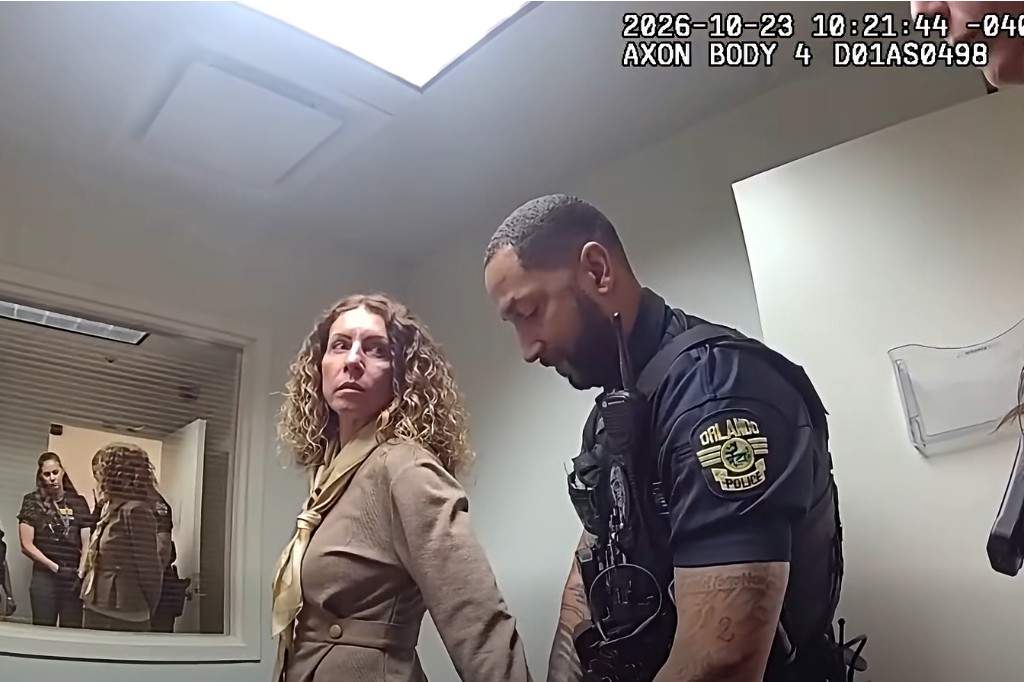
When a parent leaves four minor children unsupervised at a Florida residence to travel across the country to Las Vegas, the resulting criminal charges are not merely moral judgments; they represent the activation of strict statutory thresholds governing custodial duty of care. Standard media reporting on such arrests reduces the event to sensationalized domestic failure, obscuring the legal frameworks, risk-assessment matrices, and statutory definitions that compel law enforcement intervention. Analyzing this incident requires dissecting how Florida criminal law defines culpable negligence, how multi-day geographic separation alters risk profiles, and where the operational boundaries of lawful childcare end.
The Statutory Framework of Custodial Abandonment
In Florida, leaving children unattended does not trigger a single, uniform age-based statute. Unlike states that codify an exact minimum age for home-alone supervision, Florida Statutes Chapter 827 governs child abuse, aggravated child abuse, and neglect of a child through a behavioral and environmental standard rather than a strict chronological cutoff.
Under Florida Statute 827.03(1)(e), neglect of a child is defined along two distinct operational axes:
- Failure to Provide Essential Care: A caregiver's failure or omission to provide a child with the care, supervision, and services necessary to maintain the child's physical and mental health. This includes food, nutrition, clothing, shelter, supervision, medicine, and medical services that a prudent person would consider essential for the well-being of the child.
- Failure to Protect from Harm: A caregiver's failure to make a reasonable effort to protect a child from abuse, neglect, or exploitation by another person.
Crucially, the statute stipulates that neglect may be based on repeated conduct or on a single incident or omission that results in, or could reasonably be expected to result in, serious physical or mental injury, or a substantial risk of death. When a parent boards a commercial flight from Florida to Nevada, the single-incident threshold is immediately tested against the duration of the absence and the developmental capacities of the four minors left behind.
The Reasonable Person Standard and Culpable Negligence
Prosecutors evaluating a multi-day out-of-state absence apply the Prudent Person Standard alongside the legal definition of culpable negligence. Culpable negligence is more than a failure to use ordinary care; it is a course of conduct showing reckless disregard of human life, or of the safety of persons exposed to its dangerous effects, or such an entire want of care as to raise a presumption of a conscious indifference to consequences.
In operational terms, leaving four children alone for two hours while grocery shopping falls within the gray zone of parental discretion, depending on the ages of the children. Leaving four children alone while traveling over 2,000 miles away removes the parent's ability to intervene in an emergency. The geographic distance transforms a lapse in judgment into a structural inability to fulfill custodial duties.
The Four Variables of Supervisory Risk Assessment
Law enforcement agencies and the Florida Department of Children and Families (DCF) do not evaluate unsupervised child cases in a vacuum. Investigators utilize a matrix of compounding variables to determine whether an incident rises from a civil child-welfare concern to a third-degree felony charge of child neglect without great bodily harm.
1. Developmental Capacity and Age Distribution
The presence of four children introduces exponential complexity rather than simple additive risk. If the eldest child is a teenager, investigators assess whether that minor possesses the maturity, emergency training, and legal authority to manage younger siblings. However, when the eldest child is pre-adolescent or when the group includes toddlers or infants, the eldest child is legally classified as a dependent victim rather than a viable caregiver. A minor cannot legally consent to emergency medical treatment for a sibling, nor can a young child reliably execute evacuation protocols during a structural fire or severe weather event.
2. Geographic Distance and Response Latency
Response latency—the time elapsed between an emergency trigger and the arrival of the responsible adult—is the primary differentiator in travel-related neglect cases. Local errands create a response latency measured in minutes. Interstate air travel from Florida to Las Vegas creates a response latency measured in hours, constrained by flight availability, airport transit, and financial liquidity. During a multi-day trip, the parent has effectively severed their physical chain of custody without establishing a legal proxy.
3. Resource Depletion and Environmental Hazards
A residential environment degrades in safety over time without adult maintenance. Over a multi-day period, four unsupervised children face compounding hazards:
- Nutritional Access: Reliance on stove-top or microwave cooking increases the probability of thermal burns or kitchen fires. Conversely, a lack of prepared food leads to nutritional deprivation.
- Sanitation and Hygiene: Younger children require active assistance with basic hygiene; failure to maintain sanitation creates acute health risks.
- Security Vulnerabilities: Unsupervised minors are vulnerable to external threats, including unauthorized entry by third parties, or internal hazards such as accessing unsecured medications, cleaning chemicals, or firearms.
4. Communication Infrastructure and Contingency Failure
Investigators examine whether the parent established a functional communication loop and an authorized local backup. Leaving a cellphone in the house does not constitute adequate supervision if no local adult has been explicitly briefed, given a key, and authorized to assume temporary custody. When a parent travels without designating an on-site guardian, any minor medical issue or behavioral crisis defaults immediately to municipal emergency services (911).
The Cascade of Institutional Intervention
Once an unsupervised multi-child household comes to the attention of neighbors, school officials, or law enforcement, a rigid institutional protocol is triggered. This sequence removes discretion from the parent and transfers operational control to state agencies.
- Initial Welfare Check and Scene Stabilization: Local police respond to a tip—often generated by chronic school absences, noise complaints, or a child wandering outside the residence. Officers assess immediate physical safety, check utility functionality (water, electricity, climate control), and inspect food supplies.
- Mandatory DCF Notification: Under Florida law, law enforcement officers are mandatory reporters. Upon confirming four minors are without adult supervision and the sole guardian is out of state, the Florida Abuse Hotline is contacted immediately, initiating a parallel civil investigation alongside the criminal inquiry.
- Emergency Shelter Placement: Because the parent cannot return within a reasonable timeframe, DCF takes emergency protective custody of the children. If no vetted relative is immediately available locally, the four siblings face separation into emergency foster placements, introducing acute psychological trauma.
- Warrant Issuance and Extradition Mechanics: Criminal investigators verify the parent's travel itinerary via airline manifests, surveillance footage, or digital records. Because child neglect without great bodily harm is a third-degree felony in Florida (punishable by up to five years in prison), law enforcement secures an arrest warrant. Upon the parent's return flight landing in Florida—or via interstate coordination if necessary—the parent is taken into custody.
Distinguishing Legal Theories: Neglect vs. Abandonment
Media accounts frequently conflate child neglect with child abandonment, yet these terms carry distinct statutory requirements in Florida.
Child Abandonment, defined under Florida Statute 39.01(1) within civil dependency proceedings, occurs when a parent or legal custodian, while being able, makes no significant contribution to the child's care and maintenance or has failed to establish or maintain a substantial and positive relationship with the child. Abandonment implies a permanent or indefinite relinquishment of parental responsibility.
Criminal Child Neglect, prosecuted under Chapter 827, applies to temporary lapses where the parent intends to return—such as a vacation to Las Vegas—but subjects the children to an unacceptable risk of harm during the interim. The prosecution does not need to prove the parent intended to permanently desert the four children; it only needs to prove the parent intentionally committed an act (boarding a flight out of state) that a reasonably prudent person would know creates a substantial risk of physical or mental injury.
The Structural Drivers of Custodial Breakdowns
Analyzing this incident purely as an isolated act of individual recklessness ignores the systemic friction points that frequently precede childcare failures. While criminal liability rests entirely on the parent, operational analysis reveals three recurring failure modes in single-caregiver or strained households:
- The Childcare Cost-Access Bottleneck: Securing overnight, multi-day care for four children simultaneously requires substantial financial outlay or a robust local kinship network. When caregivers lack both liquid capital for professional sitters and reliable family support, they face a binary choice: cancel travel or gamble on the children's self-sufficiency.
- The Optimism Bias Trap: Caregivers who have previously left children alone for short periods without incident often suffer from normalization of deviance. Each uneventful two-hour absence reinforces a false belief that the children can manage themselves, leading the caregiver to scale the absence from hours to days without accounting for the non-linear increase in risk.
- Information Asymmetry in Legal Boundaries: Because Florida avoids publishing a hard minimum age for leaving children home alone, some parents misinterpret the absence of a bright-line rule as blanket permission. They fail to recognize that the absence of a specific age limit actually grants prosecutors broader discretion to charge based on environmental conditions and duration.
Limitations of Legal and Child Welfare Frameworks
The state's intervention mechanism is designed to halt immediate physical danger, not to optimize long-term family stability. Arresting the parent and placing four children into state custody resolves the acute supervisory deficit, yet it introduces severe secondary consequences.
First, a felony arrest record creates permanent barriers to employment and housing for the primary breadwinner, directly reducing the household's future financial stability. Second, the foster care system frequently lacks placements capable of accommodating sibling groups of four simultaneously, resulting in the separation of brothers and sisters during a moment of high stress. Third, criminal prosecution focuses strictly on punitive accountability; unless paired with targeted diversion programs, parenting education, and childcare subsidies, incarceration merely delays the underlying resource deficit rather than solving it.
Operational Protocol for Caregivers and Policy Enforcers
To prevent supervisory failures from escalating into felony prosecutions and family dissolution, two distinct operational adjustments are required.
For caregivers managing multi-child households, temporary travel requires a formal Delegation of Custodial Authority. Before crossing state lines, a parent must designate a physically present adult guardian, provide written authorization for emergency medical treatment (a notarized Medical Consent Form for Minors), ensure adequate financial provisions for food and transport, and verify that the guardian is residing on-site rather than conducting periodic check-ins. Without a co-located adult proxy, multi-day travel remains a direct violation of the prudent person standard.
For municipal jurisdictions and child welfare agencies, mitigating repeat incidents requires shifting from purely reactive policing to structured early intervention. School districts serve as the primary early-warning sensor; automated protocols linking unexcused multi-day absences across multiple siblings in the same household should trigger immediate, non-punitive welfare outreach by school social workers before conditions deteriorate to the threshold of felony criminal intervention.


