We keep telling ourselves that modern football is safer. We look at the padded Guardian Caps during training camp, the complex concussion protocols on the sidelines, and the advanced engineering inside modern helmets. We want to believe the game has evolved past the dark days of the early 2000s when the league tried to ignore the destruction happening inside its players' skulls.
Then a tragedy like Marshawn Kneeland happens, and the corporate marketing facade falls apart.
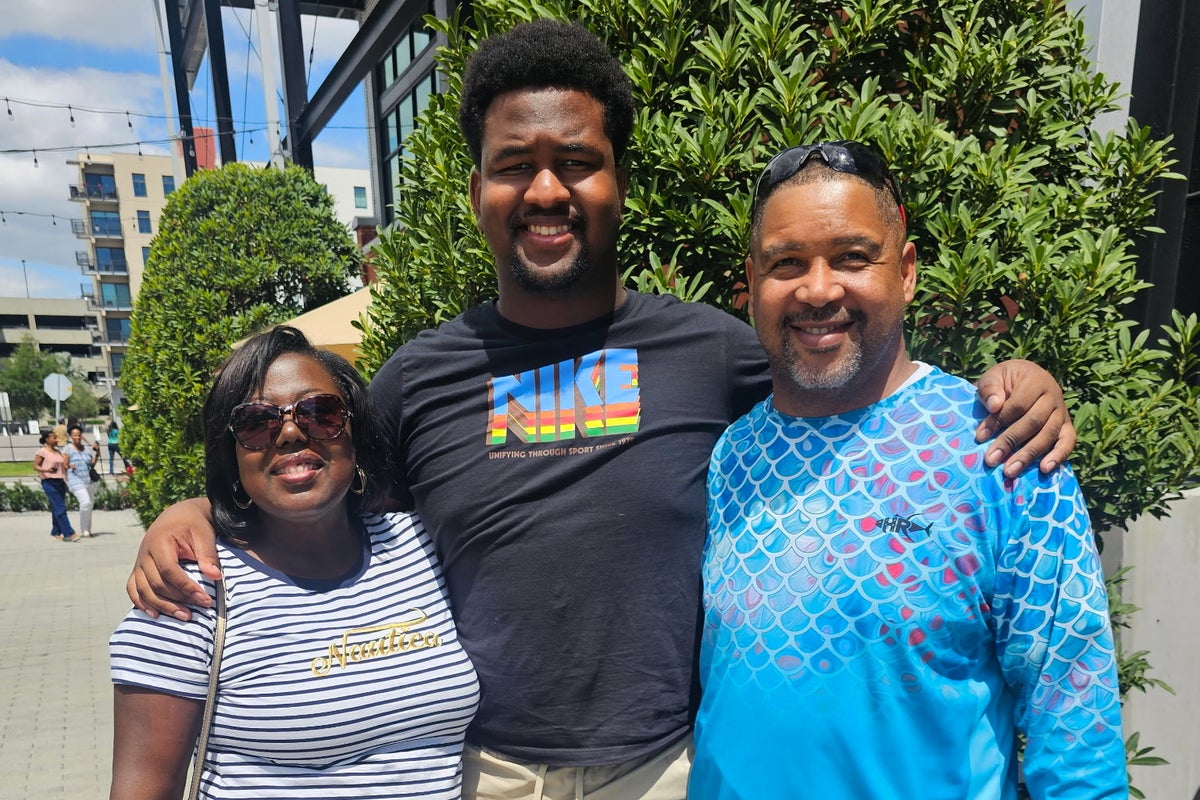
The former Dallas Cowboys defensive end died by suicide in November 2025 at just 24 years old. He was in his second NFL season, a rising talent who had just scored his first career touchdown days prior. His death followed a chaotic 160 mph police pursuit through North Texas that ended with a crash and a final, devastating group text to loved ones saying goodbye.
His family just released the post-mortem brain tissue analysis from the Boston University CTE Center. The findings are a gut punch to anyone who thinks the NFL fixed its brain injury problem. Kneeland had Stage 1 chronic traumatic encephalopathy (CTE).
He was 24. He played his entire career in the era of maximum safety awareness. If you think better helmets and medical tents are saving these young men, you're looking at the data upside down.
The Modern Era Camouflage
The most damning aspect of Kneeland's diagnosis is that he did everything "right" by modern standards. He didn't play in the lawless era of the 1970s or 1980s. He grew up under the protection of the Concussion Achievement State Laws, played his college ball at Western Michigan University under strict medical supervision, and entered an NFL that boasts about its extensive medical staff.
Dr. Chris Nowinski, CEO of the Concussion & CTE Foundation, didn't mince words about this reality. He pointed out that Kneeland played entirely within the modern era of concussion protocols and still developed the disease.
The harsh truth is simple. Concussion protocols do not prevent CTE.
A concussion is an acute injury, an event you can see on a broadcast when a player stumbles trying to stand up. CTE is different. It's a progressive, degenerative disease built brick-by-brick from thousands of sub-concussive hits. These are the routine, unremarkable collisions that happen on every single snap. A defensive end slamming into an offensive tackle doesn't look like a concussion, but the microscopic shearing of brain tissue happens anyway.
Kneeland started playing tackle football at seven years old. By the time he reached the Cowboys, his brain had sustained seventeen years of repetitive impacts.
What Stage 1 CTE Actually Looks Like
There is a common misconception that CTE only matters when a former player is in his 50s, struggling with dementia and severe memory loss. That's Stage 4.
Stage 1 is different, but it's arguably more volatile. Dr. Ann McKee, the leading neuropathologist at Boston University, noted that she wasn't surprised by Kneeland's results. Her team has found CTE in nearly half of the brains they have studied from athletes who died before reaching age 30.
In its earliest stages, CTE doesn't usually show up as forgetfulness. It targets the frontal lobe, the part of the brain responsible for:
- Impulse control
- Mood regulation
- Judgment and decision making
- Depression management
When a young athlete shows erratic behavior, wild mood swings, or sudden impulsivity, we tend to blame youth, fame, or sudden wealth. The Texas Department of Public Safety records show Kneeland fled a traffic stop on the Dallas North Tollway, hitting speeds of 160 mph before crashing near The Star in Frisco. It's easy to look at that chase as a young man making a horrific, panicked mistake.
But when you overlay a Stage 1 CTE diagnosis, that erratic behavior suddenly gets some ugly context. His family explicitly stated that while the diagnosis doesn't change the tragedy, it provides vital context for the invisible struggles he faced.
Suicide is incredibly complex. No serious scientist will claim CTE directly causes a person to pull a trigger. But the disease robs the brain of its natural brakes. It weakens the exact neurological pathways required to slow down, think rationally, and resist impulsive, self-destructive urges during a crisis.
The Problem With the Age 12 Threshold
For years, youth sports advocates have pushed a specific message. Keep kids out of tackle football until age 12, and you dramatically lower their risk. A prominent 2018 study backed this up, showing that children who play tackle football before 12 exhibit cognitive and behavioral symptoms much earlier in life.
Kneeland started at age seven. He is a textbook case of what happens when a child's brain absorbs impacts before it fully develops.
The human skull is not an effective shock absorber for a seven-year-old whose neck muscles aren't strong enough to stabilize their head during a collision. Every hit is magnified. By the time these kids reach high school, they already have a baseline of brain trauma before they ever sign a college scholarship or an NFL contract.
The football establishment likes to point to Hall of Famer Junior Seau or receivers like Demaryius Thomas and Vincent Jackson—men who played long, bruising careers—as the face of this crisis. Kneeland's diagnosis proves that the timeline is much shorter than the league wants you to believe. You don't need a ten-year NFL career to damage your brain. You just need a childhood spent in a helmet.
Beyond the Sideline Tent
If you're a parent, a coach, or just a fan trying to watch football without a heavy dose of guilt, the path forward requires dropping the obsession with helmets and protocols.
We have hit a ceiling on equipment technology. A helmet can stop a skull fracture, but it cannot stop the brain from sloshing forward and hitting the inside of the skull when a player stops instantly. That is basic physics. No amount of foam or outer-shell flexing changes the law of inertia.
If the football community actually wants to protect the next generation of players from Kneeland's fate, the focus has to shift from managing impacts to eliminating them.
Change the way teams practice. There is no reason for full-contact hitting outside of Saturday or Sunday. Limit the number of years a child can play tackle football before their brain reaches mature development. The Concussion & CTE Foundation is pushing for strict CTE prevention protocols that mandate a hard reduction in the overall volume of head impacts at every level of the sport.
If you love the game, stop buying into the safety theater. Look at the numbers, look at Marshawn Kneeland, and demand that the sport changes how it trains, or watch more 24-year-olds pay the ultimate price for our entertainment.