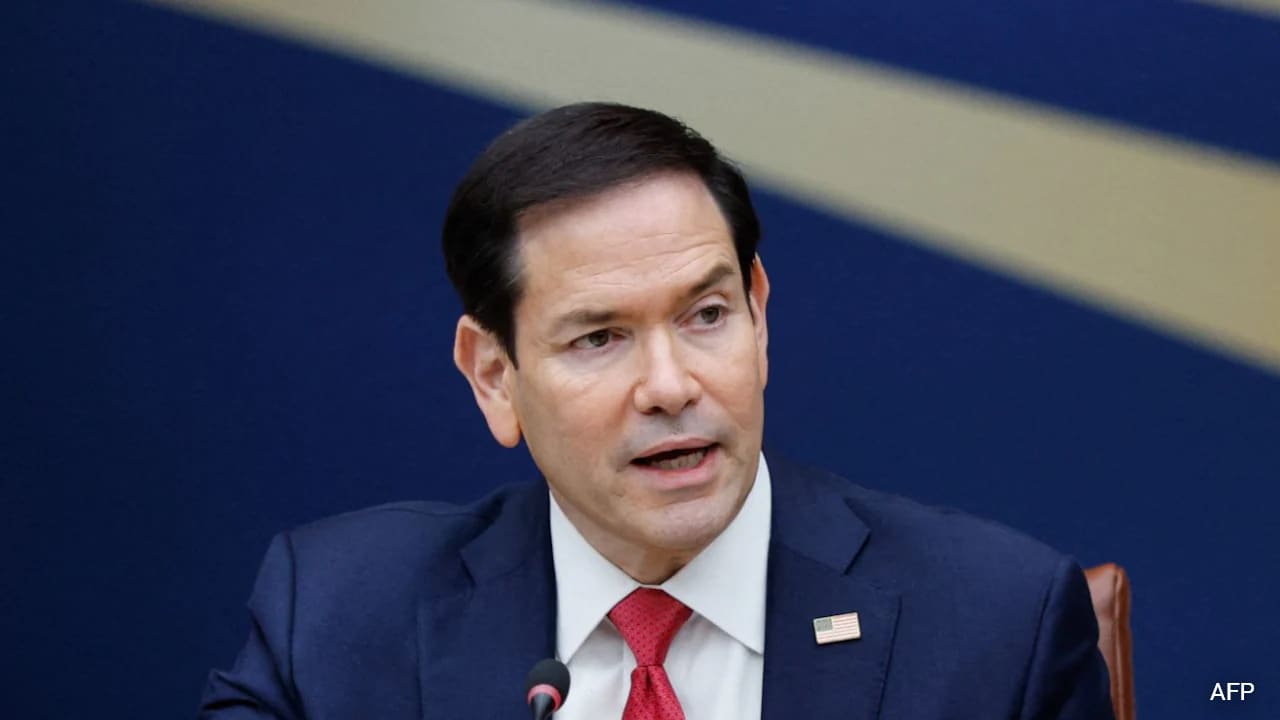
The conventional coverage of Marco Rubio traveling to Paris for G7 talks following the U.S. midterm elections reduces complex statecraft to a simple domestic scoreboard. According to standard political commentary—including the premise of headlines framing the trip around a "US Midterms Setback"—a Secretary of State arriving at an international summit after domestic electoral losses does so with diminished leverage.
That framing relies on a mechanical misunderstanding of how executive foreign policy operates in the American constitutional system and how European allies actually calculate risk. Domestic midterm results rarely alter the immediate structural power of the U.S. State Department, nor do they automatically weaken a chief diplomat's hand in bilateral or multilateral negotiations. In many cases, the opposite dynamic takes hold: domestic political constraints can clarify rather than erode diplomatic positions.
The Myth of the Weakened Envoy
Standard political journalism treats foreign summits like extensions of domestic campaign trails. When the ruling party loses seats in Congress, commentators routinely assume foreign counterparts will sense weakness, stall negotiations, or wait out the administration.
Historically, that assumption fails under scrutiny. Under Article II of the U.S. Constitution, the President retains primary authority over foreign affairs, treaty negotiation, and diplomatic representation regardless of which party controls the House of Representatives or the Senate. While Congress holds the power of the purse and the Senate ratifies treaties and confirms appointments, day-to-day diplomatic execution at forums like the G7 remains firmly within the executive branch.
Foreign ministries in Paris, Berlin, Tokyo, and London do not base their strategic calculations on cable news post-mortems of American midterm races. European diplomats track concrete policy variables:
- Appropriations continuity: Whether defense and foreign aid budgets have already cleared Congress or enjoy bipartisan majorities.
- Regulatory and trade authorities: Executive powers over tariffs, sanctions, and export controls—such as those under the International Emergency Economic Powers Act (IEEPA) or Section 301 of the Trade Act—which operate largely independent of midterm swings.
- Security commitments: Ongoing operational deployments, intelligence-sharing frameworks, and alliance obligations under NATO.
When Rubio sits down with G7 counterparts in Paris, European leaders are not negotiating with a political pundit; they are negotiating with the principal representative of the U.S. executive branch, whose statutory authorities remain intact for the next two years.
How Domestic Constraints Actually Function at the G7
In diplomatic theory, domestic political pressure is not strictly a liability. Political scientist Robert Putnam famously described international negotiations as a "two-level game." At the national level, domestic groups pursue their interests by pressuring the government to adopt favorable policies. At the international level, national governments seek to maximize their own ability to satisfy domestic pressures while minimizing the adverse consequences of foreign developments.
Putnam’s framework demonstrates a counter-intuitive reality: a negotiator whose domestic room for maneuver is visibly constrained by a divided or skeptical Congress can often extract more concessions from foreign partners, not fewer.
When a Secretary of State can credibly tell European counterparts that a specific trade concession, climate pledge, or spending commitment will be dead on arrival on Capitol Hill, the burden of adjustment shifts onto the other parties at the table. Allies who want American security guarantees, intelligence cooperation, or market access must tailor their proposals to survive Washington's domestic political reality.
Consider how this plays out across core G7 agenda items:
| G7 Policy Area | Conventional Media Narrative | Structural Diplomatic Reality |
|---|---|---|
| Trade and Tariffs | Midterm losses force the administration to soften trade demands to appease domestic consumers. | Executive tariff authorities remain broad; a skeptical Congress makes multilateral compromise harder, forcing allies to negotiate bilaterally. |
| Defense and Burden-Sharing | A weakened administration cannot pressure European allies to increase defense spending. | Congressional skepticism toward open-ended foreign commitments reinforces the U.S. demand that Europe fund its own security. |
| China and Supply Chains | Domestic distraction slows down coordinated industrial policy with the G7. | Export controls and investment screening enjoy rare bipartisan backing in Washington, giving Rubio durable leverage in Paris. |
| Energy and Sanctions | Political gridlock stalls joint energy transition initiatives. | U.S. liquefied natural gas (LNG) exports and Treasury sanctions enforcement operate through established regulatory and market mechanisms. |
Far from rendering Rubio powerless, a post-midterm environment in Washington gives American negotiators a rigid, non-negotiable baseline that G7 partners cannot afford to ignore.
Why European Capitals Watch Policy Mechanics, Not Election Headlines
To understand what actually happens behind closed doors in Paris, one has to look at the structural pressures facing the other G7 members. France, Germany, the United Kingdom, Italy, Canada, and Japan are managing their own domestic political fragilities, fiscal deficits, and industrial slowdowns.
In Paris, French officials are balancing European Union budget rules, domestic pension and fiscal pressures, and debates over European strategic autonomy. Berlin is navigating industrial competitiveness challenges driven by high energy costs and shifting export markets. Tokyo is focused on regional deterrence in the Indo-Pacific and currency stability.
None of those governments has the luxury of treating a G7 ministerial meeting as an opportunity to score rhetorical points off American midterm results. Their immediate priorities require tangible U.S. coordination:
- Sanctions Enforcement and Financial Architecture: G7 coordination on financial sanctions—whether targeting Russian energy revenues, illicit proliferation networks, or dual-use technology transfers—depends on the U.S. Treasury Department and the central role of the U.S. dollar. European banks and corporations comply with U.S. secondary sanctions regardless of midterm election outcomes.
- Indo-Pacific Deterrence and Maritime Security: For Japan and European nations with trade exposure in the South China Sea and the Taiwan Strait, U.S. naval presence and diplomatic alignment are irreplaceable. Rubio’s long-standing focus on strategic competition with Beijing aligns directly with the security anxieties of key G7 partners.
- Energy Security and Industrial Policy: Europe’s reliance on U.S. LNG following the reduction of Russian pipeline gas makes American energy production and export policy a foundational element of European economic stability.
What Observers Should Actually Watch in Paris
Evaluating the success or failure of Rubio’s trip to Paris requires discarding the "setback" narrative and tracking measurable diplomatic outputs. When the communiqués are released and the bilateral readouts are published, the real indicators of influence lie in specific policy details rather than electoral commentary.
- Language on Industrial Overcapacity and Trade: Watch whether the G7 adopts stricter, coordinated language regarding non-market practices, subsidies, and export controls. Consensus here indicates that U.S. priorities are driving the group's economic agenda despite domestic political noise.
- Bilateral Commitments on Defense Procurement: Look beyond general pledges to concrete agreements on joint procurement, ammunition production, and defense industrial integration between U.S. and European firms.
- Sanctions Alignment: Pay attention to whether European partners agree to close specific loopholes in existing sanctions regimes—particularly regarding third-country transshipments—where Washington has consistently pushed for tighter enforcement.
- Tone vs. Substance in Joint Statements: Multilateral communiqués often include carefully hedged diplomatic phrasing to accommodate domestic audiences in all seven countries. The substantive commitments usually appear in annex documents, working group mandates, and subsequent regulatory actions.
The notion that a U.S. Secretary of State arrives in Paris as a lame duck after midterm elections confuses campaign narratives with institutional power. In international diplomacy, leverage is built on economic weight, military capability, and statutory authority—none of which disappeared on election night.


