The diplomatic dance between New Delhi and Malé has shifted from a frantic sprint to a measured, heavy-footed walk. When External Affairs Minister S. Jaishankar met with Maldivian Foreign Minister Iruthisham Adam, the cameras captured the standard handshakes of "bilateral cooperation," but the subtext was far more complex. This meeting was not just a routine check-in. It was a high-stakes recalibration of a relationship that nearly buckled under a year of populist rhetoric and shifting geopolitical loyalties.
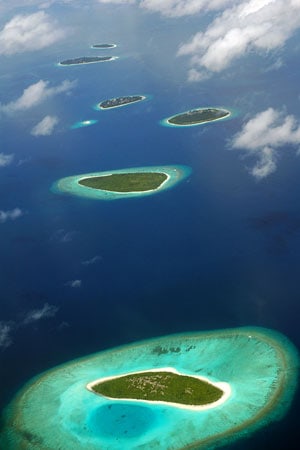
India is currently fighting to maintain its "Neighborhood First" policy against a tide of rising nationalism in the archipelago. For the Maldives, the challenge is even more precarious. The island nation is attempting to balance a desperate need for Indian infrastructure investment with a domestic political mandate that was built on distancing itself from New Delhi. This tension defines every handshake and every memorandum of understanding signed in the current cycle.
The Debt Trap and the Construction Crane
Money is the silent partner in every room where Jaishankar and Adam sit. The Maldives faces a looming debt crisis, with significant repayments due to international creditors over the next twenty-four months. While much of the public discourse focuses on "sovereignty" and "military presence," the actual survival of the Maldivian economy depends on who is willing to roll over loans or provide fresh credit lines.
India has historically acted as the first responder. From the 1988 coup attempt to the 2014 water crisis and the COVID-19 pandemic, New Delhi has used its proximity to provide immediate relief. However, the current Maldivian administration under President Mohamed Muizzu entered office on the "India Out" platform. This created a paradox. How do you ask for financial concessions from a neighbor you just asked to remove its technical personnel?
The answer lies in the Greater Malé Connectivity Project (GMCP). This is the largest infrastructure project ever undertaken in the Maldives. It is a $500 million venture funded by India, designed to link the capital with neighboring islands via a series of bridges and causeways. To abandon this project would be economic suicide for Malé. To continue it, they must maintain a functional, if not warm, relationship with the Indian government.
The Myth of Total Realignment
Geopolitical analysts often simplify the situation as a zero-sum game between India and China. That view is too narrow. It ignores the agency of the Maldivian state. Malé is not looking to trade one master for another; it is looking to maximize its leverage by playing both sides.
During the recent talks, the focus on "developmental partnership" served as a neutral ground. By emphasizing healthcare, education, and social housing, both ministers could avoid the radioactive topic of maritime security. But security is exactly what India cares about. The Maldives sits atop the primary sea lanes of communication in the Indian Ocean. A hostile or even a purely "neutral" Maldives that allows foreign naval vessels to frequent its waters is a direct threat to India’s southern flank.
India’s strategy has moved from overt pressure to strategic patience. New Delhi knows that the Maldives' geography is fixed. It can pivot its rhetoric toward Beijing, but its food security, medical tourism, and supply chains remain inextricably linked to the Indian mainland. The recent meeting suggests that the Maldivian leadership has hit a wall of cold reality. The rhetoric of the campaign trail is being replaced by the pragmatism of the treasury.
Security Cooperation Under a Different Name
We are seeing a rebranding of military ties. While the "India Out" campaign targeted the presence of Indian military personnel operating ALH helicopters and Dornier aircraft, the Maldivian government has realized these assets are vital for medical evacuations and search-and-rescue operations.
The new framework involves transitioning these roles to civilian contractors or training Maldivian pilots to take over entirely. It is a face-saving maneuver. It allows the Muizzu administration to claim a win for sovereignty while ensuring the hardware stays in the air. For India, the primary goal is ensuring that no other foreign power fills that vacuum.
The Digital and Economic Bridge
A major takeaway from the recent high-level interactions is the expansion of the Unified Payments Interface (UPI) into the Maldives. This is not just about making life easier for Indian tourists. It is about financial integration.
By embedding Indian financial technology into the Maldivian economy, New Delhi creates a layer of "soft" infrastructure that is harder to uproot than a military garrison. When a nation’s retail and tourism sectors become reliant on a specific neighbor’s payment rails, the cost of a diplomatic break increases significantly. This is economic statecraft in its purest form.
- Currency Swap Agreements: India has provided multiple tranches of currency swaps to help the Maldives manage its foreign exchange reserves.
- Trade Liberalization: Discussions are ongoing to simplify the export of essential commodities like sugar, rice, and construction materials from India to the islands.
- Human Resource Development: Thousands of Maldivian civil servants and technical experts are trained in India every year, creating a professional class that maintains institutional ties regardless of who holds the presidency.
The Fragility of the Current Peace
No one should mistake the current civility for a permanent resolution. The internal politics of the Maldives remain volatile. Former President Abdulla Yameen, though currently sidelined, represents a hardline faction that views any cooperation with India as a betrayal. President Muizzu has to look over his shoulder at his own base while trying to keep the lights on in the capital.
India, too, is changing its approach. The era of "Big Brother" diplomacy is being replaced by a more transactional model. New Delhi is increasingly asking for clear deliverables in exchange for its largesse. If the Maldives expects continued debt relief and infrastructure funding, it must offer concrete assurances regarding India’s core security interests.
The most critical factor to watch over the next six months is the Hydrographic Survey Agreement. This agreement allowed India to map the Maldivian seabed, a task essential for submarine navigation and maritime security. The Maldives recently opted not to renew it. If this stance holds, it will be a clear signal that the "review of cooperation" between Jaishankar and Adam was more about managing a decline than building a future.
The Regional Ripple Effect
What happens in Malé ripples across the Indian Ocean Region (IOR). Other small island states, from Mauritius to the Seychelles, are watching how India handles a difficult partner. If India is seen as too overbearing, it pushes these nations toward Beijing. If it is seen as a "soft touch," it loses its status as a regional security provider.
The meeting between the two Foreign Ministers suggests a middle path. India is providing the Maldives with enough economic oxygen to survive, but it is withholding the deeper, strategic warmth until it sees a sustained change in behavior. This is a game of endurance.
The Maldives cannot afford to be an enemy of India, and India cannot afford to ignore the Maldives. The current "review" is a realization that both sides are trapped in a geographic marriage with no possibility of divorce. They are now haggling over the terms of their cohabitation.
The true test of this renewed cooperation will not be found in the joint statements. It will be found in whether the next Chinese "research vessel" that seeks to dock in Malé is given a warm welcome or a cold shoulder. Until then, the relationship remains a tactical truce rather than a strategic alliance.
The construction of the Thilamalé bridge continues, the debt repayments loom, and the Indian Ocean remains as restless as ever. The diplomatic silence following these meetings often speaks louder than the official communiqués.