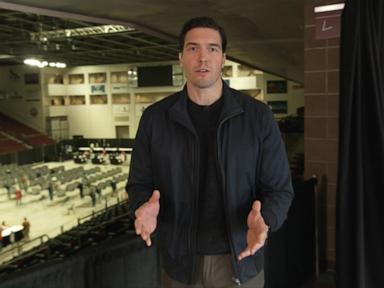
Cable news camera crews flock to small-town polling places in Maine every November like clockwork. They park heavy satellite trucks on quiet streets, interview a few voters coming out of a gymnasium, and pretend they are capturing the beating heart of American political truth.
It is pure theater.
I spent fifteen years behind the scenes of national campaign logistics. I watched network producers intentionally seek out the most caricature-ready locals to manufacture a pre-packaged narrative about the "swing voter." Watching media outlets run "on-the-ground" broadcast segments in Maine as if they reveal meaningful electoral signals makes me cringe.
The traditional political press operates on a flawed premise: that physical presence on Election Day equals insight. It does not. It yields anecdotes, not data.
The Flawed Premise of "On-the-Ground" Reporting
Every election cycle, standard media coverage falls into the same trap. Producers send reporters out to ask voters who they voted for and why. The assumption is that retail political interviews at polling places provide a micro-view of national trends.
They miss three core realities:
- Self-Selection Bias is Off the Charts: The person willing to speak to a stranger with a microphone at 7:00 AM on a Tuesday does not represent the median electorate. They represent the vocal extremes or individuals with time to burn.
- Post-Hoc Rationalization: Voters rarely articulate their true motivations to a camera crew. They repeat soundbites they absorbed from television ads 20 minutes prior.
- Maine’s Structural Nuance: Maine is not a monolith. Between its Ranked-Choice Voting (RCV) system and split Electoral College allocations, applying standard broad-brush narrative techniques to this state shows a basic ignorance of its underlying political mechanics.
If you evaluate political momentum by counting lawn signs in Bangor or recording soundbites outside a Portland precinct, you are doing the campaign equivalent of checking the weather by looking at a photograph taken yesterday.
Ranked-Choice Voting Disrupts Old Media Formulae
Networks love simple math: candidate A versus candidate B. Maine threw a wrench in that simplistic binary when it adopted Ranked-Choice Voting for state and federal elections.
When standard reporters cover Maine on Election Day, they treat first-choice preferences as the entire story. I have sat in war rooms where green campaign strategists made the exact same mistake. They targeted their spending purely around first-round messaging, completely ignoring the second- and third-preference transfers that actually determine the outcome in tight races.
Consider how transfer votes behave under RCV. A candidate can lead by five percentage points on election night in the first tally, yet carry a high risk of losing once lower-tier candidates are eliminated.
The mainstream press routinely fails to explain this dynamic during live polling updates. They report raw, early figures because early numbers create drama, even when those numbers lack analytical weight.
Standard Binary Coverage vs. RCV Realities

Traditional View:  [Candidate A: 46%] vs [Candidate B: 44%] -> Focus on 2% gap
Structural Reality: [Candidate C: 10%] -> Transfer distribution dictates the winner
Reporting on initial polling returns in an RCV state without factoring in transfer distribution is not news; it is misdirection.
The Mirage of the Rural-Urban Divide
The standard media script relies on a lazy binary: progressive urban Portland versus conservative rural District 2.
This framing ignores the structural shifts occurring within the voter base. Independent and non-enrolled voters make up roughly a third of Maine's registered electorate. They do not fit neatly into national party agendas, nor do they vote as a unified block.
During my time managing ground operations, we stopped analyzing Maine through geography years ago. We analyzed it through income volatility, energy costs, and municipal tax shifts.
When a reporter stands in front of a rural precinct and attributes voter turnout solely to national culture-war issues, they miss the local economic pressures driving decisions. Maine voters regularly split their tickets, supporting a progressive state initiative alongside a moderate or conservative representative.
The national consensus tells you voters are increasingly hyper-partisan. The data in split-district states proves they are often pragmatic, highly defensive of local interests, and deeply skeptical of outside political commentary.
Address the Real Mechanics: Early Voting and Mail-in Realities
Why do news crews still hype up physical turnout on Election Day morning? Because it makes for good visual content.
B-roll footage of voters standing in line creates an artificial sense of urgency. The real work of modern elections happens weeks before polls open.
When national broadcasts emphasize line lengths at 8:00 AM, they obscure the true state of play. A high-turnout morning at a physical precinct might simply mean a local municipality reduced the number of available voting booths, or that local mail-in processing was exceptionally efficient, leaving only a fraction of voters to turn out in person.
Campaigns that rely on Election Day visual cues get caught off guard. Modern campaign strategy requires tracking ballot returns daily starting thirty days out. By the time reporters arrive at a polling center on Tuesday morning, the vast majority of high-propensity voters have already cast their ballots.
Dismantling the "Swing Voter" Fantasy
People constantly search online asking how small-town swing voters make up their minds at the eleventh hour.
The truth is uncomfortable: the undecided voter standing in line on Election Day is rarely an informed civic actor weighing policy positions. More often, they are low-information voters acting on impulse, habit, or social friction.
Political campaigns treat undecided voters late in the cycle not as policy critics to be convinced with logic, but as turnout targets to be moved through peer pressure and repetitive messaging.
When media outlets interview these late deciders on camera, they treat their answers with unearned solemnity. Framing an impulse decision as a profound political statement misinterprets how political persuasion functions in the real world.
Build an Intuition Based on Data, Not Footage
If you want to understand what is happening in key states on Election Day, turn off the live video feeds. Stop watching reporters stand in the snow asking voters if they felt the economic squeeze this year.
Instead, track these three operational indicators:
- Municipal Ballot Return Rates: Compare absentee return percentages against historical baselines in key working-class districts.
- Third-Party Spending Velocity: Watch where super PACs dump last-minute ad buys 48 hours before polls open. They follow internal tracking data, not public polling.
- Rolloff Rates: Monitor the gap between top-of-ticket votes and down-ballot votes. A high rolloff rate signals voter exhaustion, which directly impacts local ballot measures.
The downsides of this analytical approach are clear: it is boring, it requires spreadsheet work, and it lacks the emotional pull of human-interest television. You will not get dramatic narratives or quick quotes.
You will simply get the truth.
Stop letting cable networks sell you atmosphere in place of analysis. Stop treating polling-place turnout like a mystical oracle. The real mechanics of American elections are cold, structural, and predictable long before the news cameras even boot up.
Stop watching the door. Look at the ledger.


