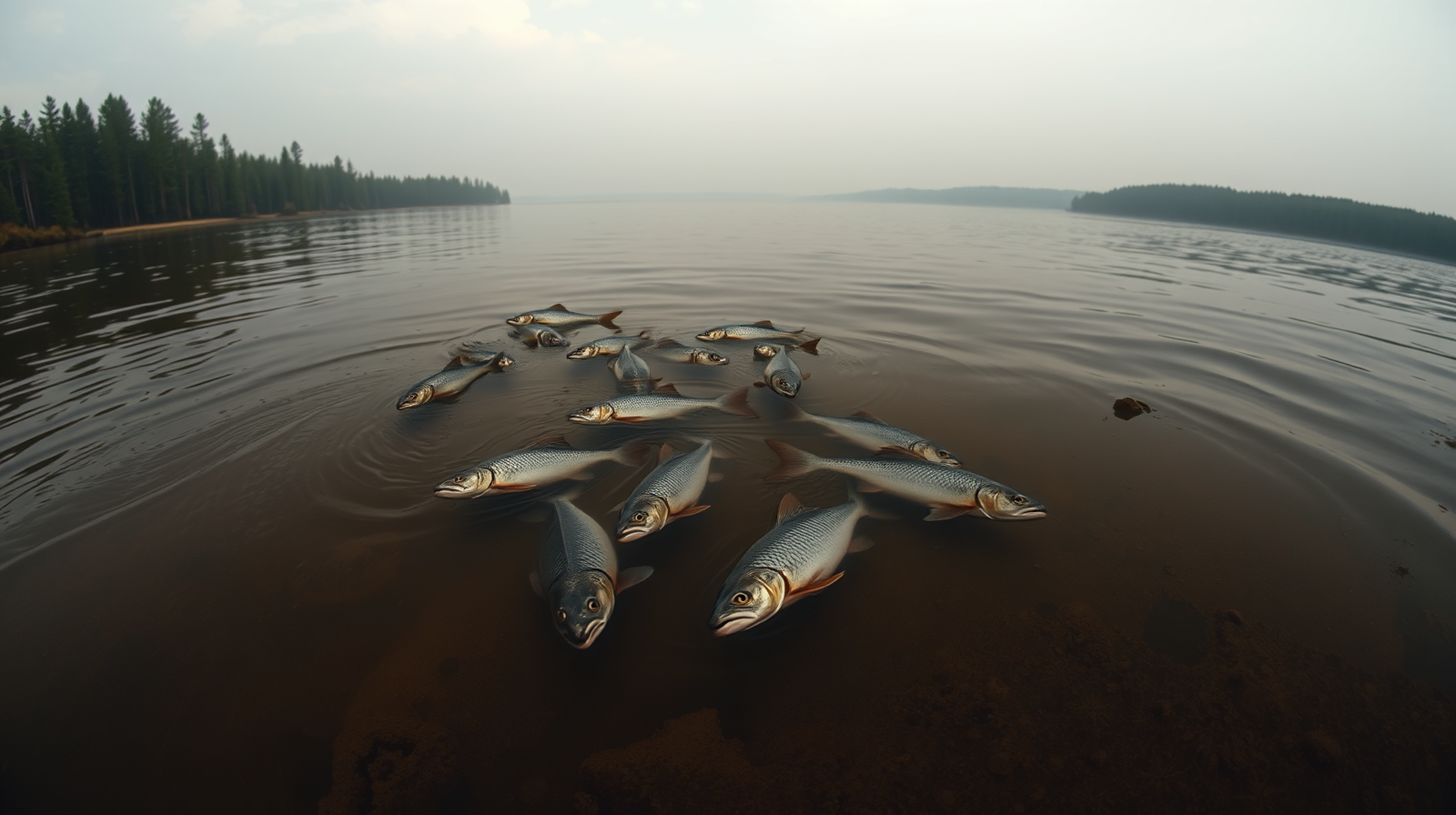
Freshwater ecosystems across north temperate regions are experiencing a fundamental shift in optical clarity and thermal structure. This process, known as freshwater browning, describes the progressive darkening of inland waters to a tea-like hue. Over the past three decades, thousands of unstocked lakes across northeastern North America and northern Europe have seen marked increases in color intensity.
Far from a superficial change, this phenomenon restructures the physical, chemical, and biological architecture of lacustrine environments. Emerging research, including meta-analyses from McGill University published in Biological Reviews, indicates that browning causes an asymmetric collapse in biomass, driving severe declines in valuable sport and commercial fisheries while favoring a narrow subset of apex predators. Don't forget to check out our recent coverage on this related article.
Understanding the trajectory of these ecosystems requires moving past vague descriptions of environmental change. We must isolate the precise geochemical drivers, physical feedback loops, and evolutionary bottlenecks that dictate which species survive in darkened waters.
The Geochemical Drivers: The Dual-Engine Supply Model
The primary mechanism behind freshwater browning is the elevated export of terrestrial Chromophoric Dissolved Organic Matter (CDOM) and dissolved iron from catchment soils into aquatic networks. CDOM consists of highly aromatic, high-molecular-weight humic and fulvic acids that absorb short-wavelength visible and ultraviolet light. The volume of CDOM delivered to a lake is governed by a dual-engine model driven by historical industrial recovery and modern climate acceleration. If you want more about the background of this, TechCrunch offers an informative breakdown.
Engine 1: Anthropogenic Acid Rebound
The most significant driver of widespread long-term browning in regions like the Adirondacks and Scandinavia is the recovery of watershed soils from historical acid deposition.
During the mid-to-late 20th century, industrial sulfur emissions artificially acidified regional soils. This elevated ionic strength and low pH suppressed the solubility of soil organic matter, locking it within the terrestrial matrix.
Following clean-air regulations, a steady decline in atmospheric acid deposition occurred. As soil pH increases and ionic strength decreases, the solubility of pre-industrial humic substances rises dramatically. This chemical shift unbinds vast reservoirs of terrestrial carbon, allowing them to dissolve into groundwater and enter local basins. In many regions, current browning represents a return to pre-industrial baselines—a process more accurately termed "re-browning."
Engine 2: Hydroclimatic Acceleration
Climate shifts amplify this chemical baseline through two distinct environmental mechanisms:
- Thermal Microbial Mobilization: Rising global temperatures extend the terrestrial growing season and accelerate microbial decomposition within catchment soils. This increased metabolic rate breaks down complex organic matter into smaller, highly mobile carbon compounds ready for transport.
- Hydrological Transport Flushing: Increased frequencies of extreme precipitation events create high-velocity surface runoff. This sub-surface flushing moves dissolved organic carbon (DOC) from the upper organic soil horizons directly into tributaries before it can undergo microbial or photochemical degradation on land.
The Physical Bottleneck: The Oxythermal Squeeze
Once CDOM enters the water column, it alters the vertical distribution of solar energy. In a clear lake, photosynthetically active radiation (PAR) penetrates deep into the water column, distributing thermal energy across a thick layer. In a browned lake, CDOM strongly absorbs light in the upper few meters. This optical barrier creates a distinct physical bottleneck through a process known as the oxythermal squeeze.
[Solar Radiation]
       │
       ▼
┌────────────────────────────────────────┐
│ Upper Mixing Layer (Epilimnion)        │ ◄── Radiative heat trapped here
│ - Accelerated warming                  │
└────────────────────────────────────────┘
=================== Thermocline (Sharp Density Gradient) ===================
┌────────────────────────────────────────┐
│ Deep Refuge Layer (Hypolimnion)        │ ◄── Shaded, colder, but disconnected
│ - Phytoplankton shaded (No Oxygen)     │
│ - Fuel load increases decomposition    │ ◄── Rapid biological oxygen demand
│ - CRITICAL OXYTHERMAL DEPLOYMENT ZONE  │
└────────────────────────────────────────┘
The first phase of this bottleneck occurs at the surface. Trapping radiative heat near the surface accelerates the warming of the upper mixing layer (the epilimnion). Simultaneously, the deeper layers (the hypolimnion) are heavily shaded and remain cold. This stark temperature differential intensifies the density gradient between the layers, locking the lake into strong thermal stratification early in the season. This barrier blocks atmospheric oxygen from mixing into the deep water.
The second phase occurs in the depths. Because PAR cannot penetrate the darkened upper layers, benthic and deep-water algae are shaded out, stopping photosynthetic oxygen production below the thermocline. Meanwhile, the large influx of terrestrial carbon fuels high rates of microbial respiration.
As bacteria consume this dissolved carbon, they rapidly deplete the isolated deep-water oxygen supply. A 2024 study in the Proceedings of the National Academy of Sciences found that browning-induced deoxygenation of deep water outpaces any expansion of cold-water zones. Cold-adapted species are trapped between an overheating surface layer and an anoxic, suffocating deep layer.
Trophic Disruption and the Visual Bottleneck
The biological impacts of browning scale rapidly from individual metabolic limits up to total community architecture. This ecological restructuring follows two clear operational constraints: a drop in primary production and a stark shift in visual search mechanics.
The Food Web Energy Deficit
The primary energy budget of a clear lake relies heavily on benthic primary production—algae growing on the lake bed that forms the foundation for invertebrates and zooplankton. As browning limits light penetration, this benthic pathway collapses.
Primary production is forced into a narrow surface band, reducing total lake-wide energy availability. With fewer zooplankton and macroinvertebrates capable of surviving the energy deficit, small forage fish face immediate food shortages, which stunts their growth rates and reduces overall population density.
Asymmetric Visual Foraging Competency
The change in light attenuation rewards specific physical traits while punishing others. Most economically and ecologically dominant sport fish—including lake trout (Salvelinus namaycush), largemouth bass (Micropterus salmoides), smallmouth bass (Micropterus dolomieu), and yellow perch (Perca flavescens)—are obligate visual hunters.
In darkened waters, their visual search volume shrinks drastically. This limitation degrades their ability to track prey, avoid larger predators, and navigate effectively. The resulting energy deficit leads to slower growth rates and falling population numbers.
Conversely, specific apex predators possess physical adaptations that turn murky waters into an evolutionary advantage:
- Walleye (Sander vitreus): Equipped with a specialized tapetum lucidum—a reflective retinal structure that amplifies minimal light—walleye maintain high visual acuity in low-light environments, easily outcompeting vision-dependent bass.
- Northern Pike (Esox lucius): Operating primarily as ambush predators, pike rely heavily on their lateral line system to detect mechanical vibrations and pressure changes in the water. Reduced visibility acts as camouflage, allowing them to surprise disadvantaged prey.
Analyses of 871 north temperate lakes confirm this species shift. While populations of trout and bass are declining, walleye and northern pike show steady increases in abundance and average size. Furthermore, morphological assessments of 303 lakes show that surviving fish communities are shifting toward species with larger relative eye sizes, highlighting the intense selective pressure driving this ecosystem change.
Resource Management Strategies under Asymmetric Stress
Traditional fisheries management models assume a stable physical and optical environment. In the face of widespread freshwater browning, these static strategies fail. Mitigating these shifts requires updated resource frameworks that acknowledge the permanent structural changes occurring in target basins.
       [Traditional Management Model]
                     │
                     ▼  (Assumes static optical clarity)
       FAILED Stocking & Harvest Policies
                     │
                     ▼
       [Browning Adaptation Framework]
                     │
       ┌─────────────┴─────────────┐
       ▼                           ▼
[Adaptive Harvest]          [Optical Asset Allocation]
- Lower yield targets       - Halt trout stocking in brown lakes
- Shift to tactile prey     - Reallocate budgets to robust native lines
1. Recalibrating Yield Targets via Adaptive Harvest Models
Managers must abandon historical harvest quotas for visual predators. Stunted individual growth and falling population sizes mean that bass and lake trout populations cannot sustain historical fishing pressure.
- Actionable Play: Implement slot limits that protect mid-sized breeding adults of declining species. Simultaneously, ease harvest restrictions on tactile, low-light predators like pike and walleye in heavily browned lakes to balance predatory pressure on struggling forage fish.
2. Strategic Structural Shifts in Fish Stocking Programs
Continuing to stock clear-water, vision-dependent trout strains into rapidly browning lakes with anoxic deep zones is highly inefficient. Stocked fry suffer high mortality rates due to visual starvation and thermal stress.
- Actionable Play: Implement an optical audit for all target lakes. Halt active trout stocking programs in lakes where DOC concentrations exceed regional thresholds (typically above 5–7 mg/L) or where Secchi disk visibility drops below a specific depth. Reallocate these operational budgets toward restoring self-sustaining native populations or supporting species that adapt well to darker environments, such as brook trout (Salvelinus fontinalis), which exhibit a higher tolerance for browning conditions than lake trout.
3. Catchment-Scale Carbon Mitigation Frameworks
While regional recovery from acid rain cannot—and should not—be reversed, the hydrological acceleration of carbon delivery can be managed through targeted land-use policies.
- Actionable Play: Establish strict riparian buffer zones around vulnerable lake basins, banning clear-cutting and heavy agricultural development within critical catchment zones. Restoring adjacent wetlands acts as a natural hydrological buffer, slowing surface runoff during extreme weather events and allowing terrestrial carbon to settle or degrade before reaching major freshwater bodies.
The long-term trajectory for north temperate lakes points toward continued darkening as climate models predict warmer, wetter shoulder seasons. Fisheries managers, conservation groups, and regional economies must accept that the clear-water ecosystems of the past century are changing. Conservation success will be defined by how effectively we pivot from preserving old baselines to managing resilient, low-light aquatic communities.