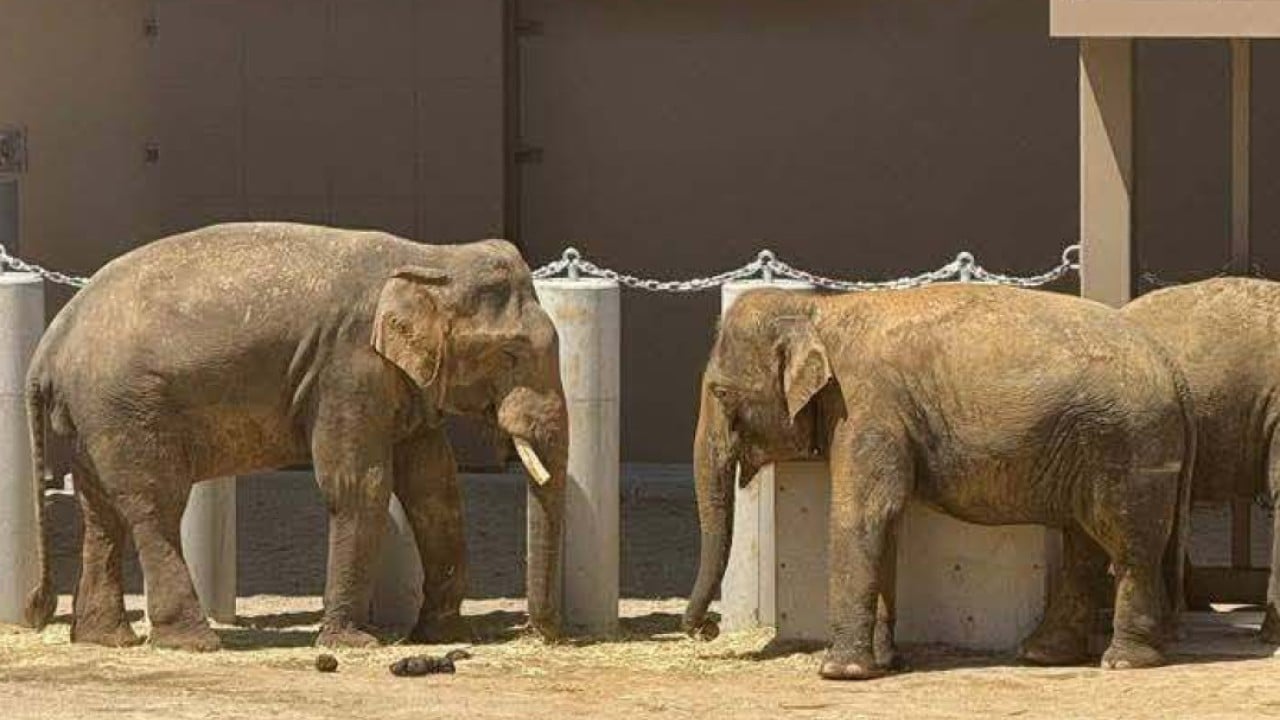
A single tear tracks a path through the deep, topographical map of an elephant’s cheek. It isn't a metaphor. It is a salt-streaked reality captured on a smartphone screen, vibrating across the social media feeds of millions. In the video, a Bornean pygmy elephant stands in a sterile enclosure in Japan, its head swaying in the rhythmic, haunting cadence of stereotypic behavior—a sign of profound psychological distress.
Thousands of miles away in the humid heat of Sabah, Malaysians are watching. They see their own heritage reflected in those wet eyes. They see a displacement that feels personal.
The outcry didn't start with a policy paper or a diplomatic cable. It started with a collective ache. Now, a growing movement is demanding the return of these "weeping" ambassadors, sparking a complex debate about conservation, ethics, and the heavy price of international "gifts."
The Living Gifts of Diplomacy
Decades ago, the exchange of exotic animals was seen as the height of soft power. It was a gesture of goodwill, a biological handshake between nations. Malaysia sent elephants to Japan as symbols of friendship, intended to educate the Japanese public and cement ties between the two Asian neighbors. At the time, we didn't fully grasp the cognitive depth of these creatures. We saw them as majestic statues that breathed.
We were wrong.
Elephants are not objects. They are intensely social, sentient beings with a sense of self and a memory that stretches back generations. To move an elephant isn't like moving a painting from one museum to another. It is the uprooting of a consciousness. When we sent these animals to Japanese zoos, we weren't just sharing a resource; we were fracturing a family.
The Concrete Silence
Imagine living your entire life in a space the size of a studio apartment. Now, imagine you are built to roam thirty miles a day through dense, emerald canopies.
In many Japanese zoos, the environment is a stark contrast to the sprawling jungles of Borneo. Concrete floors replace the soft, forgiving dampness of the forest floor. The air is stripped of the scent of wild ginger and rain. Most importantly, the silence is deafening. In the wild, elephants communicate through infrasound—low-frequency rumbles that travel through the ground, connecting them to herds miles away. In a city zoo, that channel is cut off, replaced by the screech of trains and the chatter of crowds.
Consider the hypothetical case of "Laila," a name we might give to a composite of the elephants currently at the center of this storm. In the wild, Laila would be part of a matriarchal sisterhood. She would learn which roots are medicinal and how to find water during a drought. In her current enclosure, her only choice is when to eat the hay provided by a keeper.
This lack of agency leads to "zoochosis." The swaying, the repetitive pacing, the weeping—these are the screams of a mind trying to survive an environment that offers no stimulation. It is a slow, quiet breaking of the spirit.
A Question of Sovereignty and Soul
The viral videos have shifted the conversation from "Are the elephants healthy?" to "Do they belong there?"
The Malaysian public's demand for their return isn't just about animal welfare; it's about a reclaimed sense of national identity. The Bornean pygmy elephant is a subspecies found nowhere else on Earth. They are smaller, rounder, and arguably gentler than their mainland cousins. They are the "gentle giants" of the East, a crown jewel of Malaysian biodiversity.
When Malaysians see these animals suffering abroad, it feels like a piece of the country is being mistreated. It raises a stinging question: Why should our heritage languish in a foreign cage for the sake of entertainment?
The counter-argument often focuses on the "educational value" for Japanese children. But what exactly are they learning? They aren't learning about the majesty of the wild. They are learning that it is acceptable for a magnificent, highly intelligent creature to be reduced to a miserable spectacle. That isn't education. It’s a lesson in dominance.
The Logistics of a Homecoming
Returning an elephant is a monumental task. It isn't as simple as opening a gate. These animals have spent years, sometimes decades, in captivity. Their immune systems have adapted to different climates. Their social skills are rusty.
The transition requires a massive investment in sanctuary infrastructure back in Malaysia. It requires a team of veterinarians, behaviorists, and transporters who can manage the delicate process of moving a multi-ton animal across an ocean.
But the cost of action is dwarfed by the cost of complacency.
If Malaysia successfully petitions for their return, it sets a global precedent. It signals the end of "animal diplomacy" as we know it. It acknowledges that the era of treating living beings as geopolitical currency is over.
The Invisible Stakes
Beyond the politics and the logistics lies the emotional core: the possibility of a second chance.
There is a moment in every successful animal rehabilitation where the light seems to return to the eyes. It happens when an elephant first touches real soil after years of concrete. They pause. They test the ground with their trunk. They realize, perhaps for the first time in a lifetime, that the world is soft.
We owe them that moment.
The weeping videos served as a mirror. They showed us a reflection of our own outdated practices and our capacity for unintended cruelty. Now that we have seen, we cannot unsee. The pressure on the Japanese government and zoo authorities is mounting, not because of a desire for conflict, but because of a shared understanding of what is right.
The road back to Borneo is long. It is filled with red tape and logistical nightmares. But for the giants waiting in the concrete silence, every day of delay is a day of stolen life.
Somewhere in a quiet corner of a Japanese zoo, an elephant sways. She doesn't know about the petitions or the hashtags. She only knows the cold floor and the faded memory of a forest she hasn't seen in twenty years. She is waiting for us to remember who she is. She is waiting to go home.


