Jason Collins did not just play basketball. He broke a seal that had remained airtight for 67 years of NBA history. When news of the first openly gay active player’s passing reaches the public, the immediate instinct is to treat his life as a neat, inspirational vignette. But that does a disservice to the grit it took to exist in the spaces he occupied. Collins, who died at age 47, was more than a statistical footnote or a PR milestone for the league. He was a defensive specialist who understood that the hardest hits often happen away from the ball.
In April 2013, Collins wrote a first-person essay for Sports Illustrated that began with a bluntness rarely seen in a league defined by bravado. "I’m a 34-year-old NBA center. I’m black. And I’m gay." With those three sentences, he ended the era of the "don't ask, don't tell" locker room. While the sports world often wants to paint these moments as immediate triumphs of progress, the reality was far more jagged. Collins faced a free-agent market that suddenly went cold, a league that wasn't sure how to market him, and a culture that was still terrified of what his presence meant for the "sanctity" of the team dynamic.
The Calculated Risk of Authenticity
He waited until his thirteenth season to speak his truth. That wasn't a coincidence. Collins was a veteran who knew the mechanics of the league. He knew that a rookie or a mid-level player without a reputation for "playing the right way" would have been chewed up and spat out by the system. By the time he came out, he had already established himself as a "glue guy"—the kind of player coaches love because he does the dirty work that doesn't show up in a box score.
The timing was a tactical maneuver. He chose to come out when he was a free agent, effectively forcing the NBA’s hand. If no one signed him, it would look like blackballing. If someone did, it would be a revolution. For months, it looked like the former would win out. Despite being a serviceable big man in a league that always needs size, the phone stayed silent.
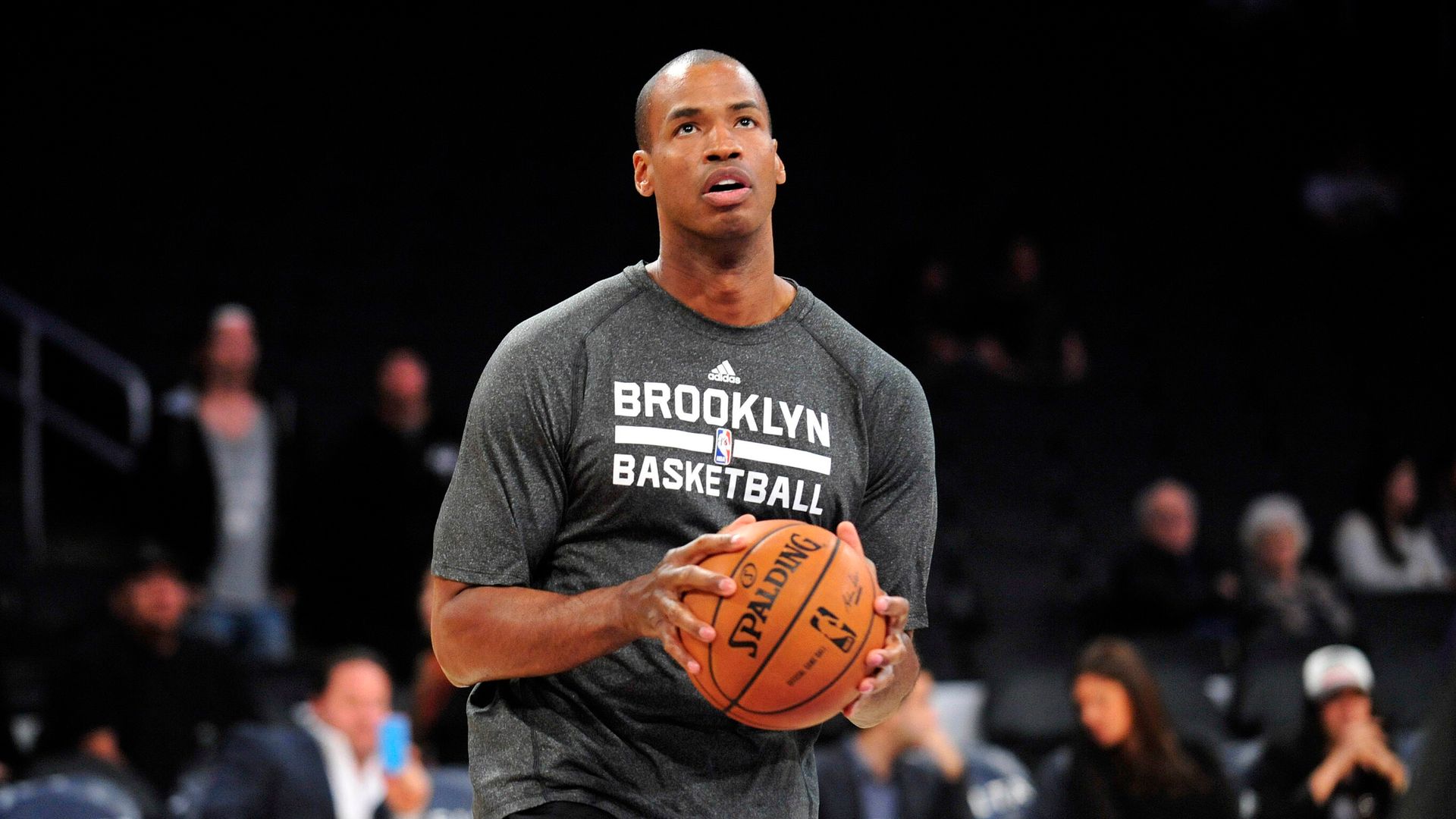
It wasn't until the Brooklyn Nets signed him to a ten-day contract in February 2014 that the barrier actually fell on the court. That stint was less about basketball and more about a stress test for the American psyche. The jersey sales skyrocketed, topping the NBA store’s charts, outperforming superstars like LeBron James and Kevin Durant. This was the public voting with their wallets, even as the internal basketball operations of many teams remained hesitant.
Behind the Jersey Sales
We like to think that once a barrier is broken, the path stays open. It doesn't. Since Collins retired, the number of active openly gay players in the NBA has returned to zero. This is the uncomfortable truth that his passing forces us to confront. If the environment were truly as inclusive as the league's marketing departments claim, there would be a line of players following his lead. Instead, there is a vacuum.
The "why" is found in the micro-aggressions of the locker room and the macro-pressures of endorsement deals. Professional sports are built on a specific brand of masculinity that views any deviation as a distraction. Collins took the brunt of that "distraction" label so others wouldn't have to, yet the label persists. Agents still whisper to their clients that coming out will "complicate" their brand. Coaches still worry about "chemistry" in the shower. Collins proved these fears were phantoms, yet the league continues to jump at shadows.
During his brief tenure in Brooklyn, the predicted circus never materialized. His teammates didn't care who he loved; they cared that he could still set a screen that felt like hitting a brick wall. This is the disconnect between the players on the floor and the executives in the front office. The players, for the most part, were ready for the 21st century long before the suits were.
The Weight of the Professional Stoic
Collins was a Stanford graduate, an intellectual who viewed his role in the NBA through the lens of a job. He brought a blue-collar work ethic to a high-glitz industry. This stoicism was his shield. When he walked onto the court for the Nets, he was met with a standing ovation, but he also walked into a storm of scrutiny that would have folded a lesser man. Every foul he committed, every missed rotation, and every benching was analyzed not just as a basketball play, but as a reflection of his identity.
He carried the weight of an entire community on his shoulders while trying to guard seven-footers who wanted to dunk on him. That kind of pressure takes a physical and mental toll. He didn't just have to be a good player; he had to be a perfect representative. This is the "tax" paid by those who go first. They lose the right to be mediocre. They lose the right to just be "one of the guys."
The Infrastructure of Exclusion
To understand the magnitude of his impact, you have to look at the infrastructure he was fighting. The NBA in 2013 was a league where homophobic slurs were still occasionally heard on the court and dealt with via modest fines. It was a league where the "alpha male" archetype was guarded with religious fervor. Collins didn't try to dismantle this overnight; he simply stood in the middle of it and refused to blink.
- The Media Circus: He was forced to become a spokesperson when he just wanted to be a center.
- The Veteran Minimum: He played for peanuts compared to his peers, largely because his "value" was weighed against the perceived "headache" of his presence.
- The Isolation: For a long time, he was an island. There was no support group for gay NBA players because, officially, there were no other gay NBA players.
He often spoke about the "mask" he wore for the first twelve years of his career. Living a double life in the hyper-masculine world of professional sports isn't just exhausting; it's soul-eroding. When he finally took the mask off, the relief was palpable, but it was quickly replaced by the exhaustion of being a pioneer.
The Myth of the Post-Gay League
His death reminds us that "first" does not mean "final." The NBA often congratulates itself on its progressive stance, pointing to Collins as proof of its enlightenment. But true progress is measured by the people who come after. When we look at the current NBA landscape, we see a league that is more socially active than ever, yet remains strangely silent on this specific front.
Why hasn't the "Collins Effect" resulted in more players coming out? The answer lies in the brutal economics of the game. The average NBA career lasts less than five years. Most players are fighting for their professional lives every single day. In that environment, anything that makes you "different" or "difficult" is a liability. Collins had the tenure and the hide to survive it. Most 22-year-olds do not.
The tragedy of his passing isn't just the loss of a man who was, by all accounts, a kind and thoughtful human being. It is the realization that the door he kicked open is slowly swinging shut. The league's culture hasn't changed as much as we’d like to believe; it has just learned to use better vocabulary.
The Legacy Beyond the Hardwood
If we are to learn anything from the life of Jason Collins, it is that courage is not a one-time event. It is a daily Choice. He chose to answer the same repetitive questions from reporters. He chose to mentor young athletes who were terrified of their own shadows. He chose to be the face of a movement he didn't ask to lead, simply because he was the only one in the room with the stature to do it.
His impact wasn't found in his points per game—which were modest—but in the conversations that happened in suburban living rooms and high school locker rooms across the country. He made the abstract real. He showed that you could be a "man's man" in the most traditional sense—a physical, bruising athlete—and still be gay. He blew up the stereotype with a chest pass.
The NBA likes to celebrate its history with statues and jersey retirements. Jason Collins doesn't need a statue. He needs a successor. He needs a league where a player's sexuality is as boring and unremarkable as their choice of shoes. Until that happens, his work remains unfinished, and his "pioneer" status remains a quiet indictment of the industry he loved.
Stop looking for the next "first." Start looking at why the "second" is still hiding in the locker room.