The key weighs next to nothing, yet it holds the gravity of an anchor.
Imagine a brass cylinder tucked inside a small plastic envelope, handed across a polished laminate desk by a caseworker whose eyes carry the exhausted patience of a battlefield medic. For Arthur, that key was supposed to mean the end of the cold concrete. For eighteen months, his world had been reduced to the nylon fabric of a three-person tent pitched beneath an overpass, a patchwork quilt of discarded cardboard, and the constant, vibrating hum of freeway traffic that sounds dangerously like a rising tide.
He turned the key in the deadbolt of apartment 4B. The latch clicked back with a clean, mechanical finality.
The room smelled faintly of fresh paint and off-gassing vinyl. Sunlight cut through unwashed double-paned glass, illuminating millions of dancing dust motes. It was empty. Completely, perfectly, agonizingly empty. No bed. No stove. Not even a square of carpet to soften the chill of the linoleum floor.
Arthur did not sleep there that night. Nor the night after.
Instead, he walked back to the overpass. He crawled back into his tent. Because the key, as it turned out, did not come with the electricity to turn on the lights. It did not come with the water required to flush the toilet, or the deposit for the utility company, or the sixty-dollar background check fee, or the mandatory renter's insurance policy, or the security deposit that equaled three months of his meager disability check.
The door was unlocked. But Arthur remained locked out.
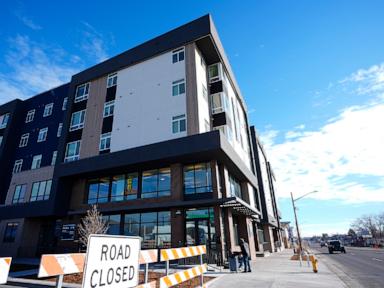
This is the strange, cruel geometry of modern survival. Across the United States, thousands of low-income housing units sit quiet and vacant, their floors unblemished, their walls freshly scrubbed. At the exact same moment, men like Arthur freeze in doorways, sleep on bus benches, and count the minutes until sunrise.
We look at this paradox and assume a simple malfunction. Bureaucracy gone rogue. Red tape wrapped so tightly around the throat of progress that nothing can breathe. But the machinery is not merely slow; it is fundamentally disconnected from the physics of human need.
Consider how the system is built. Federal housing vouchers, designed to bridge the chasm between poverty and shelter, operate under a set of rules written by people who have never had to choose between paying for a prescription and paying a municipal utility fee. A voucher might cover the baseline rent of a studio apartment. That sounds generous on paper. It looks wonderful in an annual congressional report.
Reality is far more stubborn.
Landlords, operating in a market driven by aggressive profit margins, look at a voucher holder and see risk. They see a bureaucratic payment delay. They see arbitrary inspection standards that require weeks of waiting while repairs are cleared. So they raise the barriers. They stack fees like cordwood at the entrance. Application fees here. Holding fees there. Credit score minimums that treat poverty as a moral failing rather than an economic state.
When a voucher requires a credit score of 650, it is not a housing policy. It is a locked gate disguised as an invitation.
To understand why units sit empty while people sleep rough, we have to look past the cold spreadsheets and examine the human friction points. Let's step into a hypothetical scenario based on dozens of real housing authority case files. Meet Elena, a property manager for a mid-sized apartment complex on the edge of a midwestern city. She has twelve newly renovated units designated for low-income tenants.
Her phone rings off the hook. Hundreds of desperate voices beg for a chance. Yet, three of those units have sat vacant for four months.
Why? Because the first applicant cleared by the housing voucher program showed up with a voucher that expired yesterday due to a processing backlog at the county office. The second applicant had the right voucher and the right score, but failed the landlord's mandatory criminal background check—not for a violent offense, but for a decades-old misdemeanor stemming from a desperate night trying to steal formula. The third applicant accepted the keys, but after calculating the utility hookup costs, realized they couldn't afford the refrigerator required by the lease.
Elena doesn't hate these people. But she has a mortgage to pay on the building. She has maintenance crews demanding payroll. The system forces her to act as a financial fortress rather than a shelter provider.
The math of modern destitution is unforgiving. When you have zero dollars, an administrative fee of fifty dollars is not an annoyance; it is an insurmountable wall. When you have no permanent address, receiving the mail necessary to verify your income becomes an exercise in logistical gymnastics.
We have built a system that treats housing as a reward for financial stability, rather than the foundational baseline required to achieve it.
Think about how we treat physical health. If a patient arrives at an emergency room bleeding heavily, the staff does not pause to run a credit check or demand proof of future employment. They stitch the wound. They stabilize the body. They recognize that you cannot lecture someone about healthy lifestyle choices while they are actively hemorrhaging.
Yet, when it comes to the hemorrhage of homelessness, we hand the patient a pamphlet, ask them to fill out a triplicate form online—a platform requiring high-speed internet and a smartphone—and tell them to come back in fourteen business days.
The empty units are monuments to this administrative absurdity. They are real apartments with real roofs and real plumbing, locked behind invisible walls of compliance, liability, and institutional indifference. They prove that the housing crisis is not merely a shortage of bricks and mortar. It is a crisis of imagination. We have perfected the art of building structures while forgetting how to build sanctuary.
Arthur eventually gave up on the key. He mailed it back in a plain white envelope, dropping it into a blue collection box as the sun dipped below the asphalt horizon. He walked back to his patch of canvas, pulling the nylon zipper shut against a rising wind that smelled of coming rain.
The key sits now in a plastic bin inside a municipal office, waiting for the next lucky winner of a lottery that nobody wants to play. Across town, the apartment waits too, silent and clean, its windows reflecting a sky that belongs to everyone and a city that has room for almost no one.