Somewhere in the mist-heavy mountains of the Bolaven Plateau, a farmer named Somchai reaches for a plastic switch. It is a small, unremarkable gesture. For decades, this movement was a gamble. The light might hum to life, or the room might remain swallowed by the humid dark of rural Laos. Tonight, the bulb glows with a steady, defiant brilliance.
Somchai doesn’t know about the missile strikes in the Middle East. He hasn't seen the flickering tickers of the London Stock Exchange or the frantic hedging of oil futures as the Strait of Hormuz becomes a theater of war. He only knows that his daughter can finish her homework and the refrigerator isn't leaking onto the dirt floor.
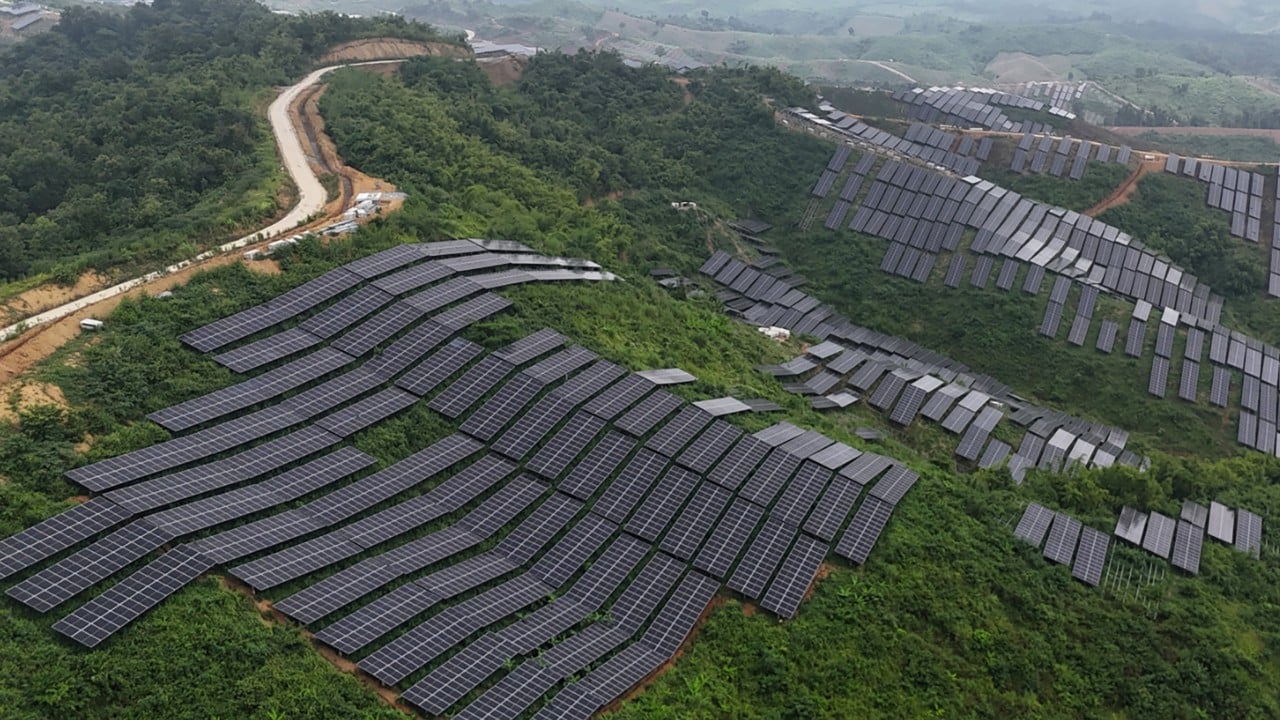
While the rest of the world watches the sky for the smoke of burning refineries, a massive stretch of silicon and glass is soaking up the sun in the Lao panhandle. This isn't just another infrastructure project. It is a lifeline thrown across a volatile planet.
The global energy market is a nervous creature. It flinches at a headline. It screams at a drone strike. When Iran and the West trade blows, the shockwaves travel through thousands of miles of copper and crude, eventually hitting the pockets of people who can least afford the surge. Most nations are tethered to this chaos. They are addicts to a fuel source that requires a peaceful world to remain affordable.
Laos decided to stop waiting for peace.
The Silicon Shield
The Nam Theun 2 Solar Project, backed by Chinese capital and engineering, represents a shift in how we conceive of national security. Usually, when we talk about "power," we talk about tanks or currency reserves. We should be talking about photons.
Consider the mechanics of a traditional power grid during a global conflict. Coal and gas are heavy. They require shipping lanes, pipelines, and stable borders. They are physical liabilities. If a refinery in Abadan goes offline, a thermal plant in Vientiane starts bleeding money. The costs are passed down. The lights dim.
Solar energy is different. It is localized. It is silent. Once the panels are bolted to the earth, the "fuel" is delivered for free from a star 93 million miles away. No blockade can stop the sun. No geopolitical spat can raise the price of a sunrise.
By integrating massive floating and land-based solar arrays with its existing hydroelectric dams, Laos is creating a "battery" out of its own geography. When the sun is high, the panels take the load. When the clouds gather or night falls, the dams release their stored potential. This synergy—a word often abused by consultants but practiced here with surgical precision—creates a buffer against a world on fire.
The Invisible Stakes of the Middle East
To understand why a solar farm in Southeast Asia matters, we have to look at the map of pain. The current energy shock isn't just about the price of a gallon of gasoline. It is about the "energy poverty" that follows when developing nations are forced to bid against wealthy European giants for a shrinking supply of liquefied natural gas.
Imagine a bidding war where the loser’s schools go dark. That is the reality of the current Iranian crisis.
When the conflict spiked, the price of carbon-based fuels didn't just rise; it became unpredictable. Unpredictability is the death of industry. A factory cannot plan a three-year expansion if it doesn't know the cost of keeping the machines running next month.
China’s Belt and Road Initiative is often framed through the lens of debt traps or geopolitical chess. While those debates have their place in the hallowed halls of think tanks, they feel abstract on the ground. In the provinces of Laos, the "influence" of Beijing isn't felt in a manifesto. It’s felt in the absence of a blackout.
The project wasn't built out of pure altruism. China needs a stable, electrified neighborhood to fuel its own supply chains. But for the person living in the shadow of the Bolaven Plateau, the motivation matters less than the result. They are now insulated from a war they didn't start and cannot influence.
The Myth of the "Clean" Transition
We often hear the shift to renewables described as an environmental crusade. It is framed as a way to "save the planet." This is a sanitized, comfortable narrative that ignores the cold, hard reality of survival.
The transition is about sovereignty.
[Image of a hybrid solar-hydro power plant]
Every megawatt generated by the Nam Theun project is a megawatt that doesn't have to be bought from a world that is currently tearing itself apart. It is a divorce from the volatility of the fossil fuel era.
The engineering of these sites is a marvel of adaptation. Floating solar panels cover the surfaces of reservoir lakes. This serves two purposes. First, it saves land that could be used for agriculture. Second, the water cools the panels, making them more efficient, while the panels reduce evaporation from the reservoir. It is a closed loop of efficiency that makes the old way of burning rocks look prehistoric.
But there is a cost. The invisible stakes include a deepening dependence on Chinese technology and the environmental footprint of mining the rare earth minerals required for the panels. We must be honest: there is no such thing as "free" energy. We are simply trading one kind of dependency for another.
The difference is that the new dependency is built on infrastructure, not on a consumable liquid. Once a solar farm is built, the "owner" of the fuel source cannot turn off the tap. The sun doesn't have a board of directors. It doesn't take sides in a holy war.
The Human Heartbeat of the Grid
Let’s return to the hypothetical, yet very real, families living in the rural corridors of the Mekong.
In a world governed by oil, their lives are dictated by men in suits thousands of miles away. Their ability to cook, to learn, and to work is a secondary concern to the "global supply chain." They are the first to lose when the price per barrel climbs.
By pivoting toward a solar-hydro hybrid model, Laos is effectively opting out of that hierarchy.
The "energy shock" from the Iran war is a wake-up call for the entire global south. It is a demonstration that the old guard of energy—the tankers, the pipelines, the refineries—is a fragile architecture. It is a glass house in a neighborhood where everyone is throwing stones.
Critics will point to the debt. They will talk about the lopsided nature of the contracts between Vientiane and Beijing. These are valid concerns. Debt can be a shackle. But poverty is a cage. When you are standing in the dark, you don't care who provided the lamp; you care that you can see.
A New Geography of Power
The map of the world is being redrawn. It is no longer just about who has the oil under their sand. It is about who has the silicon, the lithium, and the foresight to capture the energy that falls from the sky every day.
The Nam Theun solar project is a signal. It tells us that the era of the "energy hostage" is coming to an end for those brave enough to innovate. The war in the Middle East may continue to simmer or explode, sending ripples of anxiety through the boardrooms of New York and Tokyo. But in the mountains of Laos, the ripples are smaller.
The logic is simple. You cannot sanction the wind. You cannot blockade a ray of light.
As the sun sets over the Mekong, the panels begin to cool, and the hydro-turbines take over. The transition is seamless. The light in Somchai’s home doesn't even flicker. He sits down to dinner, unaware that he has just won a victory in a war he didn't even know he was fighting.
The world is changing. The old powers are clutching their oil barrels like blankets in a storm. Meanwhile, in the quiet corners of the earth, the future is being bolted to the ground, one panel at a time, indifferent to the chaos of the old world.
The true power isn't in the flame. It's in the ability to stay bright when the flame goes out.