The rain in Manila doesn't just fall. It suffocates. It pools in the narrow, labyrinthine alleys of the city’s poorest districts, washing over cracked asphalt where, not too many years ago, the gutters ran thick with something far darker than rainwater.
For nearly a decade, a heavy, enforced silence hung over these streets. To speak too loudly was to invite a knock on the door. To ask questions about the body found wrapped in packing tape by the docks was to risk becoming the next headline. People learned to look at the pavement. They learned to sweep the blood away quickly, before the morning sun could bake it into the concrete.
But silence has a shelf life.
Deep within the stone walls of the church, far from the glare of television cameras, a ledger is being kept. Every line item is a life cut short. Every page is an indictment. And now, a retired international judge and a defiant bishop are turning the pages, determined to read the names aloud.
The Architect of Fear
To understand the weight of what is happening right now in the Philippines, you have to understand the architecture of the fear that preceded it. Between 2016 and 2022, the country underwent a violent transformation under the presidency of Rodrigo Duterte. The mandate was simple, brutal, and broadcast daily on national television: eradicate the drug trade by any means necessary.
What followed was a campaign that turned neighborhoods into hunting grounds.
The official government tally admits to over 6,000 deaths during these police operations. Human rights organizations smile bitterly at that number. They place the real body count closer to 30,000. Consider that discrepancy for a moment. It means tens of thousands of human beings vanished into a statistics gap, their deaths unrecorded, uninvestigated, and unavenged.
They were tricycle drivers. They were teenage students. They were fathers who went out to buy cigarettes and never came home.
The legal system did not protect them. The courts looked away. The international community issued stern statements that evaporated the moment they hit the tropical air. For years, the state apparatus was an impenetrable fortress of impunity.
Then, the fortress began to crack.
The Unlikely Alliance
True justice rarely arrives with a trumpet blast. More often, it begins with the scratching of a pen in a quiet room.
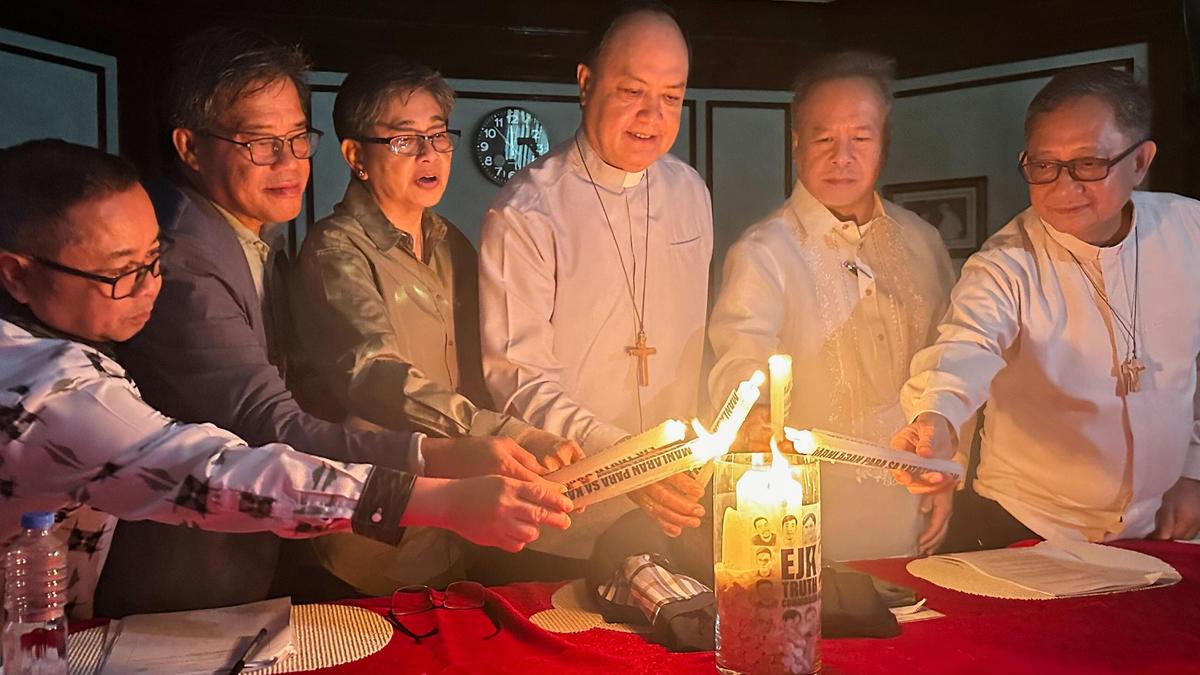
A new, independent inquiry has emerged from the ashes of that terrifying era, led by two figures who could not be more different in background, yet are completely unified in purpose.
The first is Bishop Pablo Virgilio David, the president of the Catholic Bishops' Conference of the Philippines. For years, his diocese in Kalookan was ground zero for the killings. He did not watch from a distance. He walked the alleys. He comforted the widows. When the police told the public that the dead were all criminals who fought back, the bishop knew the truth. He saw the bullet holes in the backs of heads. He saw the poverty left behind.
The second is Raul Pangalangan. He is a man of the law, a former judge of the International Criminal Court (ICC) at The Hague. He understands the cold, meticulous machinery of global justice. He knows how to build an evidentiary chain that can withstand the fiercest political storms.
Together, they represent a convergence of conscience and codified law.
This new inquiry is not a government initiative. It cannot issue arrest warrants, nor can it send police units to drag perpetrators from their beds. But to dismiss it as symbolic is to fundamentally misunderstand how power works. By gathering forensic data, documenting eyewitness accounts, and compiling a bulletproof archive of the atrocities, this panel is doing something the current administration has desperately tried to avoid: they are preserving the truth for the day the scales finally tip.
The Geometry of a Crime Scene
Imagine a mother. We will call her Maria—not because her real name matters less, but because her real name could still cost her her life.
Hypothetically, it is 2018. Maria is sitting in a plywood shack, listening to the hum of a cheap electric fan. Her twenty-year-old son, a boy who spent his afternoons basketball-rebounding for neighborhood kids, is asleep on a mat beside her.
The door doesn't knock. It breaks.
Men in civilian clothes, faces hidden by helmets and masks, drag the boy into the street. Maria screams, reaching for him, but a gun barrel pressed against her forehead stops her breath. She hears two shots. The men leave on unmarked motorcycles. When she crawls outside, her son is lying in the mud. A rusty caliber pistol has been placed near his dead hand. The police report the next morning will use the exact word used in thousands of other reports: Nanlaban. He fought back.
This is the narrative formula that sustained a drug war for six years.
What the new inquiry seeks to do is deconstruct this geometry of state-sanctioned violence. Judge Pangalangan and Bishop David are treating these accounts not as isolated tragedies, but as systemic patterns. When fifty different families across different cities describe the exact same modus operandi—unmarked vehicles, severed security camera wires, planted weapons, and immediate police arrival—the argument of "isolated incidents" falls apart. It becomes a machine.
The Geopolitical Chessboard
The stakes extend far beyond the borders of Manila.
The current president, Ferdinand Marcos Jr., walked into office on a alliance with the Duterte family. But political alliances in the Philippines are as volatile as the weather. As the relationship between the current administration and the Duterte clan fractures, the shadow of international accountability grows larger.
The ICC has been investigating the drug war for years, a move that prompted the Philippines to withdraw its membership from the court. Marcos Jr. has repeatedly stated that his government will not cooperate with the ICC, claiming the domestic judicial system is perfectly capable of handling any investigations.
But the domestic system has produced only a handful of convictions for thousands of deaths. It is a slow, grinding wheel that often grinds the victims instead of the perpetrators.
This is where the new inquiry becomes dangerous to those in power. By operating independently of the state, it creates an uncorrupted pipeline of evidence. It bypasses the local prosecutors who are too terrified to file charges. It bypasses the police internal affairs units that exist to protect their own. If the ICC ever manages to execute its mandates, the roadmap for the prosecution will likely have been drawn by this very panel.
The Sound of Retribution
There is a distinct kind of courage required to do this work. In the Philippines, human rights advocates are routinely "red-tagged"—labeled as communist insurgents or terrorists, a designation that serves as an open invitation for assassination.
Yet, the inquiry moves forward.
The strategy is clear: break the monopoly on information. For years, the state held the only microphone. They dictated who was a victim and who was a menace. By shifting the focus back to the human element, the inquiry is stripping away the political rhetoric that justified the slaughter. They are forcing a nation to look into the mirror.
It is a grueling process. Witnesses must be hidden. Safe houses must be secured. Digital records must be encrypted and mirrored on servers across the globe to prevent them from vanishing in a convenient police raid or a sudden office fire.
But the momentum is shifting. The fear that once paralyzed the slums is transforming into a quiet, burning resentment.
The Weight of the Unseen
We often view history through the lens of massive geopolitical shifts, election cycles, and macroeconomics. We forget that history is actually experienced in the small, dark corners of human existence. It is experienced in the empty chair at the dinner table. It is experienced in the permanent state of anxiety that causes a widow to jump every time a motorcycle slows down outside her home.
The work being done by a bishop and an ex-ICC judge is an attempt to measure that weight.
They are building a repository of grief that double-functions as a legal weapon. They are ensuring that when the political winds inevitably change, the excuses of "I was just following orders" or "It was necessary for public safety" will hold no water in a court of law.
The rain continues to fall over Manila, washing the streets clean of the day's grime. But some stains do not wash away. They wait under the surface, visible to anyone willing to look closely enough, until someone finally comes along with the courage to scrub them clean.
The ledger is open. The names are being read. The silence is over.