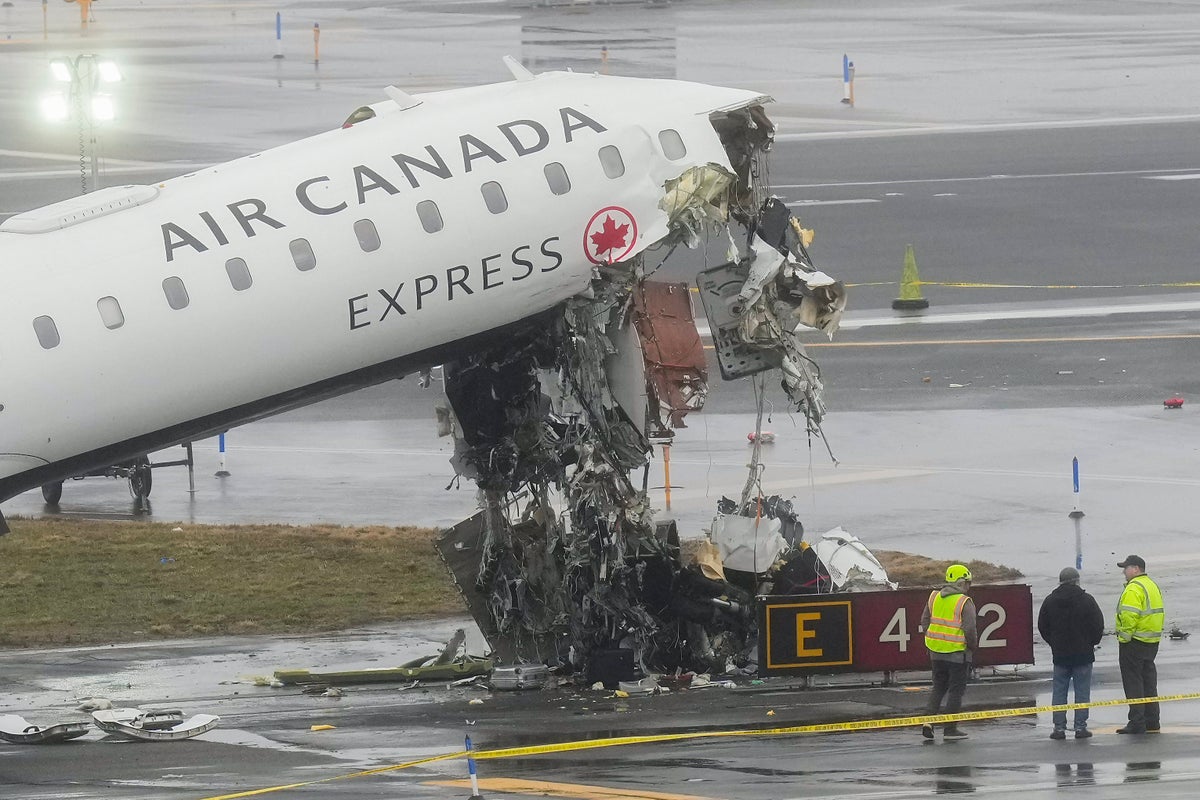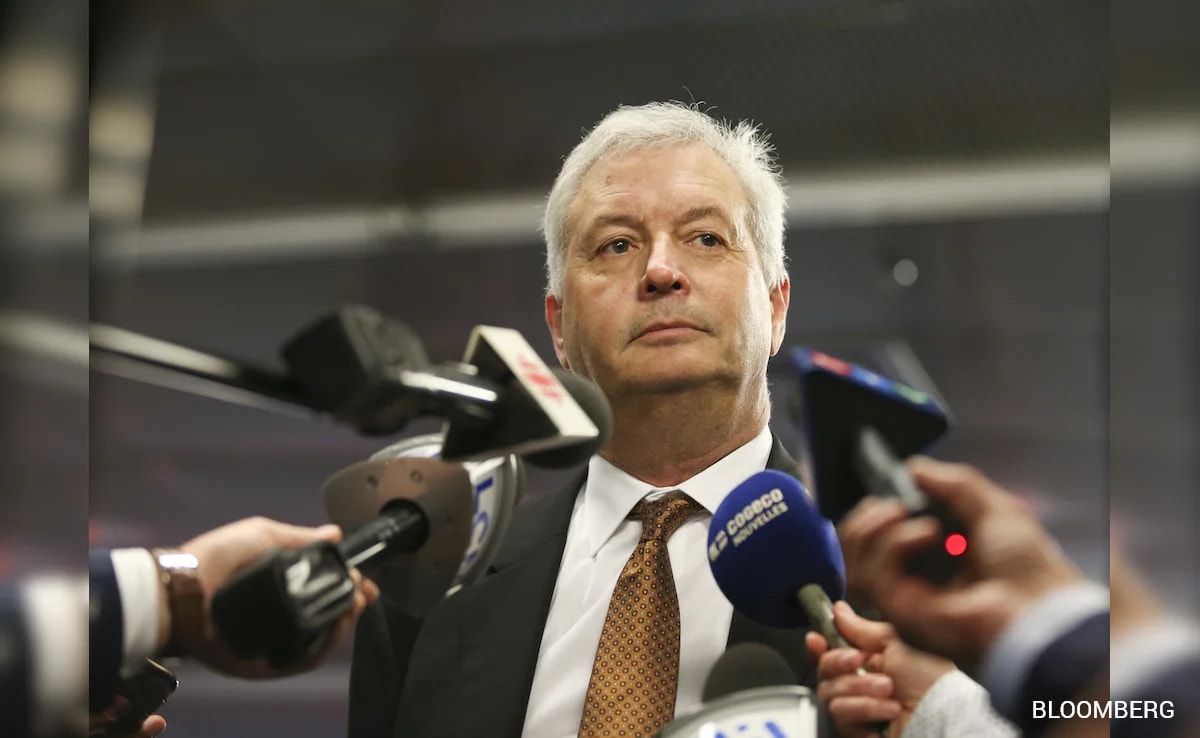
Air Canada CEO Michael Rousseau is being sacrificed on the altar of optics. The mob wants his head because he didn't speak enough French in a video following a tragic aircraft hull loss. The pundits are screaming about "cultural insensitivity" and "national identity."
They are dead wrong.
Focusing on the linguistic proficiency of a C-suite executive during a safety crisis is more than just a distraction. It is a fundamental misunderstanding of how complex systems fail and how they are repaired. If you think a CEO’s bilingualism—or lack thereof—has any bearing on the structural integrity of a Boeing 787 or the training protocols of a flight crew, you aren't just missing the point. You are actively making the skies less safe by prioritizing political theater over technical accountability.
The Myth of the "Empathetic Translator"
The common narrative suggests that if Rousseau had delivered his address in perfect, Parisian French, the "healing process" for the victims' families and the Canadian public would be well underway. This is a comforting lie.
I have spent twenty years in the guts of corporate turnarounds and crisis management. I have seen leaders who could charm a room in five languages while their balance sheets bled out and their safety cultures rotted from the inside. Language is a tool for communication, but in the hands of a PR department, it is a tool for obfuscation.
When a plane goes down, the public deserves data, not dialect. They deserve a CEO who is obsessed with the findings of the Transportation Safety Board (TSB), not one who is spending three hours a day with a phonetic tutor to appease the Quebec City news cycle. By demanding Rousseau quit over a video, the critics are signaling that they care more about how a message is delivered than whether the message is actually true.
Safety Doesn't Speak French (or English)
In aviation, there is a concept known as "Standard Phraseology." It exists because human language is messy, ambiguous, and prone to error. Pilots and Air Traffic Control use a highly restricted, technical subset of English not out of cultural imperialism, but because precision saves lives.
When we move the conversation from "Why did the engine flame out?" to "Why was the press release unilingual?", we move from the domain of objective safety to the domain of subjective identity politics.
Consider the "Swiss Cheese Model" of accident causation, popularized by James Reason.
$$Accident = \sum (Latent Errors + Active Failures) - (Defenses)$$
Nowhere in that equation does "CEO’s second language proficiency" appear as a defense. In fact, forcing a CEO to focus on linguistic optics during a post-crash investigation creates a "latent error." It diverts executive bandwidth away from the brutal, necessary internal audits of maintenance schedules and pilot fatigue.
The False Correlation of Culture and Compliance
The competitor’s take argues that a leader who ignores the language of the people is a leader who ignores the safety of the people. This is a logical fallacy—the "Appeal to Pathos" disguised as a management critique.
Air Canada’s problems aren't linguistic. They are operational. Over the last decade, the airline has faced mounting pressure to cut costs in the face of skyrocketing fuel prices and aggressive low-cost carrier competition. That is where the rot starts. It starts in the hangar, not the boardroom’s teleprompter.
If you want to dismantle Air Canada, do it because of their abysmal "on-time" performance or their history of predatory pricing. Do not do it because a guy from Ontario has a thick accent. When you conflate cultural grievance with corporate negligence, you give the corporation an easy out. They can fire the "insensitive" CEO, hire a bilingual replacement, and change absolutely nothing about the underlying mechanics that led to the crash.
The Cost of the "Optics" Hire
What happens next is predictable. The board will hunt for a "unifying" figure. They will prioritize someone who can navigate a Montreal press conference with grace.
I’ve seen this play out in the energy sector and the rail industry. When a company hires for optics following a disaster, they almost always sacrifice technical depth. You end up with a "communicator" at the helm during a time when you desperately need an "engineer."
The "Lazy Consensus" says: "A CEO must reflect the values of the nation."
The "Brutal Reality" says: "A CEO must ensure the planes don't hit the ground."
If those two goals conflict—and in the high-pressure environment of a post-crash investigation, they always do—the latter must win every single time.
Dismantling the "People Also Ask" Delusions
People are asking: Can a CEO be effective if they don't speak the language of their customers? The answer is: Yes, and it happens every day. Global shipping magnates, tech titans, and pharmaceutical heads lead organizations that span 190 countries. They don't speak 190 languages. They hire competent local leads. The expectation that a Canadian CEO must be a linguistic chameleon is a uniquely Canadian neurosis that provides zero value to a passenger sitting in 22B.
People are also asking: Is this a sign of a toxic corporate culture?
It’s a sign of a functional corporate culture that prioritizes specialized skill sets over generalist "relatability." If Rousseau is an expert at capital allocation and logistical oversight, that is exactly what Air Canada needs during a recovery. If he’s bad at those things, fire him. But don't fire him because he needed subtitles.
The Dangerous Precedent of Linguistic Resignations
If we accept that a CEO must resign because of a language gaffe during a crisis, we are setting a trap for every future leader. We are telling the industry that the "Performance of Care" is more important than the "Provision of Safety."
Imagine a scenario where a brilliant, safety-obsessed COO is passed over for the top job because their French is "only functional," in favor of a charismatic bilingual executive with a track record of cutting corners. You are literally voting for a higher probability of another crash in exchange for a more pleasant evening news segment.
The "heat" being felt by Air Canada right now is political, not professional. Politicians in Ottawa and Quebec City are using this tragedy to score points with their base. They are weaponizing a plane crash to settle old scores regarding the Official Languages Act. It is ghoulish. It is opportunistic. And the media is falling for it because "CEO is a jerk" is a much easier story to write than "A complex failure of the bleed-air system."
Stop Fixing the Wrong Problem
The competitor article wants you to feel outraged. They want you to demand a leader who "understands the fabric of Canada."
I want you to be terrified that the people in charge of the airline are currently spending their meetings discussing "Language Training Seminars" instead of "Metal Fatigue."
Every hour the Air Canada board spends debating Rousseau’s future is an hour they aren't spending interrogating their VP of Flight Operations. Every dollar spent on a linguistic PR firm to "rebrand" the CEO is a dollar taken away from the safety margins that keep 300-ton machines in the air.
You’re being sold a distraction. The linguistic "scandal" is a smoke screen for the technical and financial realities of running a legacy carrier in a post-pandemic world.
If you want a CEO who speaks your language, go to a poetry reading. If you want to land safely in Vancouver or Montreal, stop caring about the CEO's accent and start caring about his maintenance budget.
The mob doesn't want safety. It wants a sacrifice. And when you sacrifice the wrong person for the wrong reasons, you don't fix the system. You just wait for the next alarm to sound.
Stop asking if the CEO can speak French. Start asking if the CEO can speak Truth to the board about why that plane went down.
Everything else is just noise.