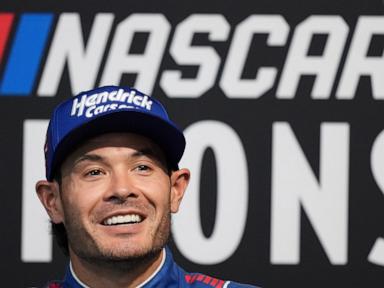
Sixteen years is an eternity in stock car racing. Think about how much the garage has changed since Jimmie Johnson rattled off his fifth straight title in 2010. We've gone through three different car generations, multiple playoff format overhauls, and a massive influx of young talent that supposedly made dynasties impossible. Yet here we are. Kyle Larson is the first back-to-back NASCAR Cup Series champion since 2010, and honestly, the rest of the garage should be terrified.
People love to say the modern elimination playoff format is a lottery. They're not entirely wrong. One blown tire in the Round of 8 or a bad pit stop during the Championship 4 race can erase ten months of dominance. That's exactly why nobody had repeated since Johnson closed out his historic run sixteen years ago. The system was practically engineered to prevent repeat winners and manufacture fresh drama every November. Meanwhile, you can explore similar events here: What 25 Seasons of Showing Up Taught One Minnesota Vikings Superfan About Real Loyalty.
Larson didn't just beat the field. He broke the math of the modern NASCAR playoffs.
Why Nobody Repeated in the Playoff Era Until Now
To understand how massive this achievement is, you have to look at the graveyard of dominant seasons since 2010. Kevin Harvick won nine races in 2020 and didn't even make the Championship 4. Denny Hamlin has put together multiple Hall of Fame campaigns without hoisting the big trophy once. Kyle Busch won two titles, sure, but they were separated by four years (2015 and 2019). Joey Logano alternated even-numbered years like clockwork without ever stringing two together. To see the complete picture, check out the excellent report by FOX Sports.
The elimination format punishes mistakes way harder than it rewards consistency. Under the old 36-race season-long points system, or even the original 10-race Chase format that Johnson mastered with crew chief Chad Knaus, a bad afternoon in October meant you lost twenty points. You could claw that back over the next month. Today, a bad afternoon in Martinsville sends you home packing before the finale even starts.
Then there's the Next Gen car. Introduced in 2022, this spec-heavy machine was specifically built to level the playing field. Teams buy their parts from single-source suppliers. Aero tolerances are policed to the millimeter. In theory, no single driver or organization is supposed to hold an insurmountable speed advantage two years in a row.
Larson and the No. 5 Hendrick Motorsports team looked at that parity and basically ignored it.
How Kyle Larson and Cliff Daniels Outsmarted the Next Gen Car
If you watch Larson on Sundays, the raw car control jumps off the screen immediately. He runs inches from the concrete wall at tracks like Homestead-Miami, Darlington, and Bristol where other drivers lift off the throttle just to survive. That dirt-track background—running sprint cars, midgets, and late models on Tuesday and Wednesday nights across the country—gives him an instinctive feel for yaw angle and tire slip that you simply can't teach in a simulator.
Raw speed alone doesn't win consecutive Cup titles anymore. Plenty of fast drivers flame out in the playoffs because they overdrive the entry into Turn 1 and end up in the SAFER barrier.
The real secret sauce here is the pairing of Larson and crew chief Cliff Daniels. Watch how they manage a race weekend when they don't have a top-five car. Four or five years ago, Larson might have crashed trying to wrestle an eighth-place car onto the podium. Now, Daniels keeps him grounded on the radio, adjusts the air pressures and track bar incrementally across three stages, and turns mediocre afternoons into quiet top-six finishes.
Here's what separates the No. 5 team from the rest of the Hendrick Motorsports stable and rivals like Joe Gibbs Racing or Team Penske:
- Unmatched restart aggression: Larson routinely makes up three or four spots on the opening two laps after a caution, using unconventional lines on the apron or against the fence before the field settles into single file.
- Pit road execution: Hendrick's over-the-wall crew for the No. 5 consistently shaves tenths of a second off four-tire stops during high-leverage playoff moments, giving Larson clean air when track position matters most.
- Adaptability across track types: Unlike specialists who rely on road courses or drafting tracks to pad their playoff points, Larson is a legitimate threat to win on short tracks, intermediates, superspeedways, and road courses alike.
Most teams have a clear weakness on the schedule. Maybe their short-track package lacks forward drive off the corner, or their road-course braking zones eat up the front rotors. The No. 5 group doesn't have an obvious Achilles' heel. When you carry a massive cushion of playoff points into September because you're winning stages and races all spring and summer, a single bad break in the postseason stops being fatal.
The Jimmie Johnson Comparison Is Finally Fair
For years, NASCAR media tried to crown the "next Jimmie Johnson" every time a driver won three races in a month. It always felt forced. Johnson and Knaus won five consecutive championships from 2006 through 2010 by treating the final ten weeks of the season like a clinical chess match. They peaked in the autumn while everyone else panicked.
Larson's style couldn't look more different on the racetrack. Johnson was smooth, surgical, and almost invisible until he suddenly appeared in your rearview mirror with twenty laps to go. Larson is visibly hanging the rear end out, sawing at the steering wheel, and living right on the ragged edge of adhesion.
Yet the results are starting to rhyme. Both drivers drove for Rick Hendrick. Both benefited from elite organizational engineering in Concord, North Carolina. And both proved that mental toughness under elimination pressure matters way more than pure horsepower.
When Johnson won his fifth straight in 2010 at Homestead, NASCAR actually tweaked the points system the very next year—moving to the simplified 43-to-1 scoring model—partly because fans were exhausted by seeing the No. 48 Lowe's Chevrolet dominate every single fall. Then came the knockout playoff format in 2014, designed to inject chaos into the championship hunt.
Larson winning back-to-back titles proves that true generational talent eventually solves any rulebook you put in front of it. You can standardize the chassis, limit wind tunnel hours, and reset the points four times in ten weeks. The best driver in the best equipment will still find a way to rise to the top when the money is on the line.
What Most Fans Miss About Larson's Dirt Racing Schedule
Whenever Larson hits a rough patch during the summer stretch of the Cup season, the same tired debate pops up on sports talk radio and social media. Critics argue he's spread too thin. They claim running High Limit Racing sprint car events in the middle of the week distracts him from Cup preparation or exposes him to unnecessary injury risk.
Those critics have it completely backward.
The dirt racing isn't a distraction from his NASCAR day job. It's the training ground that keeps his reflexes sharper than anyone else in the Cup garage. While other drivers spend their Tuesdays staring at telemetry traces on a laptop or running sterile laps in an iRacing rig, Larson is sliding a 900-horsepower winged sprint car through heavy traffic on a quarter-mile bullring with zero power steering and no margin for error.
By the time he straps into his Chevrolet on Saturday morning for Cup practice, everything feels like it's moving in slow motion. His eyes are already calibrated for high-speed chaos. Instead of burning him out, those midweek races keep him loose, happy, and mentally fresh through a grueling 38-week NASCAR calendar that breaks lesser competitors by August.
Rick Hendrick realized early on that putting Larson in a cage would ruin what makes him special. Letting him race on dirt whenever the schedule allows was one of the smartest personnel decisions in modern motorsports history.
What This Means for the Rest of the Cup Garage
If you're a rival crew chief or team owner heading into next season, you have a massive problem on your hands. It's one thing to lose a championship because a rival got hot for three weeks in October. It's another thing entirely to watch the same team solve the Next Gen puzzle two years straight while your engineers are still trying to figure out why your car loses grip in dirty air.
Rival organizations like Joe Gibbs Racing, Team Penske, and 23XI Racing can't just hope for better luck next fall. Hope isn't a strategy when the No. 5 team is banking playoff points from February onward. Competitors have to rethink how they approach the regular season entirely. Playing it safe to point your way into the postseason isn't enough anymore—you need stage wins, regular-season trophies, and maximum bonus points just to stay within striking distance of Larson once the elimination rounds begin.
For fans, the best way to appreciate what's happening right now is to pay closer attention to the details during the middle of races, not just the final ten laps. Watch Larson's throttle traces and line choices during long green-flag runs when the tires fall off by two seconds a lap. Track how Cliff Daniels manages pit road strategy when cautions fall awkwardly near the end of Stage 2. You're watching a rare stretch of historical dominance unfold in an era specifically built to stop it from ever happening again.