Everyone is applauding the microphone while ignoring the vault.
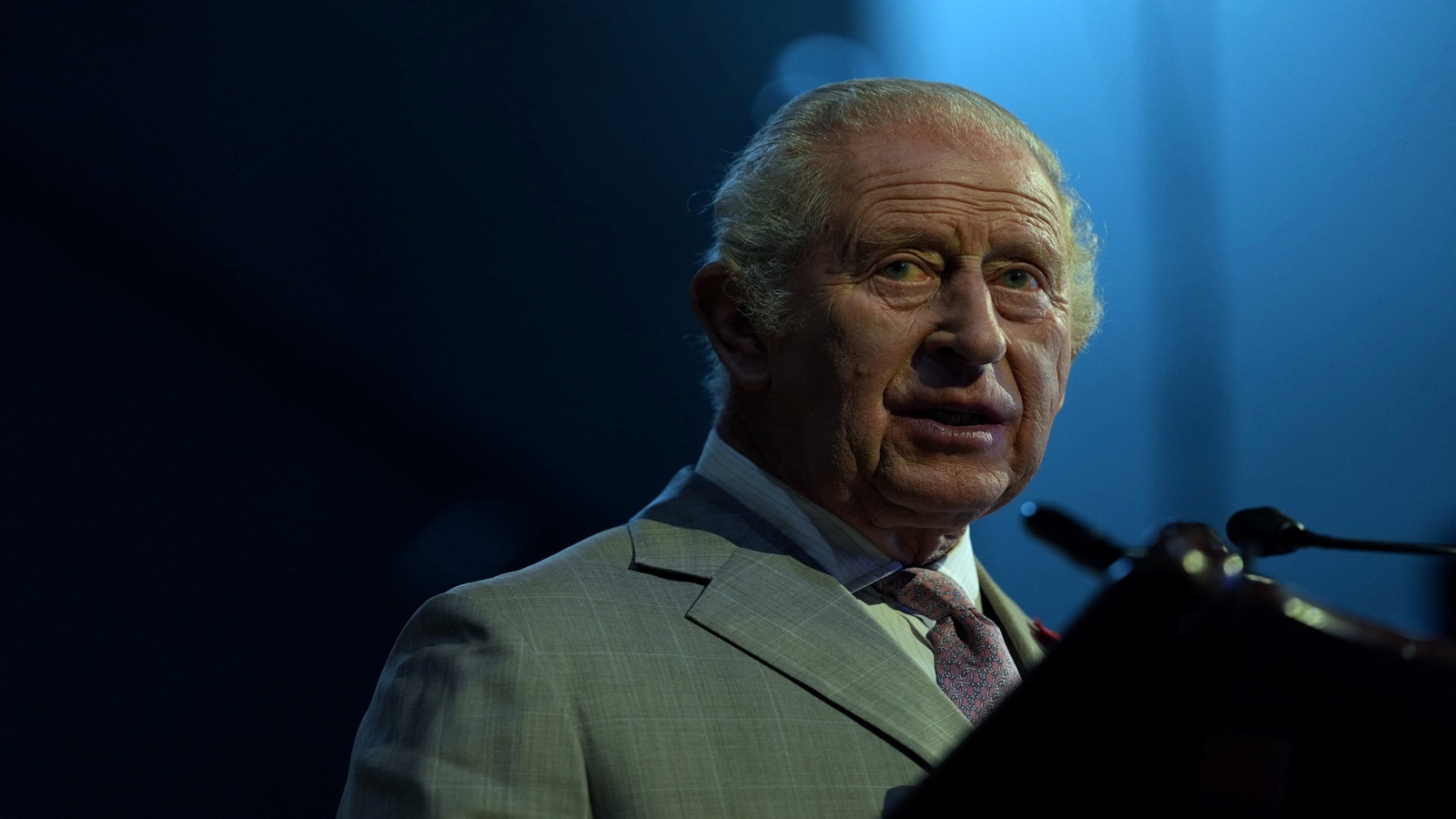
When King Charles III stood before the Commonwealth Heads of Government Meeting in Samoa and described the transatlantic slave trade as a "shameful chapter," the mainstream press did exactly what Buckingham Palace knew they would do. They ran the quote. They debated whether the words went far enough. They treated a carefully scripted diplomatic sigh as a historic moral reckoning.
It is a masterclass in institutional misdirection. And the media fell for it completely.
If you analyze how legacy institutions survive reputational crises, the pattern is obvious. You yield an inch of rhetoric to protect a mile of capital. By framing centuries of systematic human trafficking and wealth extraction as a "chapter"—something closed, literary, and safely relegated to the past—the British Crown avoids the only conversation that actually threatens its balance sheet.
The lazy consensus in international journalism right now is that the Commonwealth reparations debate is a tug-of-war between an apology and a check. Activists demand contrition; the British government refuses to open the treasury; the King splits the difference with empathetic sorrow.
That framing misses the real architecture of the dispute. The fight is not about getting a monarch to say "I am sorry." Apologies cost nothing, change nothing, and transfer zero equity. The real battle is over unjust enrichment—a strict legal and financial doctrine that asks a simple question: Where is the money now, and who is still collecting the dividends?
The Semantic Trap of the "Shameful Chapter"
Words in royal diplomacy are never accidental. Every syllable delivered at a summit like CHOGM is stress-tested by Downing Street advisors, Foreign Office lawyers, and Palace communications strategists before it ever reaches a teleprompter.
Notice what King Charles actually said. He acknowledged that the painful aspects of the past continue to resonate. He urged leaders to find the right language to understand that history. He stopped dead short of accepting institutional liability.
Why? Because in international law, an official state apology carries legal weight. Legal scholars who advise the CARICOM Reparations Commission, including Sir Hilary Beckles, have spent decades building a framework based on documented historical accounting, not emotional pleas. Once a sovereign state formally apologizes for a crime against humanity, it establishes a precedent of culpability. That culpability opens the door to litigation, asset tracing, and binding arbitration.
Expressing "sorrow" or calling an era a "shameful chapter" does the exact opposite. It achieves three strategic objectives for the British establishment simultaneously:
- It creates the illusion of moral progress. Headlines worldwide broadcast the King’s empathy, neutralizing public pressure without altering a single policy.
- It keeps the conversation stuck in the 18th century. A "chapter" implies the book has moved on. It masks the fact that the economic structures built during that era still dictate global credit ratings, trade imbalances, and sovereign debt today.
- It indemnifies the Crown. Sorrow is a personal emotion. Liability is an institutional obligation. Charles offered his feelings while shielding the institution.
I have watched corporate boards and sovereign wealth entities pull this exact maneuver for years when facing environmental or human rights liabilities. They hire expensive crisis communicators to craft statements of profound regret. They fund a modest historical research grant—just as the Palace did with its cooperation on academic studies into the monarchy's ties to the Royal African Company. Meanwhile, the core endowment remains untouched, ring-fenced, and compounding.
Follow the Ledger, Not the Speeches
To understand why the media's obsession with royal rhetoric is a dead end, look at the actual financial mechanics of British abolition and its aftermath.
Most people think Britain ended slavery out of pure moral awakening and paid a heavy price to do so. That is the sanitized textbook version. The reality sits in the archives of the UK Treasury.
When Parliament passed the Slavery Abolition Act of 1833, it did not pay a single penny to the people who had been enslaved. Instead, the British government borrowed £20 million—roughly 40 percent of the nation's entire annual budget at the time—to compensate the slave owners for the loss of their human property.
Here is the detail that turns a history lesson into a modern financial scandal: British taxpayers did not finish paying off that debt until 2015.
For 182 years, the descendants of enslaved people living and working in the United Kingdom paid taxes that went directly toward servicing the debt used to compensate their ancestors' captors. That money flowed into the British banking system, real estate portfolios, insurance conglomerates, and aristocratic estates. It was reinvested into railroads, factories, and sovereign bonds.
When researchers at University College London compiled the Legacies of British Slave-Ownership database, they did not find a dusty relic. They mapped the foundation of modern British capitalism. Prominent banks, major insurers, and prominent political families built their initial capital buffers on those 1833 payouts.
And what about the Crown itself?
King William III was heavily invested in the Royal African Company, which shipped more enslaved Africans to the Americas than any other single institution in the history of the transatlantic trade. Later monarchs, including George III and George IV, actively resisted abolitionist legislation to protect the revenues flowing from Caribbean plantations into the royal coffers.
Today, the British monarchy sits atop the Crown Estate and the Duchies of Lancaster and Cornwall—portfolios worth billions of pounds, generating hundreds of millions in annual revenue. Trying to separate the modern wealth of the British establishment from the capital accumulated between 1660 and 1833 is like trying to take the eggs out of a baked cake. The compounding interest of two centuries cannot be isolated by a five-minute speech in Samoa.
Dismantling the Flawed Questions Around Reparations
Whenever the topic of Commonwealth reparations hits the news cycle, public debate immediately collapses into the same three predictable, bad-faith questions. If you want to understand what is actually happening behind closed doors in diplomatic circles, you have to strip these questions down to their flawed premises.
"How can you hold people alive today responsible for crimes committed 200 years ago?"
This is the most common objection, and it relies on a complete misunderstanding of how institutions work.
Nobody is asking a random plumber in Manchester or a teacher in Birmingham to pay a personal fine for the 18th century. Reparations claims are directed at perpetual institutions—the British state, the Crown, and surviving corporations—not individual citizens.
Think about how corporate and sovereign continuity operates in every other context. If a multinational bank commits fraud in 1995 and the executives retire, the bank does not get to keep the stolen money in 2026 just because the current staff wasn't there. When a country takes out a 100-year sovereign bond, the citizens born fifty years later still inherit the obligation to honor it.
Institutions are legal persons that never die. They inherit the assets, the treaties, the land titles, and the prestige of their predecessors. You cannot claim the uninterrupted continuity of a thousand-year-old monarchy and a global financial empire while simultaneously claiming amnesia whenever the historical liabilities come due.
"Won't reparations just mean cutting giant, unmanageable checks to millions of individuals?"
Only people who have never read a single serious reparations proposal think this is about individual cash payouts.
Look at the CARICOM Ten-Point Plan for Reparatory Justice. It is the gold standard blueprint drafted by Caribbean governments, and it does not ask for personal checks. It asks for structural capital transfers designed to fix measurable developmental deficits left behind by colonial extraction:
- Sovereign debt cancellation: Many Caribbean nations are trapped in crippling debt cycles caused by having to borrow on predatory international markets to build basic infrastructure—schools, hospitals, roads—that Britain never built during three centuries of rule.
- Public health and education investment: The Caribbean suffers from some of the highest rates of hypertension and type 2 diabetes in the world, conditions directly linked by epidemiologists to centuries of generational trauma and colonial-era dietary deprivation.
- Technology transfer and climate resilience: Small island developing states are bearing the brunt of climate change caused by the Industrial Revolution—a revolution financed directly by Caribbean plantation profits.
Framing reparations as "handouts" is a deliberate PR tactic designed to make a sophisticated economic restructuring plan sound absurd to Western voters.
"Didn't other empires and African kingdoms also participate in slavery?"
Yes. They did. And that fact is entirely irrelevant to a bilateral legal claim against the British Crown.
Imagine a scenario where three different companies dump toxic waste into a town's water supply, poisoning the residents. If the townspeople sue Company A—the largest polluter, which kept meticulous accounting records of every barrel it dumped and is currently sitting on $50 billion in cash—Company A's lawyers cannot walk into court and say, "Your Honor, Company B and Company C also polluted the river, so we owe nothing."
Comparative moralizing is not a legal defense. Britain was not a passive bystander to a global norm; it industrialized the transatlantic slave trade, codified racial chattel slavery into law, profited enormously from it, and systematically under-developed its colonies upon exit. The existence of other historical wrongs does not erase a documented balance sheet.
The Geopolitical Reality Britain Is Trying to Ignore
Here is what the mainstream coverage of the Samoa summit completely missed: Britain no longer holds the leverage in this room.
For decades, the Commonwealth functioned as a soft-power club where London set the agenda, dispensed modest aid, and enjoyed the diplomatic prestige of presiding over 56 nations representing 2.7 billion people. That era is dying in real time.
Look at the geopolitical map in 2026. Caribbean and African nations are no longer dependent on British goodwill or London's capital markets. China has spent the last fifteen years building ports, highways, power grids, and telecom networks across Jamaica, Barbados, Trinidad, Kenya, and Ghana. Beijing does not lecture these governments about shared heritage, and it does not offer hollow expressions of sorrow. It offers hard infrastructure and liquidity.
When Barbados removed Queen Elizabeth II as head of state in 2021 to become a republic, it was a warning shot. Jamaica, Belize, and the Bahamas have all signaled similar intentions.
By refusing to engage seriously with reparatory justice—and instead sending King Charles out to deliver carefully hedged statements about a "shameful chapter"—the British government is accelerating the irrelevance of the Commonwealth. Prime Minister Keir Starmer's insistence before the summit that reparations were "not on the agenda" backfired spectacularly. All 56 nations signed a communiqué explicitly agreeing that the time had come for a meaningful, truthful, and respectful conversation about reparatory justice.
Downing Street tried to kill the topic before the planes even landed. Instead, they watched their own diplomatic alliance override them in public.
The Uncomfortable Downsides of the Reparatory Path
If you take the contrarian stance that financial and structural restitution is inevitable, you also have to be honest about the massive risks involved. Blindly cheering for reparations without acknowledging the traps is just as naive as defending the Palace's PR script.
First, governance and leakage are real threats. Handing billions of dollars in debt relief or development grants to governments with weak anti-corruption guardrails risks enriching local political elites rather than transforming the lives of working-class citizens. Without strict, independent escrow mechanisms and transparent auditing—similar to sovereign wealth fund governance models—reparatory capital can easily vanish into bloated state bureaucracies.
Second, domestic political backlash in the UK would be ferocious. Britain is dealing with stagnant productivity, strained public services, and high living costs. Any British Prime Minister who signs off on a multi-billion-pound transfer of wealth to former colonies faces immediate political annihilation from voters who feel their own communities are being neglected. This is precisely why British politicians hide behind the monarchy, letting the King absorb the cultural heat while Parliament guards the treasury.
Third, valuation is a mathematical nightmare. How do you price three centuries of stolen labor, suppressed literacy, and diverted GDP? Economists have produced estimates ranging from $100 billion to over $20 trillion depending on the discount rates and compounding formulas used. The moment negotiations move from principle to spreadsheets, the process risks collapsing into endless actuarial warfare.
How Real Restitution Actually Happens
If both sides want to move past theatrical speeches and political deadlocks, they have to stop treating this like a moral crusade and start treating it like a complex corporate restructuring.
In high-stakes financial workouts, when a debtor cannot pay a massive lump-sum liability without destroying itself, the parties negotiate non-cash equity swaps, debt write-downs, and long-term yield-sharing agreements.
That is the only realistic playbook here:
- Immediate Sovereign Debt Forgiveness: Write off bilateral debts owed by Caribbean and African Commonwealth nations to UK state lenders, and use Britain's voting power at the IMF and World Bank to restructure their multilateral debt. It requires zero immediate cash outlay from British taxpayers while freeing up hundreds of millions of dollars annually for local healthcare and education.
- Endowment Revenue Sharing: Instead of liquidating the Crown Estate or breaking up historic institutions, ring-fence a fixed percentage of annual net surplus from royal and state endowments—say, 5 to 10 percent—and route it directly into a jointly governed Commonwealth Climate and Infrastructure Fund.
- Preferential Trade and Visa Mobility: Reopen preferential market access for Caribbean agricultural and manufactured goods—the exact protections Britain stripped away when it joined the European Economic Community in 1973, devastating Caribbean economies overnight.
Notice what all three mechanisms have in common. None of them require a politician to defend writing a blank check. All of them transfer real, compounding economic value.
King Charles stood in Samoa and asked leaders to "find the right language" to address the past. The leaders in that room already know the language. It is written in balance sheets, bond yields, and trade agreements. Until London is willing to talk in numbers instead of adjectives, every royal speech is just noise.