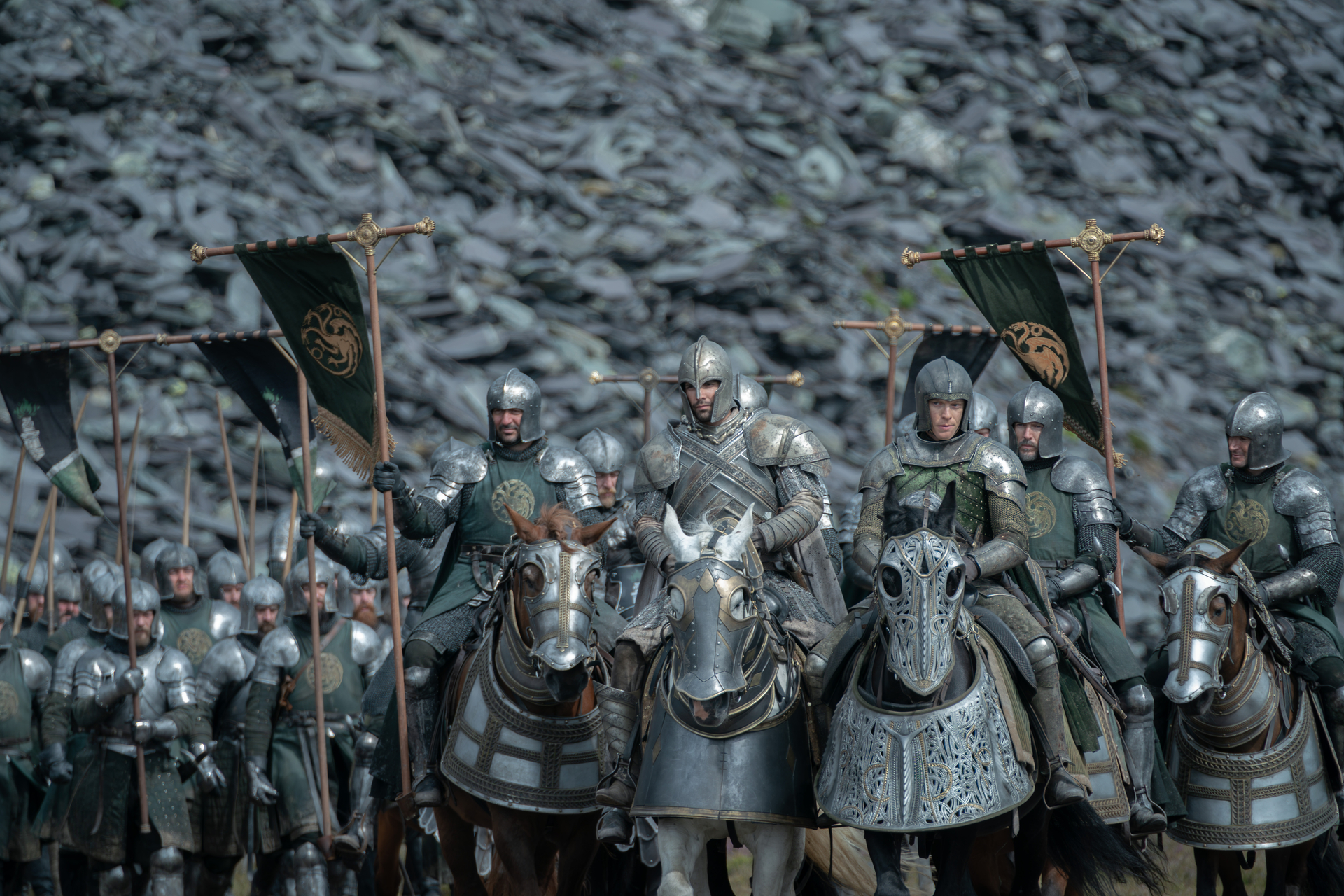
Every television critic with a Wi-Fi connection spent the morning after House of the Dragon disposed of a major character cheering for the sheer audacity of it. The lazy consensus across entertainment journalism is straightforward: prestige television needs to hurt. If nobody is safe, the stakes are real, and the writers deserve a medal for ripping our hearts out.
It is a comforting narrative for people who mistake shock value for narrative architecture.
Swapping narrative consequences for a quick body count is not brave. It is an admission of defeat. When a production team reaches for the executioner's sword every single time a plot line stalls, they are telling you they do not know how to write a scene where characters simply have to talk to each other and live with the fallout.
Let us look at the structural mechanics of dramatic tension. The lazy take assumes that danger equals death. It treats a story like a battle royale video game where the shrinking map forces engagement. But true dramatic pressure comes from proximity, trapped dynamics, and unresolved tension. When you murder a primary catalyst, you do not raise the stakes. You reset the board. You throw away years of character development because you lacked the discipline to push those characters through an uncomfortable second act.
Consider the narrative debt incurred every time a creator pulls the trigger just to keep the audience awake. I have watched showrunners panic in writers' rooms when the pacing dips, immediately reaching for the blood bucket because silence terrifies them. They confuse momentum with movement. Killing a major player provides a two-episode ratings spike and social media engagement metrics that look great on a slide deck for network executives. Then, the hangover sets in. The narrative vacuum opens up, and the writers are forced to invent new characters out of thin air just to fill the empty chairs at the council table, resetting the exact narrative problem they thought they solved.
The Cheap High of the Executioner's Axe
George R.R. Martin broke modern fantasy a decade ago, but television adaptors consistently miss the point of his structural brutality. When Ned Stark died in the first season of Game of Thrones, it worked because it shattered the foundational rules of television storytelling up to that point. It was not a twist for the sake of a twist; it was the inevitable mathematical conclusion of a painfully honest, rigid man operating in a nest of sociopaths. The death served the theme.
Fast forward to the modern spin-off era, and the philosophy has devolved from "actions have severe consequences" to "we need a bloodbath before the mid-season finale to trend on social media."
This is where the distinction between shock and resonance matters. Shock is cheap. It costs a visual effects budget and a few gallons of corn syrup. Resonance requires long-term character friction. Imagine a scenario where two mortal enemies with diametrically opposed worldviews are forced into a permanent, inescapable administrative partnership for twenty episodes. The friction of compromise, the slow erosion of ideals, the daily humiliation of having to look your son's murderer in the eye across a mahogany desk—that is hard to write. That requires actual craft.
Cutting off a head is easy. Writing a ten-minute dialogue scene where neither character backs down, yet neither can draw a blade, requires talent.
When a show constantly eliminates its best chess pieces, it turns into a game of checkers. You run out of pieces with history. You end up relying on CGI dragon fights to carry emotional weight because the human relationships have been thinned out by unnecessary funerals.
The Myth of the Unsafe World
The primary defense offered by defenders of the abattoir approach is realism. War is hell, they argue. People die unceremoniously. Characters do not get tidy narrative arcs or poetic final words.
This is a category error. Television is not a history textbook. It is a manufactured artistic medium designed to explore human behavior under pressure. If you want historical realism, watch a documentary about crop yields in the fourteenth century. We watch drama to see how people adapt, fail, compromise, and change over time.
When a character dies abruptly before their ideological arc is tested to its breaking point, the audience is robbed of the payout. We sat through the setup, we suffered through the training montages or the political maneuvering, and right when the philosophical friction should ignite, the character catches a stray blade or a sudden execution. That is not gritty realism. That is narrative blueballs.
The writers get to avoid answering the hard questions they set up. If a character holds a deeply flawed belief, the rigorous thing to do is force them to live long enough to watch that belief ruin their life and everyone they love. Killing them off lets them off the hook. It grants them an unearned martyrdom.
Why Narrative Longevity Beats Quick Blood
Look at the psychological depth we lose when characters become disposable. If an actor knows their character has a ticking clock stamped on their forehead by the end of season two, the performance shifts. They lean into the operatic, the finality, the grand gesture. They stop planting subtle seeds for long-term behavioral shifts because those seeds will never bear fruit.
Conversely, forcing creators to keep their main players alive creates diamond-sharp television. You cannot write your way out of a corner by murdering the person holding the corner down. You have to invent a solution. You have to force opposing factions into grotesque compromises. You have to watch allies turn into bitter rivals while sharing a roof.
The greatest seasons of television in history—whether political dramas, crime families, or fantasy epics—achieved their zenith not by clearing the board, but by crowding it. They piled pressure onto a fixed set of characters until the system cracked from within.
Stop confusing a slaughterhouse with a masterpiece. A true prestige drama does not need to kill its darlings to prove it has teeth. It has the confidence to let them suffer, change, and live with what they have broken.