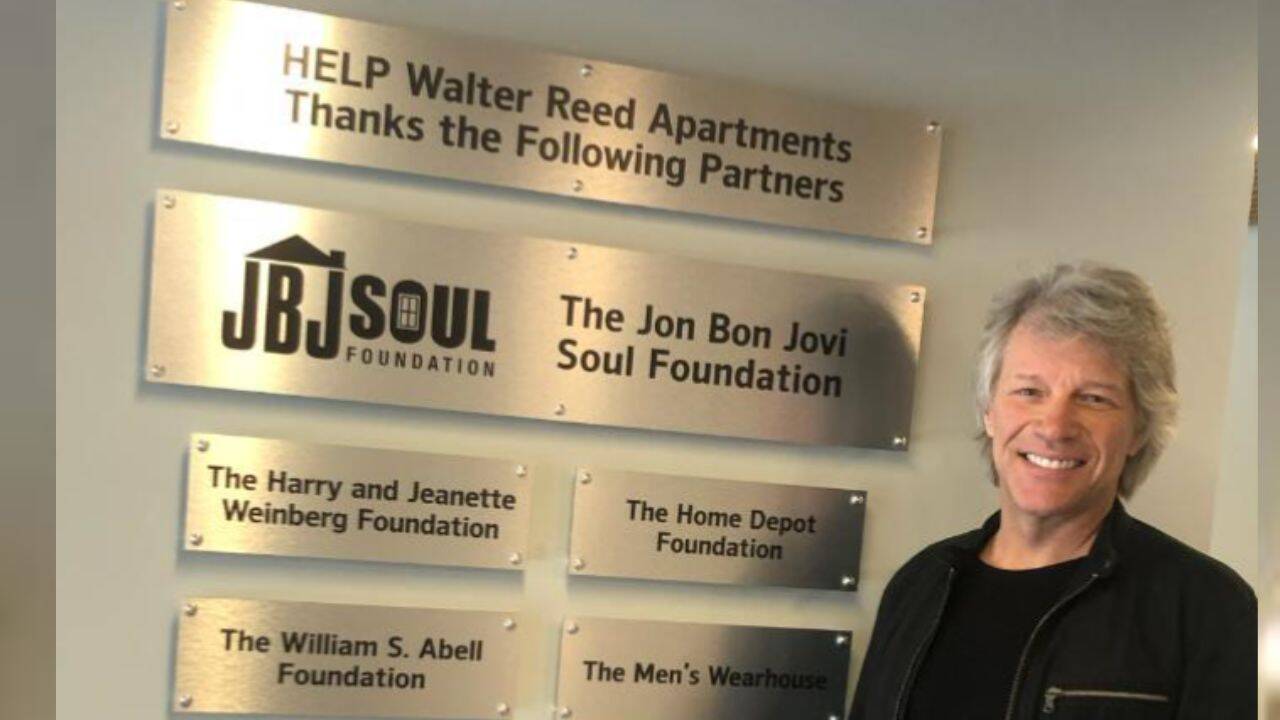
Celebrity philanthropy often gets dismissed as a superficial photo op. Rock stars show up, cut a ribbon, flash a smile, and leave the heavy lifting to actual social workers. But every so often, a project comes along that shatters that cynical mold. Take what happened at the former Walter Reed Army Medical Center.
Behind a massive multi-million dollar redevelopment effort, rock icon Jon Bon Jovi and his JBJ Soul Foundation rolled up their sleeves to tackle one of the most stubborn crises in America: veteran homelessness. Instead of throwing a quick concert and walking away, his organization stepped in as a lead private funder to help turn former military medical barracks into permanent, supportive housing units for 77 formerly homeless veterans.
Let us look at why this specific initiative matters, how it actually functions on the ground, and what most mainstream reports miss about celebrity-backed community investments.
Turning Military History Into Real Homes
The numbers surrounding American veteran homelessness are staggering. Yet, building housing is only half the battle. You need spaces equipped with the infrastructure required to help people heal.
The Walter Reed site in Washington, D.C., had an advantage. Originally constructed back in 1976, part of the facility was built as barracks housing for soldiers receiving long-term medical care who were capable of living semi-independently. When the campus underwent its massive transformation, planners realized those structures could be repurposed.
The JBJ Soul Foundation answered the call to lead private sector investment for the project. The renovated complex reopened to provide homes for 77 veterans who had previously been sleeping on the streets or bouncing through temporary shelters.
This was not just about putting a roof over someone's head. The redesigned facility integrated critical resources right where people live:
- On-site counseling and dedicated case managers
- Shared community spaces including a cafeteria and a gym
- Landscaped courtyards designed to foster a sense of security and peace
- Medical staff access built directly into the residential framework
Why Throwing Money at Homelessness Fails Without Infrastructure
You cannot solve chronic homelessness with a key alone. Anyone who has studied urban housing policy knows that unhoused individuals often carry complex, overlapping burdens—ranging from untreated post-traumatic stress disorder to severe physical disabilities and economic instability.
Jon Bon Jovi has spent decades learning this lesson firsthand. Long before the Walter Reed project, his foundation partnered with organizations like Project HOME in Philadelphia and various groups across New Jersey to build affordable, supportive housing.
The core philosophy behind these projects is simple: housing first, support always.
When a veteran moves into a facility like the one at Walter Reed, they receive a furnished apartment, but they also get a safety net. Case managers help them navigate VA benefits, secure employment, and manage healthcare. Without that wraparound support, recidivism rates skyrocket. Bon Jovi’s foundation focuses heavily on funding these exact operational safety nets rather than just cutting a check for concrete and drywall.
The Reality of Private-Public Partnerships
Funding affordable housing in major cities is an administrative nightmare. Government grants take years to clear, zoning laws create roadblocks, and public skepticism can stall progress indefinitely.
That is why private-sector leadership is so valuable. When a high-profile name backs a project, doors open. Municipal leaders listen, private donors feel more confident writing checks, and bureaucratic red tape somehow moves a little faster.
Washington, D.C., Mayor Muriel Bowser and other local stakeholders emphasized that transforming former institutional grounds into community housing requires heavy collaboration. Bon Jovi’s involvement brought national media attention to a local issue, proving that celebrity capital, when deployed correctly, can accelerate timelines and force institutional cooperation.
What We Can Learn From This Model
If cities want to make a dent in veteran homelessness, they must look closely at adaptive reuse. Tearing down historic structures is expensive and wasteful. Taking sprawling institutional footprints—like old army medical facilities, unused hospital wings, or abandoned municipal buildings—and converting them into residential communities is a blueprint that should be copied nationwide.
It takes more than a famous musician to fix a broken housing market. But when someone with a massive platform uses their resources to fund proven, dignity-first models, change happens. The 77 veterans living in those restored Walter Reed apartments are proof that rehabilitation beats abandonment every single time.