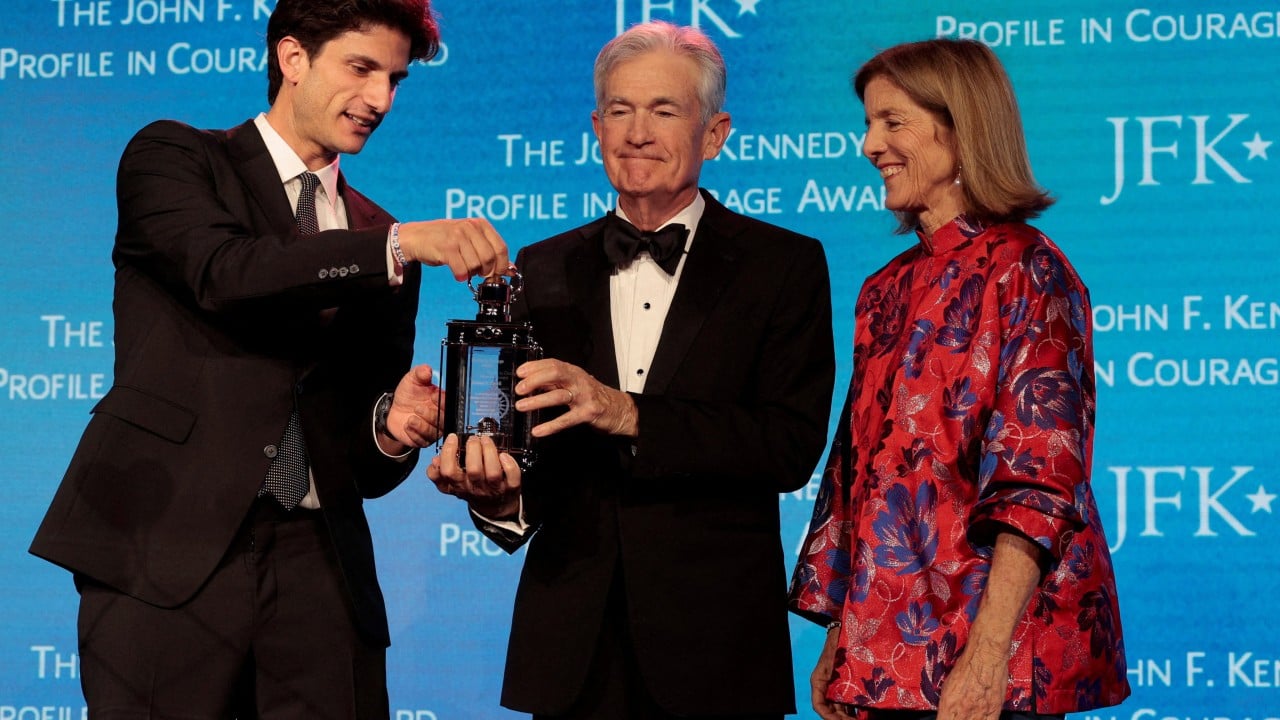
Jerome Powell just drew a line in the sand. Over the weekend, the former Federal Reserve Chair stood at the podium at the John F. Kennedy Presidential Library in Boston and delivered an uncharacteristic, blunt warning about the erosion of American democracy. He didn't name Donald Trump. He didn't have to. Everyone in the room knew exactly who he was talking about.
Powell was there to accept the 2026 Profile in Courage Award. The honor wasn't for a specific policy or a masterclass in macroeconomic theory. It was for holding the line. For years, Powell has been the punching bag of choice for an administration obsessed with low interest rates and total executive control. By standing at that podium and declaring the Fed’s independence a "priceless asset," Powell wasn't just reflecting on his legacy. He was actively participating in an ongoing institutional knife fight.
This isn't a dry debate for academic economists. It's a live-fire crisis over who controls the value of the dollar in your pocket.
The Stress Test of American Institutions
When Powell stepped down as Fed Chair earlier this month, the conventional move would have been to pack his bags, sign a multi-million-dollar book deal, and fade into the lucrative world of corporate speaking gigs. Instead, he did something highly unusual. He kept his seat as a regular member of the Fed's governing board. His term as a governor doesn't expire until January 2028.
By staying put, Powell has single-handedly blocked the White House from filling another vacancy on the rate-setting committee. It's a quiet, bureaucratic blockade. It's also the exact reason why his speech on Sunday felt less like a retirement toast and more like a battle strategy.
"Like many other institutions, the Fed has been undergoing a stress test," Powell told the audience. "If any administration finds a way to remove Fed officials over policy differences, then future administrations will do so as well. The public would lose faith that the central bank will make decisions based only on what's best for all Americans."
The stakes right now are remarkably high. The White House has actively tried to fire Fed Governor Lisa Cook, a move that is currently tied up in the Supreme Court. The Justice Department even launched a criminal probe into Powell over a building renovation project, a heavy-handed intimidation tactic that was only dropped to smooth the path for Powell's successor, Kevin Warsh.
Powell's core argument is simple. If the executive branch can bully, fire, or prosecute central bankers because they don't like interest rate decisions, the entire system collapses. Decades of built-up economic credibility evaporate overnight.
The Core Defect of Political Money
Why does this matter to you? Because an economy run by politicians is an economy headed for financial ruin.
Congress intentionally insulated the Federal Reserve from the four-year presidential election cycle back in 1913. They did it because politicians have a natural, toxic incentive structure. If you're running for reelection, you always want the economy booming right now. You want interest rates low, money flowing freely, and jobs plentiful, regardless of the long-term consequences.
The problem is that keeping the punch bowl out for too long causes massive inflation. A central bank's job is often to be the sober driver at the party. They have to raise rates and slow things down to keep prices stable. If the White House takes the wheel, interest rates will almost certainly stay artificially low, inflation will run rampant, and the dollar will lose its value at an accelerating pace.
Powell used his time in Boston to remind the country that this isn't a partisan issue. Both parties have historically respected the Fed’s boundaries. Breaking that norm is a trap. Once one administration fires a central banker over a policy disagreement, the next administration will do the identical thing. Monetary policy turns into a political football, and the global financial system loses its anchor.
Owning the Mistakes While Holding the Line
To be fair, Powell didn't paint a picture of a perfect institution. He openly acknowledged the Fed's own humanity and capacity for error.
It's a necessary admission. The central bank famously misjudged the post-pandemic supply chain crunch, dismissing surging prices as "transitory" before embarking on one of the most aggressive rate-hiking cycles in modern history. Wall Street and Main Street alike paid a heavy price for that delay.
"At the Fed, we are, of course, human and thus imperfect," Powell admitted. "When we make mistakes, we acknowledge them and change course."
But there is a vast, dangerous gulf between a central bank making an analytical miscalculation and a central bank taking orders from a president's social media feed. Powell’s point is that the public can tolerate an institution that makes mistakes based on honest economic data. What the public cannot tolerate—and what the markets will actively punish—is an institution that makes decisions based on the polling data of a political party.
What Happens Next
The friction between the White House and the independent technocrats running the government isn't going away. Powell may no longer hold the gavel as Chair, but his physical presence on the board means he remains a major obstacle to total political control of monetary policy.
If you want to protect your financial future in an era of institutional instability, you need to watch the structural battlegrounds, not just the daily stock market tickers.
- Watch the Supreme Court ruling on Lisa Cook. If the court rules that a president can dismiss a sitting Fed governor over policy differences, the legal wall separating politics from monetary policy is officially breached.
- Monitor Kevin Warsh's leadership. As the new Chair, Warsh faces the monumental task of proving to the global markets that he is operating based on data, not directives from the Oval Office.
- Diversify your assets. When institutional credibility is under a stress test, cash becomes vulnerable. Protecting your capital means holding a mix of assets that aren't entirely dependent on the political stability of a single administration.
Powell’s speech wasn't a nostalgic look back at JFK's legacy. It was a warning that the guardrails are warping. The fight for the independence of the dollar is happening right now, inside the Fed's own boardroom, and Powell has made it clear he has no intention of walking out the door.