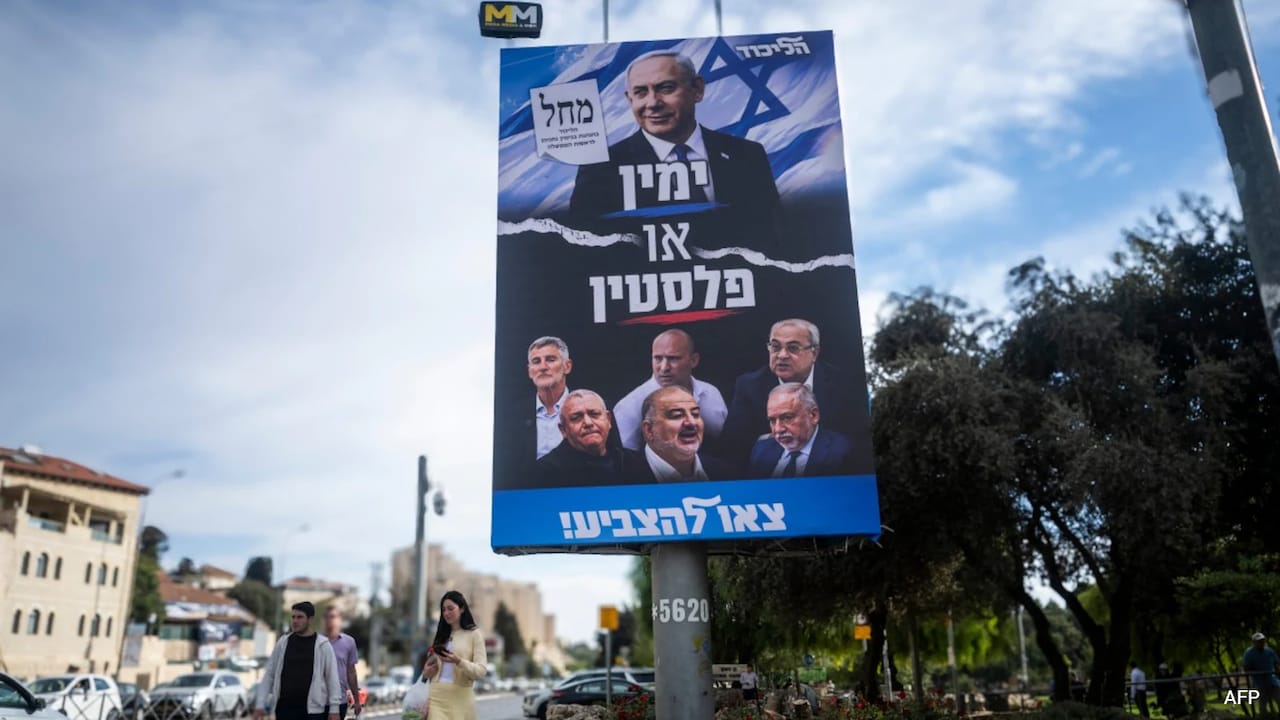
One nationwide ballot. One hundred and twenty seats. Zero geographic districts.
If you want to understand why Israeli politics feels like a high-wire act without a net, look at how votes turn into seats—and how seats turn into a government. Voters don't pick a local representative, and they don't cast a direct ballot for prime minister. Instead, millions of citizens choose a party list across a single national constituency.
That design gives small movements a real shot at a voice. It also makes governing a constant negotiation. Cross the 3.25% electoral threshold and your slate enters the Knesset. Miss it—even by a whisker—and every single vote for your party drops out of the seat math.
How the Electoral Threshold Shapes Who Gets In
Think of the electoral threshold as a bouncer at a crowded club. You can have plenty of friends outside, but if the group doesn't clear the bar together, nobody gets past the door.
In Israel, a party list must win at least 3.25% of all valid votes cast nationwide to enter the Knesset. When turnout is high, that percentage bar moves higher in raw votes too. For instance, if four million valid votes are cast, a list needs at least 130,000 votes just to clear the hurdle.
Here's the catch that drives party strategists crazy: votes cast for a list below 3.25% aren't tossed into a rival's basket, nor are they transferred to another party. They simply don't count toward seat allocation. All 120 Knesset seats get divided among the qualifying lists, which effectively boosts the seat share of parties that made the cut.
A Quick Look at How the Bar Rose
The 3.25% rule didn't drop from the sky. Lawmakers raised it over time—from 1.5% in the 1990s to 2% in 2004, and then to 3.25% in 2014.
The theory sounded clean enough on paper: fewer tiny factions, less gridlock. In practice, research from institutions like the Israel Democracy Institute shows that roughly 11 to 12 parties have still entered the Knesset on average over three decades despite the higher bar. Why? Because ideological, religious, and identity divides run deep, and factions often form joint lists before election day to survive the math.
Still, hovering near the threshold is terrifying. A party polling right around 3.25% can watch its survival swing on late-breaking turnout or split tickets.
Candidate Disqualification and Legal Boundaries
Thresholds aren't the only way a list or candidate can be kept out of the Knesset. Under Section 7A of Basic Law: The Knesset, election authorities and the Supreme Court have legal grounds to disqualify a party list or candidate if their platform or actions cross specific red lines—such as denying Israel's existence as a Jewish and democratic state, inciting racism, or supporting armed struggle against an enemy state or terrorist organization.
That rule sits right at the intersection of democracy and national security, and it's fiercely debated. Critics on different sides argue over where free political expression ends and state-protection rules begin, especially when petitions target Arab parties, far-right candidates, or contentious platforms.
If you're following a specific election cycle, keep a simple distinction in mind: failing the 3.25% vote threshold is a math outcome on election night, whereas disqualification is a legal/constitutional question reviewed through statutory and judicial processes. Confusing the two is a common shortcut in casual commentary, and it misses how each operates.
Seat Math, Excess Votes, and the Bader-Ofer Twist
Once qualifying lists clear 3.25%, seats are awarded proportionally based on each list's predetermined candidate order. Win 15 seats, and names one through 15 on your party's list head to the Knesset.
Because pure division leaves fractional remainders and unassigned seats, Israel uses the Bader-Ofer method (named after former Knesset members Yohanan Bader and Avraham Ofer) to hand out remaining seats.
Here's how that works in plain English: a party's vote total is divided by the number of seats it currently holds plus one, and the highest resulting quotient claims the next seat. A smaller party with fewer total votes can actually edge out a bigger party for a remaining seat if its divisor math comes out higher.
Why Parties Cut Deals Before Voting Even Starts
Before the election, two parties often sign an excess-vote agreement. They still run separately on the ballot and keep their own seats. Their leftover votes are combined in the Bader-Ofer calculation to help land an extra seat.
Honestly, this is one of the smartest quirks in the system—and one of the easiest to misread. Signing a surplus-vote pact is a mathematical move, not a marriage vow. Two parties can share leftover votes on paper and still sit on opposite sides of the aisle when coalition talks begin.
How Israel Builds Coalitions After Election Day
Winning the most votes doesn't hand you the keys to the prime minister's office. To command a majority in the 120-seat Knesset, a governing coalition generally needs 61 seats.
Because no single party has governed alone with an outright majority in Israel's history, every government is a coalition puzzle. After official results come out, the president consults with party leaders and tasks a candidate with forming a government—typically within a 28-day window, with potential extensions up to 14 more days (42 days total), and fallback steps if that effort stalls.
If no one can pull together enough backing, the Knesset can dissolve and trigger fresh elections—something Israelis experienced repeatedly between 2019 and 2022. And even after a government takes office, it survives only as long as it holds parliamentary confidence; a coalition can fracture early over budgets, judicial fights, security policy, or draft disputes.
That's why smaller or mid-sized factions frequently hold outsized leverage. When a bloc sits at 58 or 59 seats, a small party with four or six seats isn't just along for the ride. It can demand key ministries, policy commitments, or veto power—a dynamic illustrated in 2021 when Naftali Bennett became prime minister leading a diverse coalition despite his party winning just six seats.
Minority Governments and Shifting Blocs
Sometimes parties can't lock down a formal 61-seat majority on day one, opening the door to a minority government backed or tolerated from outside by other lawmakers. It's doable, sure, though passing budgets and tough legislation without a cushion gets bumpy fast.
Also, don't assume blocs are frozen in amber. Centrist, religious, and ideological factions sometimes shift alignments depending on what's on the table. Small seat swings between two camps can flip who actually gets to govern.
Practical Ways to Read Israeli Election News Like a Pro
You don't need a political science degree to follow Knesset math without getting whiplash. Just change what you look for in the headlines:
- Watch the 3.25% "danger zone" first: Before obsessing over who finishes first or second, check which parties are polling between 2.8% and 4.0%. A single party falling short can shift dozens of effective seats across the board.
- Track bloc math, not just single-party totals: A party can gain seats and still lose power if its natural coalition partners lose ground—or if a rival bloc crosses 61.
- Separate surplus-vote pacts from governing alliances: Seeing two parties partner on leftover votes tells you about seat optimization, not necessarily who will share cabinet seats later.
- Check primary sources for rules and official tallies: For institutional rules, seat mechanics, and election procedures, cross-check coverage against the Knesset and nonpartisan policy analysis such as the Israel Policy Forum.
Votes set the pieces on the board. Coalition math decides who moves first.