The sea does not care about executive orders.
Off the southern coast of Iran, the water stretches in a heavy, turquoise glare, oblivious to the diplomatic cables spitting fire between Washington and Tehran. Here, the Strait of Hormuz forms a narrow bottleneck, barely twenty-one miles wide at its tightest squeeze. Through this liquid throat flows a fifth of the petroleum consumed on Earth. Every single day.
Stand on the deck of a supertanker crawling through these shipping lanes, and the silence is deafening. You hear only the low, chest-vibrating thrum of the diesel engines and the hiss of salt spray against the hull. But look closer at the horizon. The tankers move like heavily laden beasts, their waterlines sitting low, weighted down with millions of barrels of crude. They are vulnerable. Everyone here knows it. The captains know it. The insurance syndicates in London know it. And the men sitting in windowless conference rooms thousands of miles away know it, too.
For months, the rhythm of economic sanctions has beaten a steady, punishing drumbeat. Washington has tightened the screw, widening the net of financial isolation, aiming to squeeze Iranian commerce until the regime gasps for breath. It is a war fought not with bullets, but with SWIFT codes, asset freezes, and secondary penalties meant to starve a nation of its lifeblood.
To watch this from the outside is to see a spreadsheet. Numbers red or black. Percentages ticking upward or downward.
To live it inside Iran, or aboard a ship caught in the crosshairs, is entirely different. It tastes like copper and anxiety.
Consider a hypothetical harbor master in Bandar Abbas, a man named Reza who has spent thirty years watching tankers slip out toward the open ocean. Reza does not care much for the grand geopolitical chess matches played out on evening television. He cares about the crane cables, the drafts of the ships, and the families who rely on the port staying open. When the latest wave of American financial restrictions dropped, Reza didn't cheer or panic. He simply looked out over the docks and sighed. He had seen this script before.
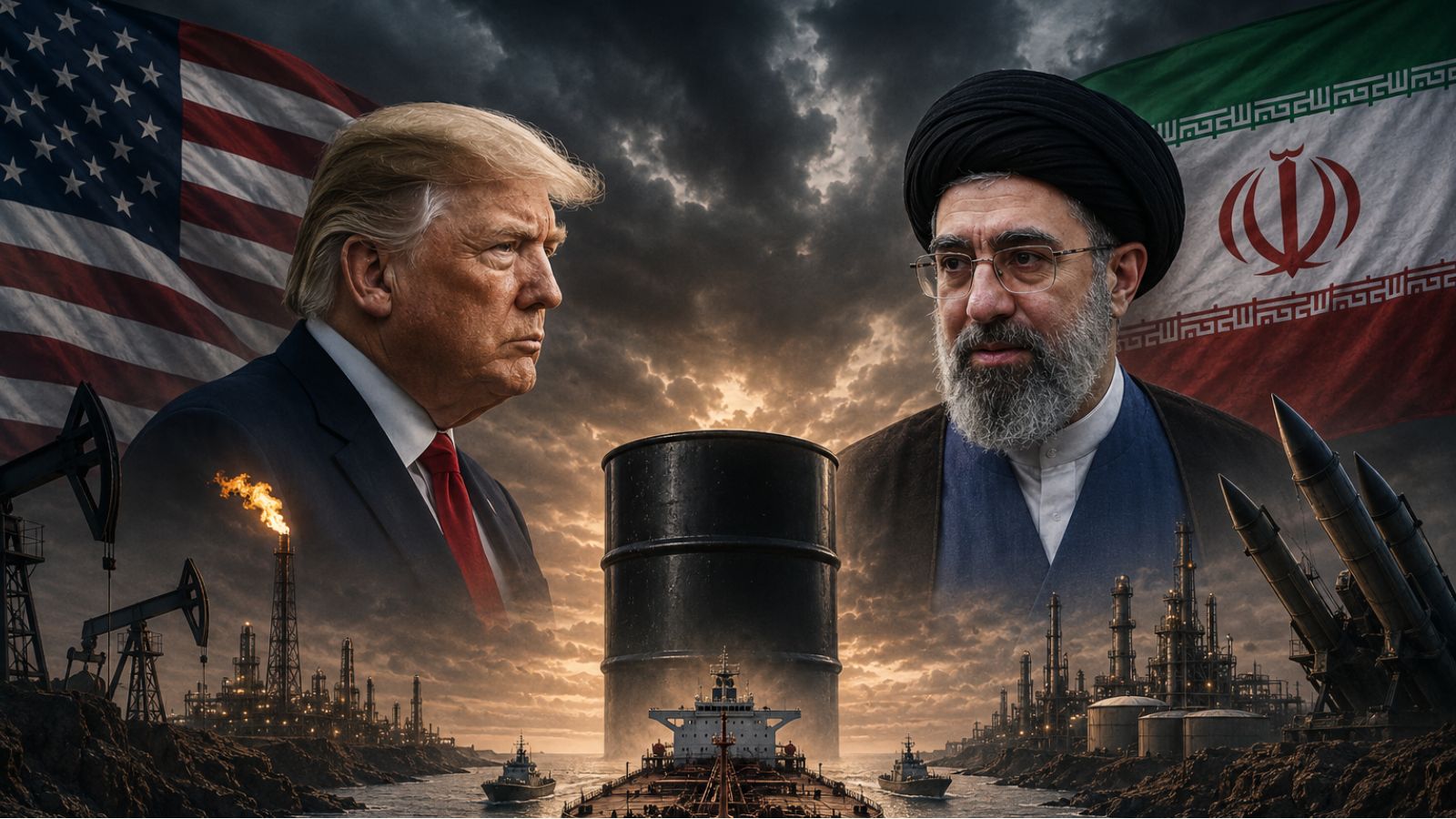
The official response from Tehran was swift, sharp, and entirely predictable. Fully prepared, they called it. A tit-for-tat move. If Washington intends to choke off Iranian oil exports through financial force, Tehran holds the ultimate counter-weight. The oil chokehold.
It is a terrifying phrase. But what does it actually mean on the ground?
The Anatomy of a Choke
To understand the threat, you have to understand the geography. The Strait of Hormuz is essentially a maritime highway split down the middle by traffic separation schemes. Inbound traffic uses one lane, outbound uses another, and a narrow buffer zone separates them.
If you want to disrupt global energy markets, you do not need to sink a fleet. You just need to introduce doubt.
Maritime insurance rates spike overnight. Crew members refuse to sign contracts for voyages heading into the Persian Gulf. Shipowners reroute, burning extra days and millions of dollars in fuel. The oil doesn't even have to stop flowing entirely for the shockwaves to hit. The mere threat of constriction acts as an invisible tax on every gallon of gasoline pumped into a car in Chicago, Tokyo, or Berlin.
When officials in Tehran announce they are ready for a tit-for-tat retaliation, they are pointing directly at this nervous system of global commerce. They are saying: if you lock us out of the ledger, we will lock everyone else out of the supply.
The escalation ladder is steep, and both sides have been climbing it rung by rung for years. The United States applies maximum pressure. Iran responds with maximum resistance. The middle ground—where diplomacy breathes and compromises are forged—has grown smaller than a vanishing point.
The Human Toll of the Ledger
Down in the engine room of a container ship navigating these tense waters, the air is thick with the smell of hot oil and ozone. A young engineer from Mumbai, staring at a bank of digital gauges, wonders if this is the voyage where things go wrong. He is not a soldier. He is a father saving money for his daughter's university tuition. Yet, his safety is collateral in a dispute between capitals he has never visited.
This is the hidden cost of economic warfare. We talk about sanctions as if they are clean, surgical instruments. We imagine bureaucrats in tailored suits striking names off a list. But sanctions bleed into the physical world. They alter the cost of bread in local markets. They strand crews at sea. They turn vital maritime corridors into zones of high-stakes psychological warfare.
When a nation is pushed to the economic brink, its calculus changes. Survival overrides international norms. The threat of closing or restricting the Strait of Hormuz is the ultimate card to play when all other cards have been trumped by financial isolation. It is a desperate measure, born of a desperate position, but it carries enough gravity to make the entire world hold its breath.
The Waiting Game
Back in Washington, the strategy is calculated on the assumption that relentless pressure will eventually force a compliance shift. In Tehran, the counter-strategy is built on endurance—the belief that the regime can weather the storm longer than global markets can tolerate high energy prices.
Both sides are gambling with other people's stability.
The tankers keep moving, for now. The harbor masters keep checking their manifests. The engine rooms hum their steady, rhythmic song against the dark water. But the margin for error has vanished.
A single miscalculation by a patrol boat captain, a single misread radar blip in the dark waters of the Gulf, could turn a war of words into a very real crisis of supply. The iron vein beneath the waves is throbbing, tense and exposed, waiting to see which side blinks first in a standoff where nobody can afford to look away.