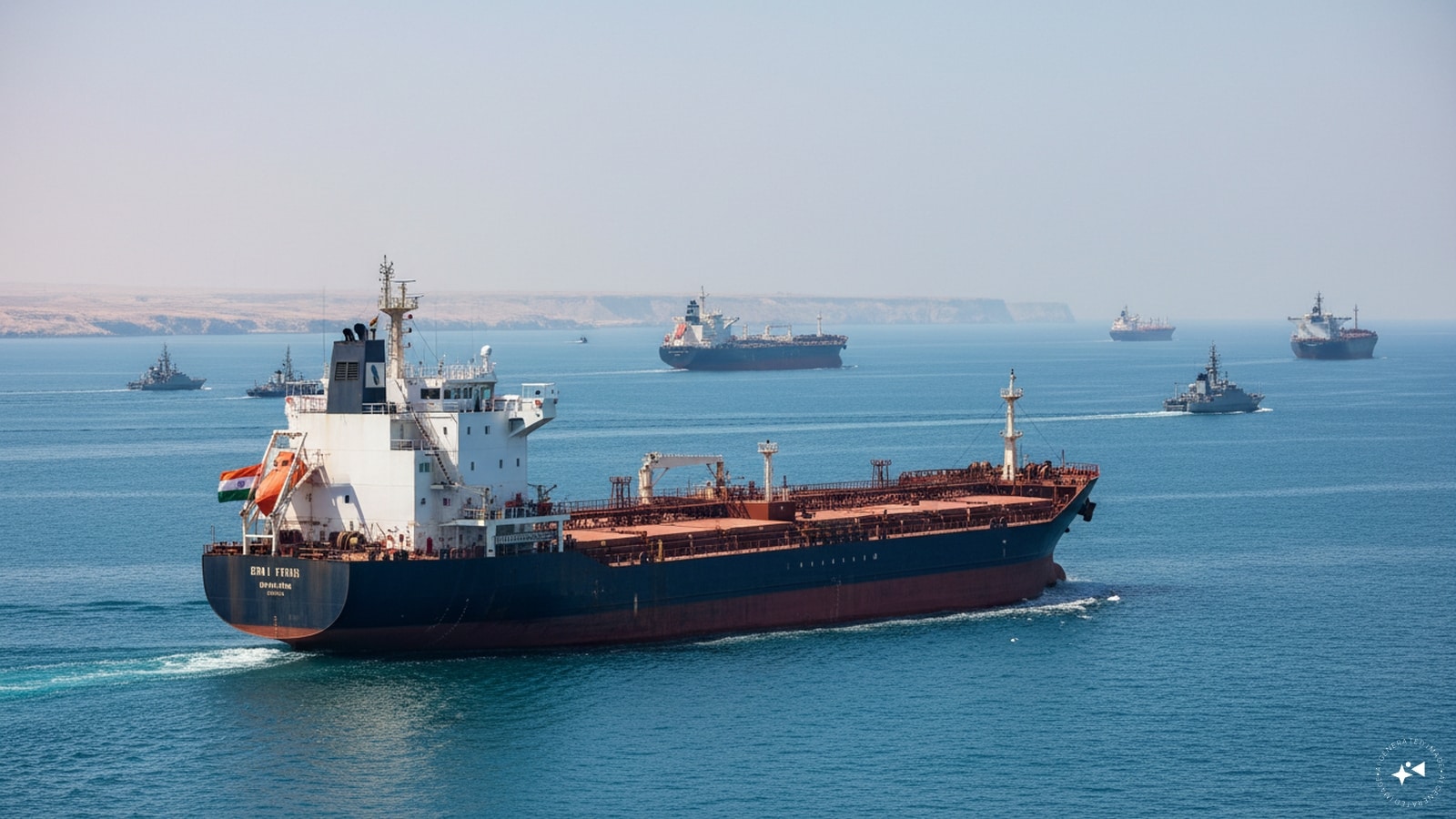
When Tehran announces selective maritime exemptions in the Strait of Hormuz, global energy traders don't just read the headlines—they immediately pull up AIS vessel-tracking maps. The news that Iran exempted ships from India and three other nations from strict transit restrictions in the Strait of Hormuz isn't just another diplomatic footnote. It's a calculated geopolitical pressure valve.
Let's be clear about what's happening here. Roughly one-fifth of the world's total petroleum consumption passes through this narrow 21-nautical-mile chokepoint between Oman and Iran. Whenever tensions flare in the Persian Gulf, insurance premiums spike, freight rates double overnight, and everyone starts panicking about $120 oil. By carving out exemptions for India and three select partners, Tehran isn't offering charity. It's weaponizing access while protecting its own economic lifelines.
Why Iran Selective Transit Rules Change the Maritime Math
If you've ever watched how sanctions and maritime blockades play out in real time, you know that blanket closures rarely last. Closing the Strait of Hormuz completely would trigger an immediate military response from the United States Fifth Fleet and alienate Iran's remaining buyers. Selective restrictions are much smarter. They let Iran squeeze Western-aligned shipping without starving its own treasury.
India sits right at the center of this equation. As one of the world's largest crude importers, New Delhi relies heavily on Gulf energy supplies to keep its domestic economy humming. Iran knows this. More importantly, Tehran remembers how India navigated previous sanctions cycles and continues to invest in strategic connectivity projects like the Chabahar Port. Granting Indian-flagged or Indian-bound vessels safe passage keeps diplomatic channels open and ensures New Delhi won't join a Western maritime coalition.
And what about the other three nations included in the exemption? While diplomatic channels often keep specific operational lists quiet until vessels actually transit, Tehran consistently rewards states that refuse to enforce unilateral Western sanctions or those that maintain active bilateral trade mechanisms outside the US dollar system. Typically, countries like China, Russia, and key regional neighbors fall into this protected tier.
The message to global shipping lines is blunt. Align with Tehran's diplomatic preferences, and your tankers sail through without naval harassment. Fly the wrong flag or carry cargo for the wrong buyer, and you face boarding parties, GPS spoofing, or outright seizure.
The Reality Behind Strait of Hormuz Transit Exemptions
Most news coverage treats these exemptions like a simple "get out of jail free" card for ships. That's not how commercial shipping works. Even if Iran's Islamic Revolutionary Guard Corps Navy (IRGCN) agrees not to intercept an Indian vessel, the commercial market doesn't immediately relax.
Here is what actually happens on the ground—and on the water—when selective exemptions get announced:
- War-risk insurance stays stubbornly high. Underwriters at Lloyd's of London don't base their actuarial tables on verbal assurances from Tehran. If missiles are flying or drones are active in the Gulf of Oman, a vessel still pays massive additional war-risk premiums just to enter the Persian Gulf.
- Flagging and ownership get messy fast. A ship might be owned by a Greek company, flagged in Liberia, crewed by Filipino sailors, and carrying crude bound for an Indian refinery. Does that count as an "Indian ship" under Tehran's rules? Usually, the IRGCN looks at the cargo's final destination and the charterer's nationality, which forces shipping operators to carry thick stacks of verified manifests and diplomatic clearances.
- AIS transponders become a liability. Normally, ships keep their Automatic Identification System (AIS) broadcasting for safety. In contested waters, captains face a tough choice. Keep it on to prove you're an exempted vessel, or turn it off to avoid becoming a target for rogue actors who didn't get the memo.
I've seen charterers spend days on the phone with maritime lawyers just trying to verify whether a specific hull qualifies for safe passage. A single misinterpretation can leave a Very Large Crude Carrier (VLCC) anchored outside Fujairah for weeks, burning tens of thousands of dollars a day in demurrage fees.
How India and Exempted Nations Benefit From This Corridors Deal
For India, this exemption is a massive diplomatic win. New Delhi has spent years walking a tightrope between Washington, Tehran, and Gulf Arab states like Saudi Arabia and the UAE. By securing a carve-out from Iranian transit restrictions, Indian refiners—both state-run giants like Indian Oil Corporation and private players like Reliance—gain a clear competitive edge.
Think about the cost structure. When rival Asian buyers face delays, rerouting costs, or astronomical freight rates, Indian buyers can source Gulf crude and liquefied natural gas (LNG) with far less friction. Even if India buys heavily from Russia, Middle Eastern grades remain essential for Indian refinery configurations. Keeping the Strait of Hormuz open for Indian hulls protects domestic fuel prices from sudden inflationary shocks.
The other exempted nations enjoy similar advantages. They avoid the costly delays of the Cape of Good Hope reroute, which adds anywhere from 10 to 14 days to a voyage and burns hundreds of tons of extra bunker fuel. Their supply chains stay intact while competitors scramble for alternative tonnage.
What Happens to Non-Exempted Shipping
If you aren't on Tehran's preferred list, the Strait of Hormuz turns into a minefield of operational headaches. Western-linked vessels have to rely on naval escorts, transit during specific daylight windows, or hug the Omani coastline to stay inside territorial waters where Iranian patrol boats are less likely to operate aggressively.
Freight rates split into a two-tier market. We already saw a version of this after the Red Sea crisis began in late 2023. Safe vessels command massive premiums from desperate charterers, while "high-risk" hulls sit idle or get pushed onto longer, less profitable routes. Global trade doesn't stop, it just gets slower, uglier, and much more expensive for consumers in Europe and North America.
Common Misconceptions About Hormuz Chokepoint Politics
People love dramatic headlines about Iran "closing" the Strait of Hormuz. Honestly, that's the biggest misconception in energy geopolitics.
First, Iran relies on the Strait of Hormuz for its own survival. Almost all of Iran's crude oil exports—mostly heading to independent refineries in China—leave through Kharg Island in the northern Persian Gulf and pass straight through the strait. Iran also imports basic foodstuffs, machinery, and refined goods through Bandar Abbas. Choking off the waterway completely would starve Iran's own economy within weeks.
Second, international maritime law explicitly protects transit passage through straits used for international navigation under the UN Convention on the Law of the Sea (UNCLOS). While Iran signed UNCLOS, it never ratified it, arguing that transit passage rights only apply to treaty signatories. That legal gray area is exactly why Tehran feels comfortable issuing selective exemptions and demanding prior notification from foreign warships and commercial vessels.
Third, exemptions aren't permanent. They are transactional. If New Delhi or any of the other three exempted nations makes a diplomatic move that angers Tehran—such as backing a tough resolution at the International Atomic Energy Agency (IAEA) or cutting back on bilateral trade—those transit privileges can vanish overnight.
What Supply Chain Managers and Traders Need to Watch Next
If your business touches global freight, energy commodities, or manufacturing inputs moving through the Middle East, you can't afford to take these announcements at face value. Diplomatic exemptions reduce political risk, not physical risk.
Start by auditing your bill of lading and charter party agreements. Make sure your force majeure clauses explicitly cover selective maritime blockades and war-risk surcharges, not just outright war. If you're shipping cargo into or out of the Persian Gulf, verify the exact beneficial ownership and flag state of every vessel booked by your freight forwarder.
Keep a close eye on maritime advisories from the UK Maritime Trade Operations (UKMTO) and the Joint Maritime Information Center (JMIC). Those real-time incident reports tell you what is actually happening on the water, regardless of what diplomats say at press conferences. Finally, build a 10-to-14-day buffer into your inventory models for any goods transiting the region—because in the Strait of Hormuz, safe passage is always one miscalculation away from disappearing.