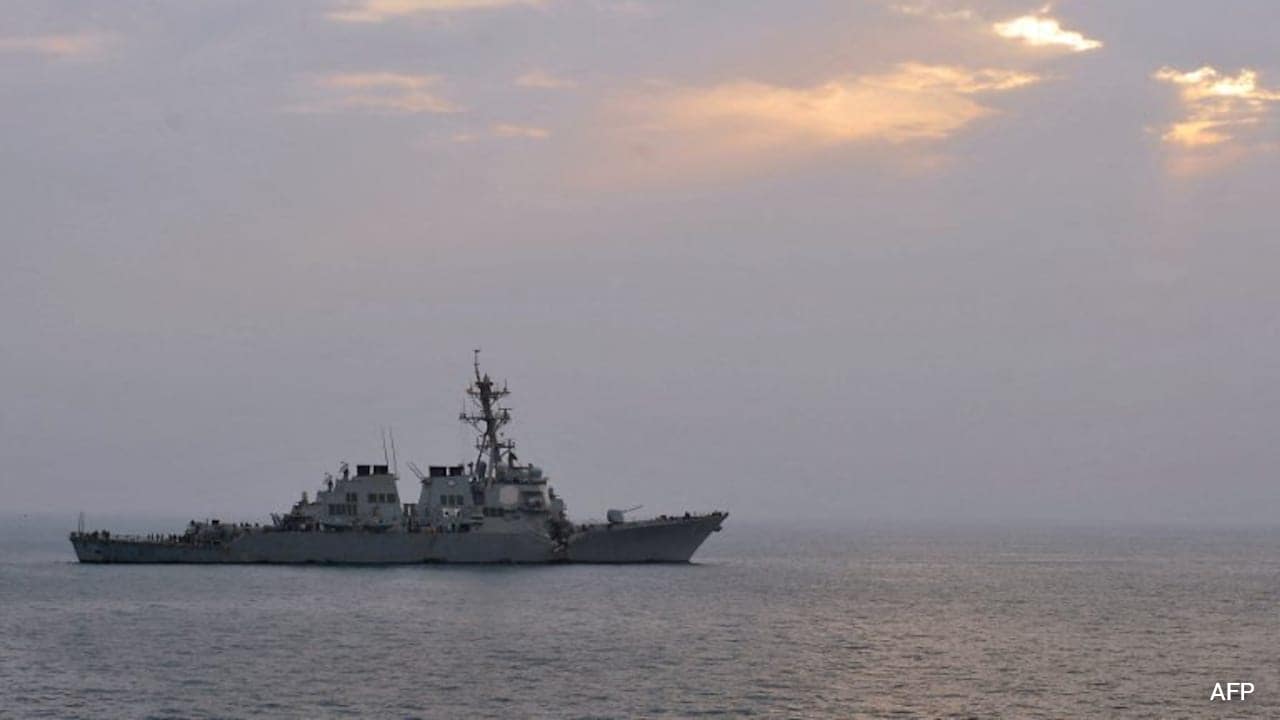
Silence.
That is what every sailor on the midnight watch listens for when their hull slips out of the Persian Gulf and into the Gulf of Oman, because in those warm, dark waters east of the Strait of Hormuz, a sound you do not expect usually means the steel beneath your boots is about to tear open.
Consider a hypothetical crew member—let us call him Mateo, a thirty-four-year-old second engineer from Manila working aboard a Very Large Crude Carrier. For fourteen hours, Mateo has watched the pressure gauges thrum in the blistering heat of the engine room, waiting for the vessel to clear the narrow bottleneck between Oman and Iran. He is thinking about his daughter’s upcoming birthday, the transfer of his monthly wages, and the quiet relief of reaching open ocean. Then comes a dull, subterranean thud that lifts a three-hundred-thousand-ton ship like a toy boat in a bathtub. Alarms scream. Thick, black smoke rolls down the companionways. Outside, two other tankers drifting across the same shipping lane are already burning against the night sky.
This is not a scene from a geopolitical thriller. It is the stark, terrifying reality behind the headlines reporting that three oil tankers caught fire after striking naval mines east of the Strait of Hormuz—an incident unfolding right at Iran’s maritime doorstep.
To most people reading the news over morning coffee, a maritime incident thousands of miles away feels abstract, like a blip on a radar screen or a temporary red arrow on a financial ticker. Yet the moment steel meets an underwater explosive in this specific stretch of sea, the shockwave does not stop at the waterline. It travels through pipelines, across currency exchanges, and straight into the price of everything you will buy for the next six months.
The Chokepoint Where the World Holds Its Breath
To understand why three burning ships near Iran can rattle the entire planet, you have to picture the global economy not as a sprawling, indestructible web, but as a living body with a single, dangerously exposed jugular vein. That vein is the Strait of Hormuz.
At its narrowest point, this stretch of water separating Iran from the Arabian Peninsula is just twenty-one miles wide. Within that tight corridor, the actual shipping lanes for massive supertankers are only two miles wide in each direction, separated by a two-mile buffer zone. Through this slender aquatic hallway passes roughly one-fifth of the world’s total petroleum consumption—around twenty million barrels of crude oil and refined products every single day, alongside a massive share of the world's liquefied natural gas.
When you stand on the bridge of a tanker navigating these waters, you are acutely aware of how little room there is for error. The sea floor is shallow, the currents are tricky, and the coastline of Iran looms close enough on the radar to make every officer on watch sweat through their uniform. Unlike an airport runway, where ground crews sweep for debris every hour, the ocean hides its deadliest threats beneath a dark, shifting surface.
Naval mines are the ultimate asymmetric weapon. They cost mere thousands of dollars to manufacture, require no sophisticated guidance systems once deployed, and can bob quietly beneath the waves for months or years until the magnetic signature or acoustic rumble of a passing hull triggers an explosion. A single drifting mine does not need to sink a supertanker to achieve its strategic goal. It only needs to punch a hole in the double hull, ignite the volatile vapors, and prove that the lane is no longer safe.
Why Three Fires Change the Math for Everyone
When three vessels strike mines in rapid succession just east of the strait—in the waters of the Gulf of Oman where ships decelerate, anchor, or wait for orders—the damage extends far beyond scorched metal and injured crews. Maritime insurance underwriters in London, Singapore, and New York immediately begin rewriting the rules of global trade.
Think of maritime war-risk insurance as the invisible oxygen that keeps cargo moving across the oceans. No shipping company, regardless of how wealthy or reckless, will send a hundred-million-dollar tanker carrying eighty million dollars' worth of crude oil into a minefield without coverage. When the news breaks that mines have detonated near the Strait of Hormuz, war-risk premiums do not merely edge upward; they skyrocket overnight, sometimes jumping by hundreds of percent for a single seven-day transit.
That sudden spike in risk creates an immediate domino effect:
- Shipowners hesitate: Captains are ordered to drop anchor outside the danger zone and wait for naval escorts or minesweeping operations, creating an instant traffic jam of energy supplies.
- Freight rates surge: The few operators willing to brave the waters demand astronomical fees to compensate for the threat to their crews and vessels.
- Refineries scramble: Buyers in Asia, Europe, and North America suddenly face delayed shipments, forcing them to bid aggressively for alternative supplies from West Africa, the North Sea, or the Americas.
Even if not a single drop of oil is permanently lost to the sea, the sheer uncertainty acts like a tax on every gallon of fuel refined anywhere on Earth. By the time a tanker finally clears the Gulf of Oman, the cost of that delay is already baked into diesel prices for long-haul truckers, jet fuel for commercial airlines, and the plastic packaging wrapped around groceries in towns that have never heard of the Strait of Hormuz.
The Echoes of History Beneath the Waves
If this feels eerily familiar, it is because the waters surrounding Iran have witnessed this exact brand of shadow warfare before. Anyone who has followed maritime security over the past four decades recognizes the pattern immediately.
During the brutal Tanker War of the 1980s, commercial vessels became the primary targets of a grinding regional conflict, with hundreds of ships damaged by mines, missiles, and gunboats. Fast-forward to the summer of 2019, when limpet mines tore into six tankers in the Gulf of Oman over the course of a few tense weeks, pushing the region to the brink of open military confrontation. Every time tensions escalate between Tehran, its regional neighbors, and Western powers, the shipping lanes east of Hormuz become the pressure valve where geopolitical friction turns into physical fire.
What makes these incidents so maddeningly difficult to resolve is the fog of plausible deniability that hangs over the water. Unlike a ballistic missile launch, which satellites can trace back to a specific coordinates pad within seconds, a mine leaves few immediate fingerprints. Finger-pointing begins almost before the fireboats finish dousing the flames. Iran routinely denies involvement, often suggesting the incidents are fabricated or the result of foreign provocation, while Western intelligence agencies and regional navies point to the types of explosives used and the operational capabilities required to deploy them unnoticed in such heavily monitored waters.
For the mariners caught in the middle, the diplomatic sparring is background noise. I have spoken with merchant seamen who sailed through the Gulf during previous spikes in hostility, and the emotion they describe is rarely anger—it is a grinding, exhausting vigilance. You cannot shoot back at an underwater mine. You cannot outmaneuver an explosion you cannot see coming. All you can do is post extra lookouts on the bow with binoculars, stare at the churning black water ahead, and hope the ship ahead of you did not miss something lurking three meters below the surface.
The Fragile Illusion of Distance
We live in an era that encourages us to believe our modern supply chains are automated, frictionless, and immune to old-world geography. We tap a screen, a package arrives at our door, and we pull up to a brightly lit fuel pump assuming the underground tanks will always be full.
Three burning tankers east of the Strait of Hormuz strip away that illusion in an instant. They remind us that the modern world still relies on men and women steering massive steel hulls through narrow, contested waters where ancient rivalries meet modern explosives. Until naval minesweepers can clear the lanes, until insurers decide the risk is calculable again, and until the smoke clears over the Gulf of Oman, every ship approaching that twenty-one-mile strait is sailing into the unknown.
Out on the dark water tonight, another watch officer is stepping onto the bridge, peering through the salt spray toward the horizon, and listening closely to the quiet hum of the engines—praying the silence holds.