Dawn arrives differently in a city divided by constitutional friction. The streetlights flicker out over a quiet Brooklyn avenue, casting long, fractured shadows across the pavement. To a casual observer, the morning is ordinary. But beneath the surface hum of traffic and commuters, a silent constitutional tug-of-war is quietly reshaping what it means to enforce the law in America.
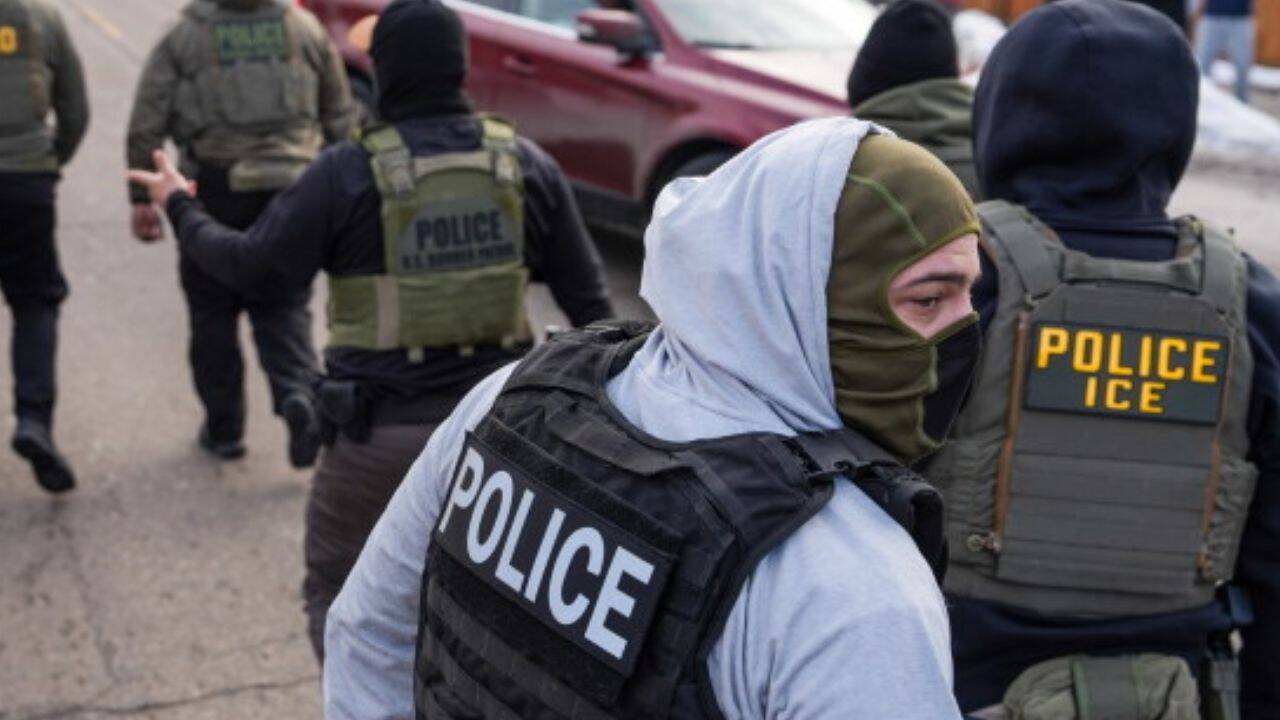
Picture a hypothetical street corner on a brisk Tuesday morning. Two men in plainclothes step out of an unmarked vehicle. Their faces are half-concealed by dark gaiters, their identities shielded from the neighborhood watching anxiously from behind apartment windows. To the local residents, they are an anonymous force operating in the shadows, unidentifiable and unaccountable. To the federal government, they are agents of sovereignty performing a mandate that transcends local ordinances.
This tension is no longer confined to political debates. It is a concrete reality etched into a 51-page preliminary ruling handed down by U.S. District Judge Mae D'Agostino in Albany. The decision cuts straight to the core of federalism, drawing a sharp, unyielding line between local community standards and federal supremacy.
The Weight of the Mask
For months, the atmosphere in New York has been thick with apprehension. When Governor Kathy Hochul signed the state’s Face Covering and Identification Acts in late May, it was framed as a direct push for transparent policing. Lawmakers argued that when officers of the law operate with hidden faces and obscured badge numbers, fear fills the vacuum. Communities grow distrustful. Panic spreads through neighborhoods when unmarked, masked figures detain individuals outside homes and workplaces.
The state’s intent was clear. Protect public welfare. Force accountability into the open air.
Yet, the courtroom is rarely a place for pure sentiment. When the Department of Justice challenged the state mandate, arguing that local governments cannot police the mechanics of federal operations, the judiciary had to weigh intention against the cold architecture of constitutional law.
Judge D'Agostino acknowledged the validity of the state's concerns. She noted in her ruling that New York officials "may be correct that federal immigration officers wearing masks and not displaying viable identification creates certain dangerous situations".
She understood the fear. She recognized the anxiety of a mother watching unidentifiable men operate near a community school. But she pivoted immediately to the bedrock principle that has governed the republic for centuries: the Supremacy Clause. Settled law dictates that federal authorities, not state legislatures, write the playbook for executing federal immigration statutes. The ruling blocks local police from arresting federal agents who choose to keep their faces covered, handing the Trump administration a critical victory.
A Divided Verdict on Sovereignty
The courtroom victory, however, was not total. Constitutional battles rarely yield simple winners. While the federal government succeeded in halting the mask ban, a separate pillar of New York's legislative package was allowed to stand.
Beginning later in August, a strict prohibition on formal collaboration agreements between local police departments and U.S. Immigration and Customs Enforcement—known as 287(g) partnerships—will take effect. On this front, the court ruled that the state possesses the legitimate authority to decide how local tax dollars and municipal resources are expended. Local law enforcement can be told to look inward, focusing strictly on local matters rather than footing the bill for federal immigration sweeps.
Consider the paradox this creates on the ground. Federal agents may wear their masks without fear of local arrest, protected by the sweeping umbrella of national sovereignty. Yet, the local police officers patrolling the exact same blocks are legally barred from lending a hand. It is a fractured system where two layers of law enforcement occupy the same geographical space while operating under entirely divorced legal realities.
The Human Fallout
Legal doctrines like the Supremacy Clause sound sterile on paper, but they bleed into real life with heavy consequences.
Behind every headline about jurisdictional authority are real people holding their breath. Immigrant families wonder if the next knock on the door belongs to an identifiable local officer or an anonymous federal operative. State leaders, eyeing political calendars and public safety metrics, calculate the electoral fallout of a federal judiciary dismantling local safeguards. Meanwhile, federal officials argue that masking is not a luxury, but a shield against targeted harassment in an increasingly polarized political climate.
The arguments collide daily in states across the country. Similar battles have played out in California, Virginia, and Pennsylvania, where local efforts to unmask federal agents have routinely collided with federal pushback. Each ruling adds another layer of brick to a wall dividing statehouses from federal agencies.
As the late August implementation date for the cooperation ban approaches, New York officials are left reviewing their remaining legal options. The appeals may take months, weaving their way through higher courts, but the immediate reality remains unchanged.
The street corner is quiet again. The unmarked vehicle drives away into the morning fog, its occupants still hidden behind their barriers of cloth and constitutional protection, leaving the city to grapple with the invisible lines drawn right through its neighborhoods.


