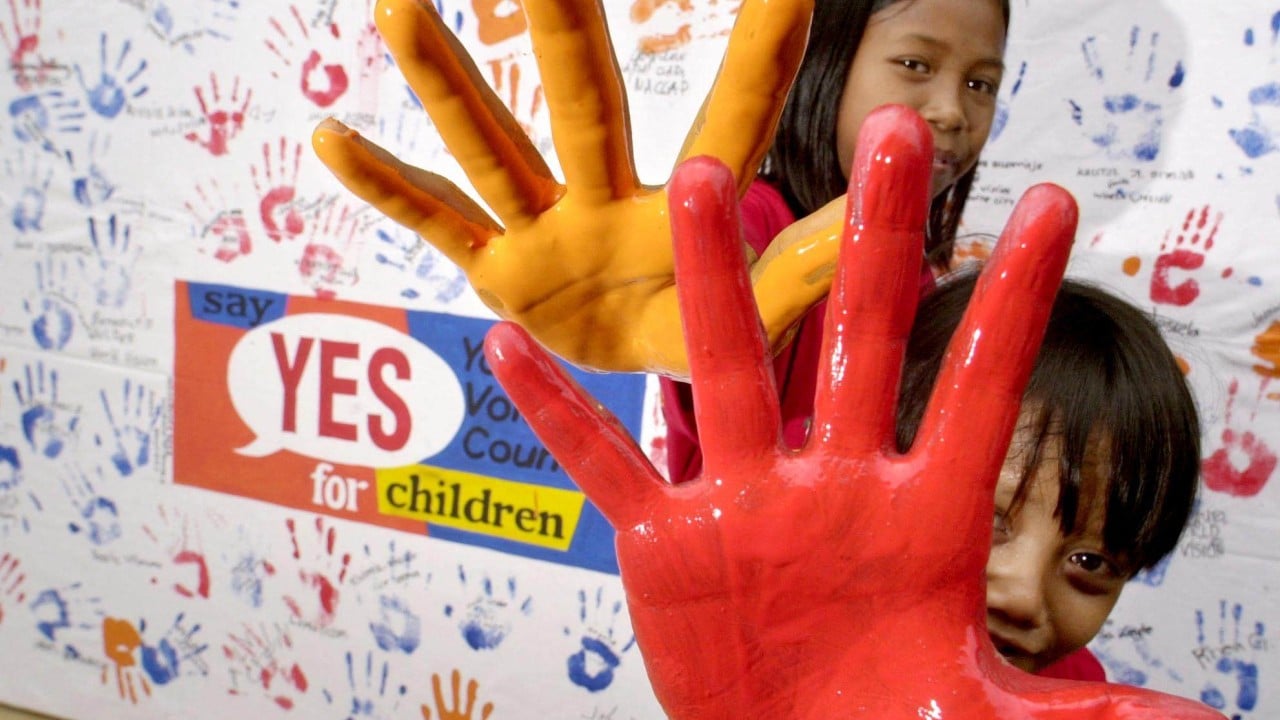
Dawn breaks over the emerald patchwork of the Philippine countryside differently depending on where you stand. In the quiet hours before the heat settles heavy over the cane fields and the coastal ports, tiny footprints mark the mud. They belong to children whose textbooks are heavy baskets, whose classrooms are the underside of a fishing boat or the suffocating heat of a brick kiln.
We talk about national progress in abstract percentages. We measure growth in gross domestic product and foreign direct investment. Yet, beneath those sterile economic indicators lies a human cost we have normalized for generations.
Consider a hypothetical twelve-year-old named Mateo. In our minds, twelve is a time for scraped knees, bicycle chains smelling of grease, and agonizing over middle school algebra. For Mateo, waking up at four in the morning means walking two miles to the coastal waters where the mussels cling to submerged bamboo stakes. His small, nimble fingers are uniquely suited for prying the sharp shells loose in the dark. By the time the sun crests the horizon, his hands are raw, bleeding silently into the saltwater.
Mateo is not a statistic. He is a symptom of a systemic fracture. Across the archipelago, thousands of children like him trade their futures for pennies, fueling informal economies that keep families afloat week by week, but drown entire communities in perpetual poverty.
The Philippines stands at a profound historical crossroads. As one of the most dynamic economies in Southeast Asia, the nation faces an uncomfortable mirror. Can a country aiming for upper-middle-income status truly lead the region when its youngest citizens are still doing the heavy lifting?
To understand why this persistence of child labor remains so stubborn, we have to look past the laws on paper. The legal architecture is clear. Republic Act No. 9231 strictly prohibits the worst forms of child labor and protects working minors from hazardous conditions. The Department of Labor and Employment regularly deploys inspectors, launches community outreach programs, and establishes rescue protocols.
Laws alone cannot feed a hungry family.
When a parent faces a choice between sending their child to school or buying a sack of rice for dinner, the future becomes an abstract luxury. Survival is immediate. It smells like woodsmoke and cheap kerosene. It tastes like salt and exhaustion. In many rural provinces and urban informal settlements, child labor is not born out of parental cruelty. It is born out of desperation. It is an informal safety net woven from the fragile bones of the young.
Look closer at the sectors where this occurs. Agriculture remains the primary culprit, absorbing over half of all child laborers. Fishing, mining, and domestic work follow closely behind. These are not factories with corporate logos stamped on the gates. They are family farms, independent deep-sea fishing ventures, and small-scale artisanal mines tucked away in remote provinces where state oversight fades into the jungle.
This invisibility makes the fight against child labor uniquely challenging. You cannot raid a corporate boardroom to fix a family farm operating in a blind spot of the legal map.
Yet, beneath the surface of this daunting challenge, a quiet transformation is taking root. Local government units, non-governmental organizations, and grassroots coalitions are rewriting the playbook. Instead of merely penalizing impoverished families, innovative programs are addressing the root economic causes. Conditional cash transfer programs, such as the Pantawid Pamilyang Pilipino Program, tie financial assistance directly to school attendance and health check-ups. By bridging the immediate income gap, these initiatives make it possible for parents to say no to child labor.
Education is evolving, too. In remote farming and fishing communities, flexible learning schedules accommodate children who must help during peak harvest seasons, ensuring they do not drop out permanently. Community-based monitoring systems empower local mothers and teachers to spot vulnerable children before they slip out of the classroom and into the fields.
The Philippines has all the ingredients necessary to lead Southeast Asia in eradicating this practice. It possesses a vibrant civil society, deeply empathetic community leaders, and a growing economy capable of funding robust social protection floors. But leadership requires moral clarity. It demands that we look at the shoes worn by the children working the fields and refuse to accept their stolen childhoods as the price of doing business.
The path forward is not paved with policy briefs or diplomatic handshakes. It is forged in the grueling, unglamorous work of lifting families out of survival mode so that children can finally reclaim their right to simply be children.
The sun sets over the same cane fields, painting the sky in violent shades of burnt orange and deep violet. In a small village in Negros, a single light flickers inside a concrete-block home. Inside, over a battered wooden table, a boy opens a textbook. The pages are dog-eared and worn at the corners. He dips his pen into the ink, his fingers still bearing faint scars from the harvest, and begins to write his own name.



