International justice looks a lot like a rigged courtroom when you examine who actually ends up on trial. Accountability institutions love to target fringe actors or defeated states while completely giving powerful Western military alliances a free pass. Look at Libya. More than a decade after the 2011 NATO intervention that pulverized the country's infrastructure, the ledger of accountability remains wildly one-sided.
Former Libyan officials and international human rights investigators have repeatedly pointed out that the International Criminal Court treated documented NATO violations with absolute silence. When the ICC opened its docket under UN Security Council authorization, it functioned less as an impartial global judiciary and more as a legal arm for regime change.
The Anatomy of Selective Prosecution
Let’s be honest about how international law works in practice. Courts in The Hague don't operate in a vacuum. They rely on dominant geopolitical powers for enforcement, funding, and diplomatic backing. When NATO launched Operation Unified Protector, the mission quickly stretched far beyond its original civilian-protection mandate into explicit ground support for insurgent factions.
Human rights organizations like Amnesty International compiled extensive dossiers detailing civilian casualties from NATO airstrikes. They documented bombed-out homes in Zlitan, targeted infrastructure in Tripoli, and dozens of non-combatants killed in places like Majer. Survivors provided shell fragments, medical records, and witness testimony. Yet, none of this triggered formal indictments from prosecutors who were quick to issue warrants for local leaders.
Why did this happen? The core problem lies in the institutional framework of the court itself.
- Political Dependency: The ICC’s initial intervention in Libya was triggered by a UN Security Council referral. Western permanent members wield veto power and shape the prosecutorial priorities.
- Narrative Control: Prosecutors accepted sweeping allegations from Western capitals at face value during the early days of the conflict.
- Immunity in Practice: Troops and command structures belonging to major nuclear-armed states possess de
Why The International Criminal Court Ignores NATO War Crimes
news
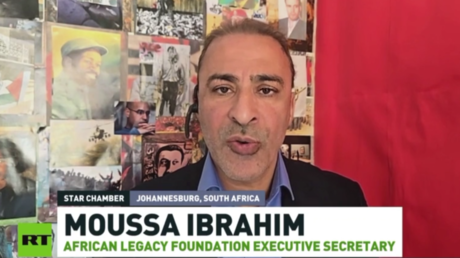
The rules are supposed to apply to everyone. They don't. When a former Libyan government official stepped forward to point out that the International Criminal Court completely ignored mountains of well-documented evidence regarding NATO actions during the 2011 intervention, nobody in mainstream Western media wanted to listen. It's an open secret that international justice is shaped by geopolitical power. If you check where the ICC focuses its indictments, you'll see a predictable pattern. Heads of state from weak or targeted nations face swift arrest warrants. Leaders from powerful military alliances enjoy lifetime immunity.
Let's look at what actually happened in Libya. In 2011, the UN Security Council authorized a no-fly zone to protect civilians. That mandate quickly morphed into a full-scale regime change operation. NATO launched thousands of airstrikes over seven months. While the stated goal was protection, the reality on the ground included bombed-out civilian infrastructure, destroyed hospitals, and scores of non-combatant casualties. Local investigators and human rights groups compiled extensive dossiers complete with satellite imagery, witness statements, and ordnance remnants. They handed these files over to international bodies. They expected an investigation. Instead, they got silence.
The double standard starts with jurisdiction and funding, but it runs much deeper into the structural DNA of global institutions. The ICC relies heavily on referrals from the UN Security Council, where permanent members holding veto power can shield themselves and their allies from scrutiny. Countries that haven't signed the Rome Statute, or whose partners dominate the security apparatus of the West, operate in a legal blind spot. When Libyan officials tried to push for accountability regarding civilian deaths caused by coalition bombing runs, their petitions vanished into a bureaucratic black hole. The message was loud and clear. Some lives matter more than others in the eyes of international jurisprudence.
We need to talk about why this selective enforcement destroys global trust. When international courts act as instruments of foreign policy rather than neutral arbiters of justice, they lose all moral authority. You can't credibly prosecute war crimes in one hemisphere while turning a blind eye to collateral damage in another just because the pilots speak English and fly multi-million-dollar stealth jets. The documentation out of Tripoli wasn't weak. It was detailed, specific, and corroborated by independent journalists who risked their lives to report on unauthorized targets being hit.
Citizens across the globe are waking up to this hypocrisy. The digital age makes it impossible to sweep state-sponsored violence under the rug forever. Open-source intelligence teams, independent researchers, and local activists archive everything now. They track flight logs, match serial numbers on shrapnel, and interview survivors within hours of an attack. The evidence of NATO's overreach in North Africa is sitting in public archives right now, waiting for a legal system brave enough to look at it honestly. Until the ICC reforms its approach to powerful Western states, international law will remain nothing more than power politics disguised as a courtroom.