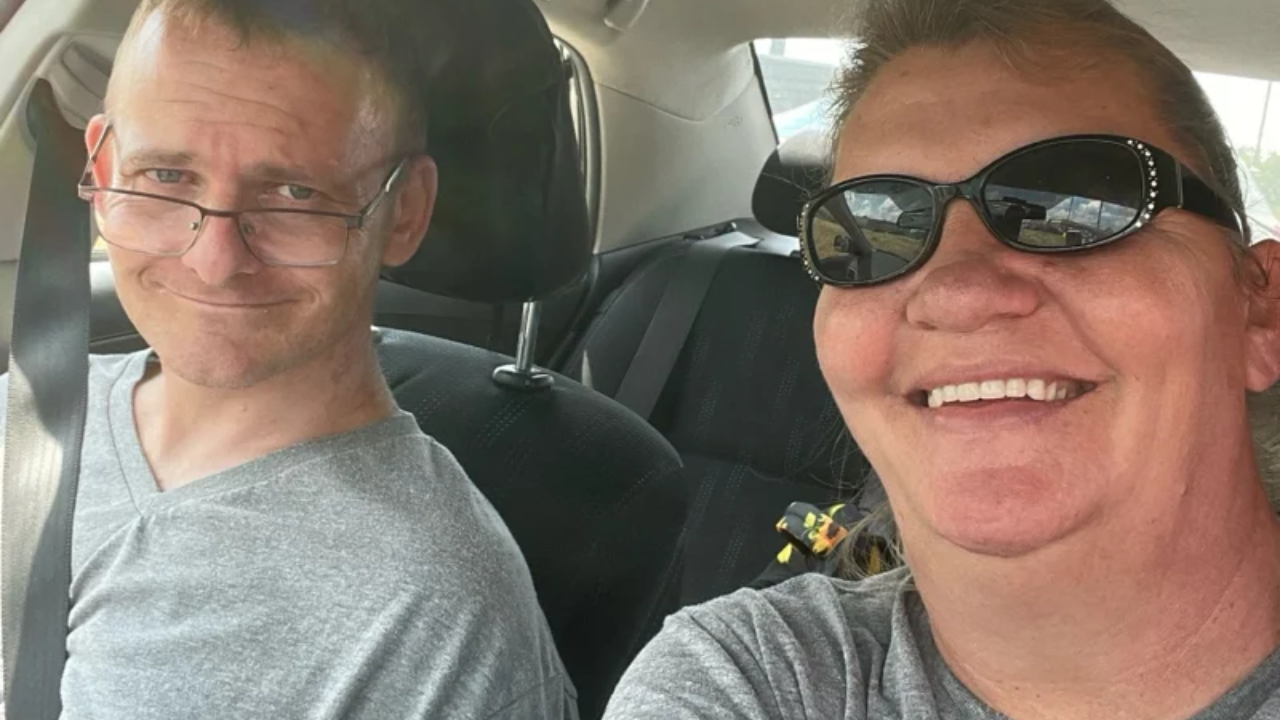
Federal health regulators moved to decertify Kentucky Organ Donor Affiliates after an investigation revealed that surgical staff nearly harvested organs from a living patient, Anthony Thomas "TJ" Hoover II, in October 2021. The Centers for Medicare & Medicaid Services (CMS) initiated the rare enforcement action following congressional testimony and whistleblower accounts detailing how the organ procurement organization (OPO) pushed forward with a recovery procedure despite clear signs that Hoover was waking up on the operating table. For decades, the American transplant network has operated behind a curtain of self-regulation and moral immunity, but this single, terrifying breakdown in Richmond, Kentucky, has exposed structural rot across the entire US organ donation system.
A System Built on Blind Trust
When a family agrees to donate a loved one's organs, they hand over absolute authority to a regional monopoly. There are 56 federally designated OPOs across the United States, and each one holds exclusive rights to coordinate organ recovery within its assigned geographic territory. Hospitals cannot shop around for a better partner. Families cannot request a different procurement team.
For years, that monopoly status bred institutional arrogance. While transplant surgeons and hospital administrators faced intense scrutiny over patient outcomes, OPOs largely graded their own homework. Metrics were self-reported. Underperforming organizations rarely lost their federal contracts, even when thousands of viable organs went unrecovered or were damaged in transit.
Then came the case of TJ Hoover.
In October 2021, Hoover was admitted to Baptist Health Richmond following a drug overdose. Doctors declared him brain-dead, and his family gave consent to take him off life support and donate his organs. What happened next violated the most basic rule of medicine—the Dead Donor Rule, which strictly mandates that a patient must be dead before any vital organs are removed.
According to whistleblower testimony provided to the House Energy and Commerce Committee, Hoover began thrashing on the operating table during the cardiac catheterization procedure meant to assess his organs. He was visibly crying. He was pulling away from painful stimuli. The attending doctors refused to proceed with the harvest, yet whistleblowers reported that coordinators from Kentucky Organ Donor Affiliates (KODA) pressured hospital staff to find another surgeon willing to finish the job.
Hoover survived. He walked out of that hospital, albeit with lasting neurological and physical challenges, and returned home to his sister, Donna Rhorer, who became his primary caregiver. Had the procurement team had its way, he would have been killed on a surgical table in the name of saving someone else.
How Donation After Circulatory Death Blurs the Lines
To understand how an error of this magnitude happens, you have to look closely at the mechanics of modern organ procurement. Most people assume organ donors are exclusively individuals who have suffered catastrophic, irreversible brain death—where all electrical activity in the brain has permanently ceased. That used to be the standard.
Today, however, a massive portion of the transplant supply comes from Donation After Circulatory Death (DCD).
In a DCD scenario, the patient is not brain-dead. They have suffered a devastating injury or illness with no realistic hope of meaningful recovery, and the family has decided to withdraw life-sustaining treatment. The protocol is rigid and high-stakes:
- The patient is brought to the operating room or an adjacent room.
- Ventilators and medications are withdrawn.
- The surgical team waits for the heart to stop beating.
- Once cardiac arrest occurs, doctors must observe a mandatory "hands-off" period—typically between two and five minutes—to ensure the heart does not spontaneously restart, a phenomenon known as autoresuscitation.
- Only after that timer expires can surgeons make the first incision.
The biological clock is brutal. The moment the heart stops, oxygen stops flowing to the liver, kidneys, and lungs. Every second of warm ischemia time degrades the quality of those organs. If the patient takes too long to die after life support is removed—usually more than 60 to 90 minutes—the organs become unusable, and the procurement is aborted.
That ticking clock creates immense psychological and institutional pressure on OPO coordinators. Their entire professional mandate is to maximize the number of organs recovered. When a potential donor lingers, or when neurological signs flicker unexpectedly, the boundary between aggressive organ preservation and premature intervention can dangerously erode.
In Hoover's case, the failure occurred even earlier in the chain. His initial declaration of brain death was flawed, and the communication breakdown between the hospital's clinical team and the OPO coordinators turned a diagnostic error into a near-fatal surgical crisis.
The Regulatory Hammer Finally Drops
For three years after Hoover left Baptist Health Richmond, the incident remained largely buried within internal hospital reviews and federal complaint logs. It took brave whistleblowers—including former KODA organ preservationist Nyckoletta Martin—stepping forward to Congress in late 2024 to force the issue into the public square.
The reaction from federal oversight bodies was swift, though long overdue. The Health Resources and Services Administration (HRSA) conducted its own review, corroborating the whistleblower accounts and finding systemic failures in how KODA handled neurological assessments and staff complaints. Soon after, CMS issued a formal notice of decertification against the organization, which had recently merged with another group to form Network for Hope.
Decertification is the nuclear option in the transplant world. It strips an OPO of its Medicare and Medicaid funding, effectively shutting down its operations and handing its territory over to a competing organization.
Historically, CMS almost never pulled that trigger. Between 1990 and 2020, not a single OPO was decertified for poor performance, despite massive disparities in how efficiently different regions recovered organs. Some OPOs were leaving behind more than half of the viable organs in their territories while their executives collected six-figure and seven-figure salaries.
The regulatory shift began in 2020, when federal rules were rewritten to tie OPO certification directly to objective, verifiable mortality data from the Centers for Disease Control and Prevention (CDC) rather than self-reported numbers. Those new rules sorted OPOs into three tiers:
- Tier 1: Top performers that automatically earn recertification.
- Tier 2: Mid-level performers that must compete against other OPOs to keep their service areas.
- Tier 3: Failing organizations slated for automatic decertification.
Even under that stricter framework, KODA's decertification stands apart. It was not triggered merely by low organ recovery numbers; it was triggered by a catastrophic breakdown in basic patient safety and ethical boundaries.
The Collateral Damage of Eroding Trust
There is an uncomfortable truth that transplant advocates hate discussing publicly, yet every veteran medical reporter knows it well: the entire organ donation enterprise runs on fragile, voluntary public goodwill.
Over 100,000 Americans sit on the national transplant waiting list. Seventeen people die every day waiting for an organ that never arrives. Because the need is so desperate, the medical establishment has spent decades building a public relations fortress around organ donation, encouraging citizens to check the box on their driver's licenses with assurances that doctors will always fight to save their lives first.
When a story like TJ Hoover's breaks into the mainstream news, it validates the single darkest fear that keeps people from registering as donors—the suspicion that if you end up in an emergency room with a donor designation on your ID, medical teams will view you as spare parts rather than a patient.
Following the congressional hearings and media coverage of the Kentucky incident, state donor registries across the country reported spikes in individuals actively removing their names from organ donor lists. That is the real tragedy of KODA's failure. By cutting corners and ignoring screaming red flags in one operating room, the organization endangered the lives of thousands of future transplant recipients who depend on public faith in the system.
Counter-Arguments and the Complexity of Brain Death
To examine this crisis fairly, it is necessary to look at the clinical gray areas that physicians and procurement teams navigate daily. Critics of the OPO system often paint procurement coordinators as callous vultures, but the reality inside an intensive care unit is far more complicated.
Determining brain death is not as simple as checking a pulse. It requires a rigorous series of clinical exams: verifying the absence of brainstem reflexes, performing an apnea test to see if the patient attempts to breathe when disconnected from a ventilator, and ruling out confounding factors like hypothermia, severe metabolic disturbances, or lingering sedative drugs.
In overdose cases—like Hoover's—the diagnostic picture is notoriously murky. High doses of illicit substances or medical sedatives can suppress brain activity so deeply that a patient mimics total brain death for hours or even days before the body clears the toxins. If a hospital physician rushes the neurological exam before those substances have fully metabolized, the initial diagnosis will be wrong.
Furthermore, dead bodies can move. Spinal reflexes—known colloquially as the Lazarus sign—can cause a genuinely brain-dead patient to twitch, flex their arms, or even arch their back after life support is removed. To an untrained observer, those movements look like signs of life. OPO coordinators are trained to recognize spinal reflexes and reassure families and operating room staff that the patient is still deceased.
The fatal flaw in Richmond, Kentucky, was that KODA staff allegedly treated clear, purposeful neurological responses—tears, thrashing, pulling away from pain—as mere spinal reflexes, dismissing the bedside doctors and nurses who knew the difference. When institutional momentum overrides clinical reality, training becomes a liability rather than a safeguard.
Structural Fixes the Industry Still Resists
Decertifying one rogue organization in Kentucky will not fix a system designed with baked-in conflicts of interest. True reform requires dismantling the structural incentives that allowed KODA to operate unchecked for years.
First, separation of powers inside the hospital must be absolute. Currently, OPO coordinators routinely access patient electronic medical records before a family has even been approached about donation, and they often remain heavily involved in clinical discussions around end-of-life care. Federal rules need to establish an unbreakable firewall: the clinical team treating the patient must have zero contact with procurement coordinators regarding care decisions, and no OPO employee should ever pressure a physician to sign a death declaration or proceed with a surgery.
Second, independent neurological verification must become mandatory for DCD and overdose cases. Relying on a single overwhelmed hospitalist or emergency physician to declare brain death in complex toxicology cases invites catastrophic errors. Requiring a second, independent neurologist—or mandatory cerebral blood flow imaging—when drug toxicity is present would eliminate the diagnostic blind spot that nearly killed Hoover.
Third, whistleblower protections within the transplant network must be reinforced with federal teeth. The United Network for Organ Sharing (UNOS), the private nonprofit that has managed the national transplant system under federal contract for nearly forty years, has historically operated with minimal transparency. HRSA's ongoing initiative to break up the UNOS monopoly and introduce competitive bidding for different parts of the transplant infrastructure is a step in the right direction, but frontline preservationists and nurses still risk career suicide when they report misconduct.
Finally, real-time video and physiological monitoring during procurement procedures should be standard practice. Aviation solved its safety crisis decades ago by putting black boxes in every cockpit and removing blame from error reporting. Operating rooms where organs are recovered already record vital signs continuously; archiving that data for automatic, random audits by CMS would ensure that no coordinator ever feels emboldened to ignore a rising heart rate or purposeful movement on the table.
Where the Accountability Stops
Network for Hope, the entity formed by KODA's merger, has launched appeals and insisted that it has overhauled its leadership, retrained its staff, and instituted strict new clinical protocols since the 2021 incident. Hospital administrators at Baptist Health Richmond have similarly pointed to internal policy updates designed to prevent communication failures.
On paper, the checklists have been updated. The flowcharts look cleaner.
Yet checklists do not cure a culture that measures success exclusively by organ yield. As long as federal metrics reward volume without imposing immediate, career-ending penalties for safety breaches, the pressure inside those operating rooms will remain relentless. TJ Hoover only survived because a handful of doctors and nurses in Kentucky refused to pick up a scalpel while a living man cried on the table—and the next patient might not be lucky enough to have a surgical team willing to say no.