When British counter-terrorism officers detained an active-duty United States Army officer on suspicion of passing classified secrets to Russian intelligence, the arrest shattered decades of quiet diplomatic protocol between Washington and London. Typically, espionage cases involving allied military personnel stationed on foreign soil are handled behind closed doors through quiet expulsions or discreet military court-martials. Taking the suspect into custody under the UK National Security Act signals a severe breach that forced intelligence agencies on both sides of the Atlantic into immediate damage control.
The arrest exposes a critical vulnerability inside the Western intelligence apparatus. For years, security officials assumed that modern Russian espionage relied primarily on cyber intrusions, commercial spyware, and deep-cover illegals operating outside official military channels. Instead, Moscow has returned to its oldest and most effective tradecraft—recruiting insiders with direct physical and digital access to allied command structures.
Why Allied Bases in Britain Are Prime Intelligence Targets
The United Kingdom is far more than a symbolic partner for the Pentagon. It serves as the forward operational hub for American military logistics, signals intelligence, and strategic air power across Europe.
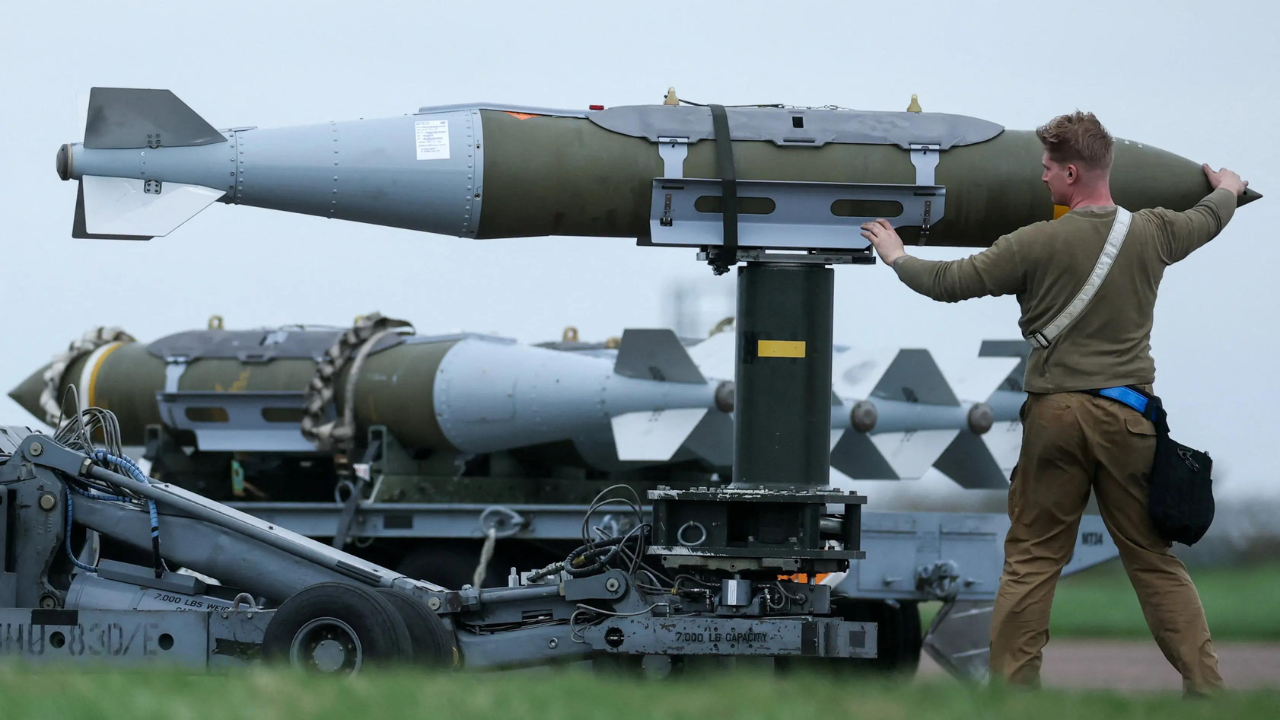
Bases like RAF Lakenheath, RAF Mildenhall, and RAF Croughton house thousands of American service members and civilian contractors. These installations manage critical communications relays, coordinate reconnaissance flights over Eastern Europe, and store high-grade tactical hardware. For a foreign intelligence service like the Russian GRU or SVR, a single compromised officer inside one of these hubs offers an unobstructed window into NATO force readiness and operational planning.
Russian case officers do not need to penetrate the Pentagon in Virginia when they can target an officer sitting at a desk in Suffolk or Oxfordshire. The access is often identical, yet the counterintelligence perimeter around overseas installations frequently suffers from divided jurisdiction.
The Jurisdictional Blind Spot
Operating on allied territory creates inherent friction between host-nation police and visiting military authorities. Under the NATO Status of Forces Agreement, legal jurisdiction over offenses committed by visiting troops is carefully divided.
- Military jurisdiction typically covers offenses committed strictly on base or against fellow service members.
- Host-nation jurisdiction applies when an offense threatens the national security of the host country or occurs off-base within civilian society.
- Intelligence handoffs require seamless coordination between the FBI, Army Counterintelligence, and Britain's MI5.
When a suspect steps off base to meet a handler, drop a dead-letter package, or transmit encrypted files over a civilian network, they enter British legal territory. Historically, MI5 would quietly hand the evidence to American counterparts to avoid public embarrassment. That London chose a formal arrest under domestic counter-espionage statutes indicates that the compromised intelligence directly threatened British national security, or that the breach had already grown too large to contain quietly.
How Modern Recruitment Bypasses Traditional Vetting
Every military officer holding a Top Secret or Sensitive Compartmented Information (SCI) clearance undergoes rigorous background investigations. Investigators scrutinize financial records, foreign travel, personal relationships, and psychological stability. Yet insider threats continue to slip through the net.
The reason lies in how intelligence recruitment has evolved. Cold War spies often walked into embassies carrying briefcases of documents, driven by ideological sympathy or sudden financial desperation. Modern recruitment is slower, quieter, and largely digital.
The Digital Approach and Financial Leverage
Foreign intelligence services constantly scrape social media, professional networking sites, and leaked data breaches to map the personal lives of cleared military personnel. Algorithms flag officers who express professional frustration, display sudden lifestyle changes, or struggle with hidden debts.
Once a target is identified, the initial approach rarely looks like espionage. It often begins as a benign inquiry from a purported think tank, a defense consultancy, or an academic researcher offering generous stipends for "unclassified market analysis."
By the time the officer realizes they are speaking with a foreign intelligence proxy, they have already accepted money and signed non-disclosure agreements. At that point, the handler introduces blackmail alongside escalating cash payments. What started as a side hustle writing harmless white papers transforms into treason.
The Psychological Trap of the Disgruntled Insider
Decades of counterintelligence case studies show that money is rarely the sole motivator. Ego, resentment, and a distorted sense of grievance play an equally powerful role.
Military officers stationed abroad often operate in high-stress environments with immense responsibility but limited public recognition. When an officer feels passed over for promotion, alienated from their command, or ideologically opposed to current foreign policy, they become prime candidates for manipulation. Skilled handlers validate those grievances, convincing the target that leaking secrets is a way to correct institutional failures or prove their own intellectual superiority.
The Strategic Damage to NATO Operations
Assessing the fallout from an espionage arrest requires looking beyond the individual documents stolen. Intelligence agencies conduct formal damage assessments that can take years to complete, tracing every network the suspect touched and every operational plan they viewed.
If the arrested officer had access to joint UK-US intelligence systems, the compromise extends well beyond American troop movements.
- Signals Intelligence Methods: If the officer knew which frequencies, satellites, or interception nodes NATO uses to monitor Russian military communications, Moscow can immediately alter its encryption and render billions of dollars in surveillance infrastructure blind.
- Human Asset Exposure: Compromised tactical briefings often contain subtle clues about where Western intelligence obtained its information. Russian counterintelligence excels at reverse-engineering leaks to identify and eliminate informants inside Moscow.
- War Gaming and Contingency Plans: NATO continuously updates defensive blueprints for the Baltic states, the Black Sea, and the Arctic. Knowing how allied commanders plan to respond to specific provocations allows Russian planners to design countermeasures before a crisis even begins.
The most immediate operational cost is paralysis. Whenever a major breach occurs, intelligence sharing slows down. Commands compartmentalize data further, revoke clearances across entire units, and force allies to scrub compromised communication channels. In an active geopolitical crisis, that self-imposed friction gives an adversary a decisive time advantage.
Historical Echoes of Allied Espionage Breaches
This arrest does not exist in a vacuum. It follows a long, sobering lineage of insider betrayals that forced Western intelligence services to overhaul their security doctrines.
Consider the case of Aldrich Ames inside the CIA or Robert Hanssen inside the FBI. Both men operated for years despite glaring red flags—unexplained wealth, erratic behavior, and unauthorized access to files outside their immediate duties. In both instances, institutional arrogance blinded supervisors to the possibility that one of their own had turned.
More recently, the leaks involving Air National Guardsman Jack Teixeira demonstrated how junior personnel with routine administrative access could siphon hundreds of classified documents onto public gaming servers without triggering automated alerts.
Lessons Ignored
Each scandal produced promises of continuous vetting and stricter digital monitoring. Yet the fundamental tension remains unresolved. Modern military operations depend on rapid information sharing across allied networks. Building higher digital walls slows down warfighters; lowering those walls invites theft.
When an officer stationed in Britain is arrested for spying, it proves that the pendulum swung too far toward access at the expense of oversight. Even after the Teixeira leaks, internal auditing systems failed to catch an officer exfiltrating sensitive material or maintaining covert contact with a hostile service on allied soil.
The Diplomatic Fallout Between Washington and London
The Special Relationship between the United States and the United Kingdom rests heavily on intelligence integration. Through the UKUSA Agreement—the foundation of the broader Five Eyes alliance—London and Washington pool their most sensitive secrets with virtually no filters.
Trust is the currency of that partnership. When an American officer betrays that trust while operating under British protection, the political reverberations hit the highest levels of government.
British intelligence officials face intense domestic pressure to demonstrate that foreign military bases on UK soil do not compromise national security. By executing a public arrest under British law rather than quietly deporting the suspect, London sent an unmistakable message to Washington—security protocols on US bases must tighten immediately.
Behind closed doors, Pentagon officials now face uncomfortable audits from MI5 and GCHQ. British counterintelligence will demand full transparency regarding who the officer contacted, what joint systems they accessed, and why American internal vetting missed the warning signs.
Why Counterintelligence Reforms Keep Failing
Whenever a spy is caught, lawmakers demand new regulations, stricter polygraphs, and expanded surveillance of cleared personnel. These measures rarely solve the root problem because they treat espionage as a technical failure rather than a human one.
Continuous vetting algorithms can flag a sudden credit score drop or an unreported foreign trip. They cannot detect quiet resentment, ideological drift, or a burner phone handed over during a ten-minute walk through a London park.
Furthermore, security clearances have become vastly over-issued. Millions of military personnel, civil servants, and private contractors hold Top Secret clearances, creating an unmanageable haystack for counterintelligence investigators. When everyone is cleared, scrutiny becomes shallow and bureaucratic. Investigators spend their days clearing routine paperwork rather than hunting actual threats.
Real security requires shrinking the footprint of classified access. Fewer people should hold high-level clearances, compartmentation must be strictly enforced regardless of rank, and counterintelligence teams on overseas bases need integrated joint command structures rather than siloed national jurisdictions.
The Reality of the Invisible War
The public tends to view espionage through the lens of Cold War cinema—dramatic midnight exchanges on foggy bridges and dramatic courtroom confessions. The reality is far more mundane and infinitely more dangerous.
Today's espionage war is fought inside mundane office buildings on quiet military bases, mediated through encrypted messaging apps and cryptocurrency wallets. Russian intelligence services have rebuilt their human networks across Europe with ruthless efficiency, compensating for diplomatic expulsions by recruiting insiders who already sit behind allied security perimeters.
Arresting one officer stops a single leak, but it does not close the vulnerability that allowed the recruitment to happen in the first place. Until Western militaries drastically reduce the number of personnel granted sweeping digital access and rebuild genuine counterintelligence oversight on overseas installations, Moscow will keep finding willing insiders behind the wire.