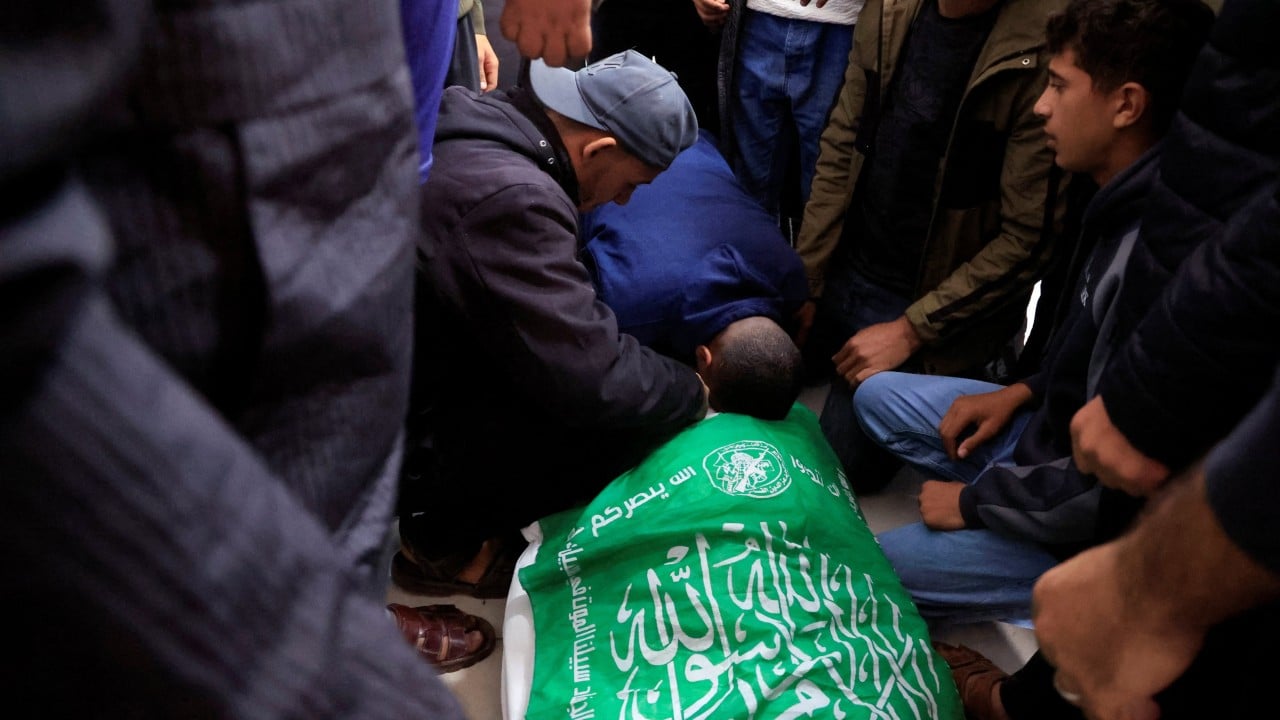
When an Israeli airstrike kills a senior Hamas commander in Gaza, the immediate headlines follow a familiar script. Military spokespeople announce the elimination of a high-value target, list the attacks the commander orchestrated, and frame the operation as a decisive blow against militant infrastructure. Hours later, Hamas confirms the death, praises the commander as a martyr, and vows that the organization's chain of command remains unbroken.
Both narratives miss the deeper operational reality. Targeted killings are not isolated tactical events; they are the centerpiece of a decades-long Israeli military doctrine designed to degrade leadership capacity, disrupt operational tempo, and force asymmetric adversaries into defensive survival modes. Yet history across Gaza, Lebanon, and the broader region demonstrates a persistent paradox: removing a top commander rarely collapses the organization, and often accelerates its decentralization. Learn more on a similar topic: this related article.
Understanding what actually happens in the wake of a high-profile strike requires looking past the press releases and examining the intelligence architecture, the structural resilience of militant networks, and the strategic trade-offs that both sides accept every time a precision munition hits a safehouse or tunnel complex.
The Intelligence Machine Behind the Strike
A successful strike against a senior Hamas figure is the final seconds of an intelligence operation that often spans months or years. Since Hamas took full control of Gaza in 2007, the territory has become one of the most densely monitored battlespaces on earth. Further analysis by The New York Times explores similar views on the subject.
Israel's intelligence apparatus—combining Unit 8200 for signals intelligence, the Shin Bet for human intelligence networks, and the Israeli Air Force for persistent aerial surveillance—operates on a sensor-to-shooter loop that has compressed dramatically over the past decade. Where locating and verifying a target once took days of cross-referencing, artificial intelligence-assisted data fusion now correlates mobile phone metadata, drone feeds, thermal signatures, and informant tips in near real time.
Senior commanders know this. As a result, the individuals at the top of Hamas's military wing, the Izz ad-Din al-Qassam Brigades, operate under strict operational security protocols. They avoid electronic devices, rely on human couriers, rotate constantly through underground tunnel networks, and rarely sleep in the same location twice.
When a strike succeeds, it usually signals one of three breakdowns in that defensive posture:
- Operational exposure during active combat: High-intensity fighting forces commanders to communicate more frequently to coordinate units, move supplies, or adjust defensive lines. Every message or physical movement creates a signature.
- Human intelligence penetration: Financial pressure, internal rivalries, and the grinding toll of prolonged conflict create openings for intelligence services to recruit informants inside support networks—drivers, guards, or logistics handlers who know a commander's routine even if they do not know his strategic plans.
- Pattern-of-life fatigue: Even the most disciplined operatives develop subtle habits over time. Surveillance algorithms are built to detect tiny anomalies—a specific vehicle visiting a neighborhood twice in a month, or a sudden spike in courier traffic to a seemingly residential building.
The strike itself is merely the execution phase. The real strategic contest happens in the quiet intervals between explosions, as Israeli analysts map the social and operational graphs of Hamas's leadership and militant planners try to figure out which link in their security chain failed.
How Hamas Absorbs Leadership Losses
Western military observers often evaluate decapitation strikes through the lens of conventional armies, where removing a division commander can paralyze units waiting for orders. Hamas does not function that way. Its military wing was intentionally engineered to survive the loss of its top brass.
Founded in the late 1980s and shaped by decades of Israeli targeted assassinations—including the killings of founder Sheikh Ahmed Yassin and co-founder Abdel Aziz al-Rantisi in 2004, as well as military chief Ahmed Jabari in 2012—the Qassam Brigades operate on a cellular, decentralized command model.
Regional brigades across northern Gaza, Gaza City, central Gaza, Khan Younis, and Rafah possess significant tactical autonomy. While strategic decisions—such as initiating a major war, negotiating a ceasefire, or allocating strategic rocket reserves—rest with the top leadership council, day-to-day combat operations are delegated to local battalion and company commanders.
When a senior commander is killed, three things happen almost immediately:
- Pre-designated succession kicks in. Every senior position has a clear deputy and a tertiary backup already briefed on ongoing operations. There is no power vacuum and no public leadership contest.
- Operational authority shifts downward. Local unit leaders execute pre-approved contingency plans without waiting for centralized approval, making the organization harder to disrupt through further top-down strikes.
- Security protocols tighten across the board. Surviving commanders immediately purge communication channels, relocate safehouses, and launch internal counter-espionage sweeps to identify potential leaks.
This structural redundancy explains why Hamas has repeatedly absorbed the loss of veteran commanders—such as Marwan Issa, Mohammed Deif, and Yahya Sinwar—without suffering immediate organizational collapse. The institutional knowledge is distributed across dozens of mid-level officers who grew up inside the tunnel system and spent their entire adult lives preparing for asymmetric warfare.
The Strategic Paradox of Decapitation
If targeted killings do not destroy Hamas's ability to fight, why does Israel invest immense intelligence and military resources into hunting individual commanders?
The answer lies in the distinction between organizational survival and strategic capability. You do not need to erase an organization to degrade its effectiveness.
Senior commanders are not interchangeable cogs. A veteran brigade leader or operations chief brings decades of institutional memory, personal relationships across factions, technical expertise in weapons smuggling or tunnel engineering, and the political authority to enforce discipline among younger, more impulsive fighters. When that individual is killed, his replacement may hold the same title, but he rarely possesses the same strategic depth.
Consider the impact on three critical areas:
1. Complex Operation Planning
Large-scale, coordinated operations require months of meticulous planning, compartmentalized logistics, and cross-unit synchronization. Losing the architects behind these operations forces Hamas to scrap existing blueprints and revert to simpler, localized tactics—ambushes, sniper fire, and small-unit rocket launches—that are far less threatening strategically.
2. Deterrence and Cognitive Load
When senior leaders must spend 90 percent of their waking hours simply staying alive—moving between subterranean bunkers, vetting couriers, and avoiding surveillance—they have far less bandwidth to govern, recruit, or plan offensive campaigns. The psychological weight of constant pursuit degrades decision-making quality across the entire leadership tier.
3. Diplomatic and Political Leverage
In ceasefire and hostage negotiations, the survival or elimination of key military figures directly alters the calculus at the bargaining table. Removing hardline military commanders who control captive networks or veto political compromises can shift internal dynamics within Hamas's politburo, even if the external rhetoric remains defiant.
Yet there is an undeniable counter-argument that veteran intelligence officials quietly acknowledge. Targeted killings often eliminate pragmatic, experienced commanders who understand the limits of violence and can enforce a ceasefire once agreed upon. Their replacements—younger, radicalized under siege, and eager to prove themselves—frequently adopt more reckless tactics and show less interest in long-term truces.
The Civilian Toll and International Fallout
No analysis of Israeli strikes in Gaza is complete without confronting the operational environment in which they occur. Gaza is one of the most densely populated strips of land in the world, and Hamas deliberately embeds its military infrastructure—command centers, weapons caches, and tunnel shafts—beneath and inside civilian neighborhoods, schools, mosques, and hospitals.
For Israeli planners, this creates a brutal arithmetic. Intelligence may confirm that a top commander is meeting with subordinates inside an apartment building or subterranean bunker beneath a crowded district. Waiting for him to emerge into an open field might mean losing the target permanently. Striking immediately guarantees high collateral damage.
The resulting civilian casualties carry severe strategic costs for Israel:
- Erosion of diplomatic backing: Every high-casualty strike triggers international condemnation, strains relations with Washington and European allies, and fuels legal challenges at the International Court of Justice and International Criminal Court.
- Recruitment fuel for adversaries: For every commander killed in a strike that also claims civilian lives, dozens of grieving relatives and neighbors become prime recruits for Hamas or splinter militant groups. The tactical gain of removing one experienced operative is weighed against the generational radicalization of the surrounding population.
- Information warfare defeat: In modern conflict, visual evidence of destruction travels globally within seconds. Even when military intelligence proves a target was legitimate, the public narrative is overwhelmingly shaped by the immediate human aftermath on the ground.
What History Tells Us About the Endgame
Looking across nearly four decades of targeted assassinations—from the 1996 killing of Hamas bomb-maker Yahya Ayyash to the elimination of Hezbollah chief Hassan Nasrallah in Beirut and senior Hamas leaders in Gaza—one pattern stands out above all others.
Targeted killings are an effective tactical tool for buying time, disrupting specific plots, and imposing heavy costs on militant leadership. They are a poor political strategy on their own.
History offers few examples where airpower and intelligence-driven assassinations alone permanently defeated a deeply rooted insurgency with broad social ties and an ideological core. When the United States eliminated top al-Qaeda and ISIS leaders across Iraq, Afghanistan, and Yemen, those networks fractured and weakened, yet they persisted in mutated forms until local political realities and ground-level governance changed.
The same reality governs Gaza. Every time a top Hamas commander is killed, the strike demonstrates Israel's formidable intelligence reach and tactical precision. It forces the surviving leadership deeper underground and complicates their ability to wage coordinated warfare.
But military pressure without a viable political horizon leaves a vacuum that armed groups are uniquely built to fill. Until there is an alternative governing framework capable of providing security, economic survival, and political legitimacy in Gaza, the elimination of one commander will always be followed by the quiet promotion of the next.