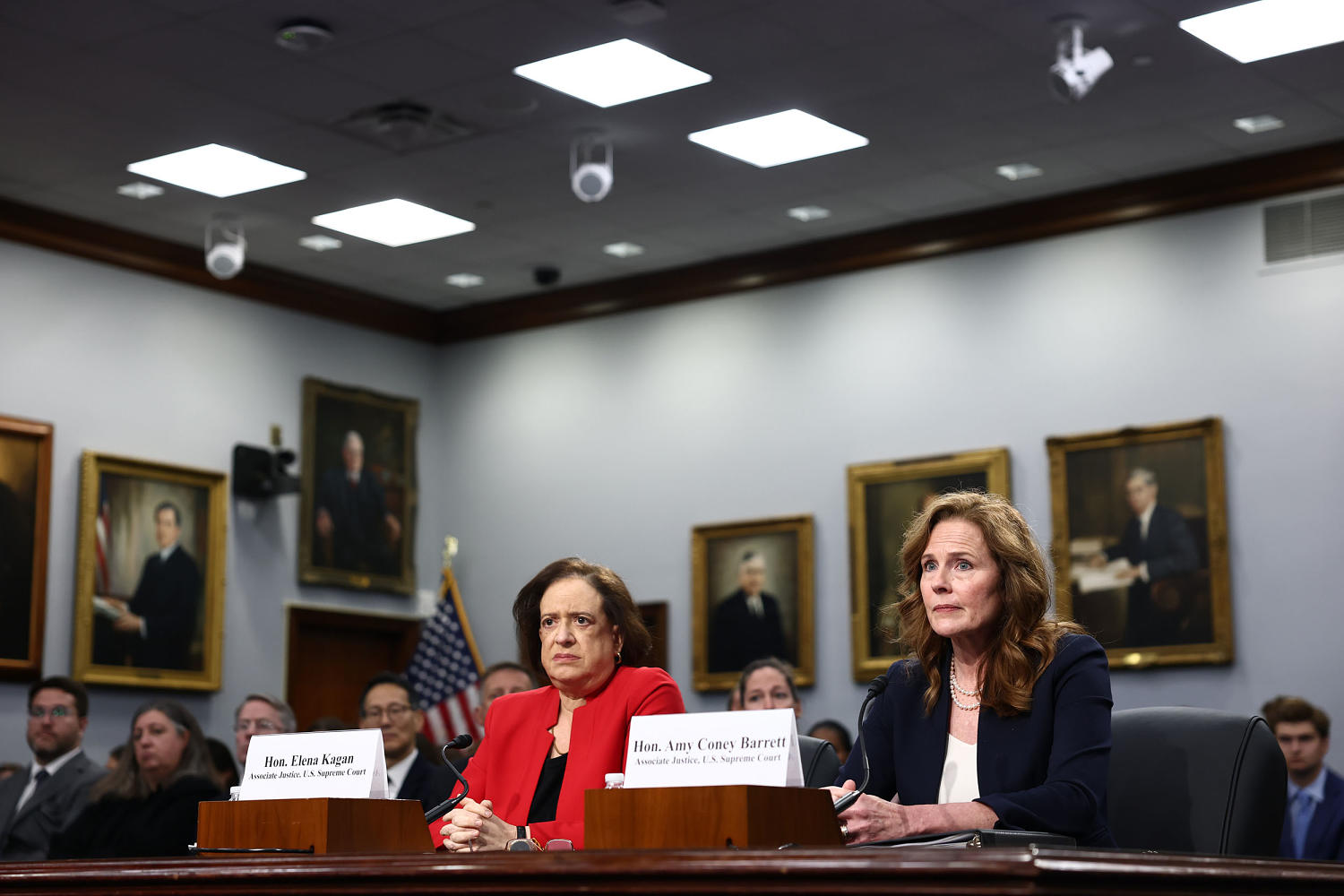
Supreme Court Justice Amy Coney Barrett recently detailed a chilling swatting incident during congressional testimony, throwing a harsh spotlight on a security vacuum that threatens the independent judiciary. Swatting—the malicious act of placing a hoax emergency call to dispatch heavily armed police to a target's residence—has evolved from an online harassment tactic into a tool of political intimidation. The weaponization of emergency services against high-ranking federal officials represents a systemic breakdown where digital anonymity clashes with physical security.
While the public focus remains on the high-profile nature of the targets, the operational mechanics of these attacks reveal a much deeper vulnerability. It is not just about the politicians and judges in the headlines. The crisis exposes a fundamental flaw in how the nation’s emergency response infrastructure handles spoofed data and digital identities.
The Mechanics of Intimidation
Swatting relies on a simple, devastating exploit. Attackers utilize Voice over Internet Protocol (VoIP) services, spoofing applications, or compromised dark web accounts to mask their true location and identity. They call local emergency dispatchers, often using non-public administrative lines rather than standard 911 systems to bypass regional routing restrictions.
The callers fabricate high-stakes crises. They report active shooters, hostage situations, or imminent bomb threats, choosing scenarios engineered to trigger an immediate, high-tactical response.
Local police departments face an impossible choice. Dispatchers must treat every call as legitimate because the cost of a delayed response to a real mass-casualty event is catastrophic. When a call comes in claiming a barricaded suspect has a hostage at a specific address, law enforcement executes its standard operating procedure. Heavily armed tactical units arrive within minutes, breaching doors and securing the perimeter with weapons drawn.
The danger is immediate. A confused, innocent homeowner opening the door to a SWAT team creates a high-probability scenario for accidental, fatal gunfire. For a Supreme Court Justice with a permanent, armed security detail, the risk multiplies exponentially. A confrontation between local police responding to a hoax and federal marshals defending a judicial target could easily turn lethal in seconds.
A Systemic Failure of Digital Sovereignty
The government cannot protect its officials because it cannot protect basic data privacy. The swatting of federal judges is the direct consequence of a multi-billion-dollar data broker industry that operates with minimal federal oversight.
Public records, voter registration rolls, property deeds, and corporate filings are routinely scraped by commercial aggregators. Anyone with a credit card and an internet connection can purchase a comprehensive profile of a target within minutes. This profile includes home addresses, unlisted phone numbers, vehicle registrations, and the names of family members.
[Data Brokers] ──> [Scraped Public Records] ──> [Dark Web/Commercial Aggregators] ──> [Attacker] ──> [Spoofed VoIP Call] ──> [Local Police Dispatch]
Efforts to scrub this data are largely ineffective. While federal laws like the Daniel Anderl Judicial Security and Privacy Act aim to restrict the publication of judges' personal information, the legislation lacks teeth when confronting decentralized internet architecture. Data brokers hide behind complex corporate structures, and international hosting providers ignore takedown notices entirely.
Furthermore, the technology used to perpetrate these hoaxes has outpaced law enforcement's ability to trace it. Proxy servers, virtual private networks (VPNs), and end-to-end encrypted messaging platforms allow bad actors to operate from jurisdictions far outside the reach of US federal warrants. A caller sitting in an internet cafe in Eastern Europe can trigger a tactical police deployment in a Virginia suburb with total impunity.
The Friction Between Transparency and Security
Securing public officials in an era of hyper-polarization requires confronting an uncomfortable paradox. A democracy relies on open judicial proceedings, public access to government records, and the ability to critique those in power. Yet, that very openness provides the ammunition used by those seeking to subvert the system through terror.
Some security experts argue for a complete blackout of personal data for federal employees, suggesting that property records should be automatically shielded under generic corporate entities. This approach is flawed. It creates a tiered system of citizenship where elites enjoy privacy protections denied to the average taxpayer, while doing very little to stop determined actors who rely on illicit data breaches rather than public records.
The real breakdown exists within the telecommunications infrastructure. The US phone system was built on a foundation of trust that no longer exists. Caller ID authentication protocols, such as STIR/SHAKEN, were designed to curb robocalls, but they contain massive loopholes for international traffic and enterprise VoIP networks.
Emergency call centers, known as Public Safety Answering Points (PSAPs), are chronically underfunded and technologically obsolete. Most dispatch centers rely on legacy infrastructure that cannot verify whether an incoming call originating from a web-based service matches the physical location claimed by the caller.
Redefining Federal Deterrence
The current legal framework treats swatting primarily as a state-level harassment offense or a federal hoax violation. This classification severely underestimates the nature of the crime. When directed at a member of the judiciary, swatting is an act of domestic terrorism designed to influence legal outcomes through implicit physical coercion.
Current legislative proposals focus on increasing criminal penalties, raising maximum prison sentences for hoaxes that result in bodily injury. Increased penalties only work as a deterrent if the perpetrator believes they will be caught. When the conviction rate for anonymous, cross-border digital attacks remains abysmally low, harsher sentencing guidelines offer nothing more than political theater.
A real solution demands a complete overhaul of emergency communication verification.
- Registry Isolation: Establishing a secure, verified registry for high-profile public officials that alerts local PSAPs when an emergency call involves a protected address, mandating a cross-check with federal protective details before tactical entry.
- VoIP Accountability: Implementing strict, non-bypassable identity verification requirements for commercial VoIP providers operating within the US, cutting off access to networks that refuse to validate customer identities.
- Infrastructure Modernization: Funding the transition to Next Generation 911 (NG911) systems nationwide, allowing dispatch centers to receive and verify digital telemetry, IP routing data, and real-time location metrics.
The incident involving Justice Barrett is a warning shot. The vulnerability lies not in a lack of armed guards or physical barriers, but in an obsolete technological architecture that allows a laptop miles away to weaponize local law enforcement against the state itself. Failing to secure these digital pathways ensures that the next escalation will not end quietly on a congressional hearing floor.