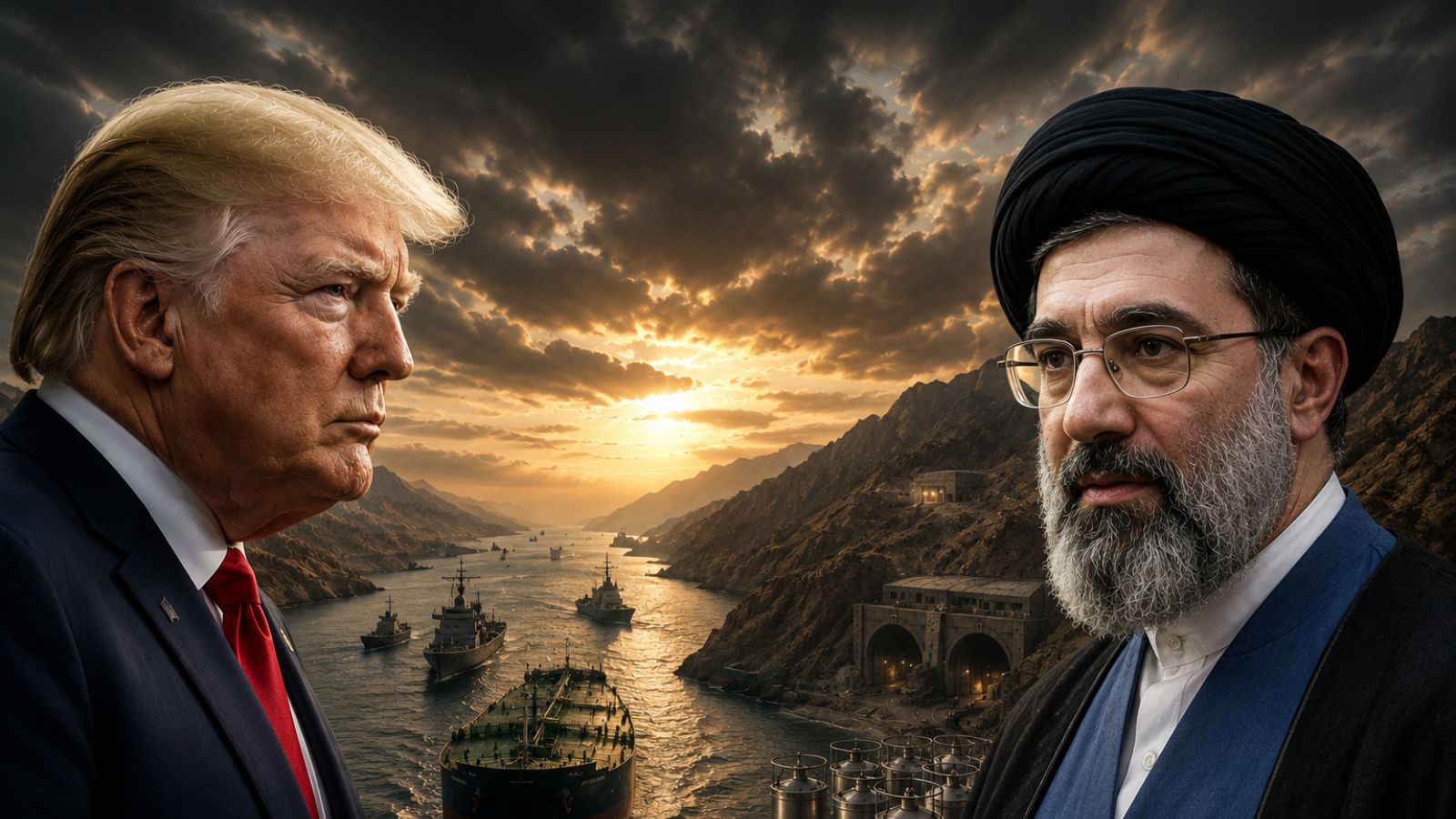
The maritime choke point holding global commerce hostage is not a mystery, but rather a narrow corridor of water where every miscalculation carries planetary consequences. President Donald Trump has temporarily paused American airstrikes against Iranian infrastructure, yet the underlying crisis remains completely unresolved. Tehran insists on exercising jurisdictional control over the Strait of Hormuz, demanding that commercial shipping follow designated corridors and submit to state-managed protocols. Washington views these assertions as an intolerable threat to international trade and free navigation, setting the stage for an explosive resumption of hostilities if backchannel diplomacy through regional mediators fails.
Decades of mutual hostility have compressed into a hyper-volatile present following the military escalations earlier this year. The death of Supreme Leader Ayatollah Ali Khamenei fractured the upper echelons of the Iranian state, yet the institutional machinery of the Islamic Revolutionary Guard Corps continues to direct maritime operations in the Persian Gulf. When mercantile vessels attempted independent transits through the strait, Iranian units intercepted or fired upon them, treating maritime traffic as both economic leverage and a sovereignty test.
Diplomacy moves at a glacial pace while military readiness operates on a hair-trigger. Omani intermediaries have attempted to forge operational mechanisms for safe passage, but the fundamental gap between American demands for unconditional security and Iranian survival imperatives remains unbridgeable. The White House has made it explicitly clear that any subsequent attack on commercial shipping will trigger an immediate return to punishing air campaigns, utilizing assets prepositioned across the region.
Financial retaliation adds another layer of complexity to an already combustible environment. Washington has signaled its intent to utilize frozen Iranian assets to compensate shipowners for damages sustained during recent attacks. For Tehran, the expropriation of financial reserves represents an economic assault that demands retaliation, ensuring that the conflict extends far beyond physical kinetic strikes into the architecture of international finance.
Israeli Prime Minister Benjamin Netanyahu’s impending visit to Washington underscores the alignment—and subtle strategic divergences—between allied commands. While total elimination of Iran's nuclear capabilities remains a shared objective, the tactical timeline divides external strategists. A pause in bombing gives room for exhausted populations to catch their breath, but it simultaneously allows the Iranian military to reinforce air defense networks and reposition mobile missile batteries.
The friction point is structural. If global energy corridors can be regulated by a single regional power through coercion, the security paradigm of the entire Middle East shifts permanently. The current diplomatic pause is not a peace treaty; it is merely a collective intake of breath before the next collision of wills.