Scarborough has long operated as a medical afterthought. While downtown Toronto towers over a dense cluster of specialized teaching hospitals and research institutions, the eastern suburb has watched its population swell while primary care access dwindled to a crawl. Thousands of residents live without a family doctor, relying instead on emergency departments that buckle under chronic underfunding. Into this structural vacuum steps an entirely new institutional pipeline. The University of Toronto's Scarborough Academy of Medicine and Integrated Health, known as SAMIH, has finally opened its doors, launching an inaugural cohort designed to rewrite how care is delivered east of the Victoria Park bottleneck.
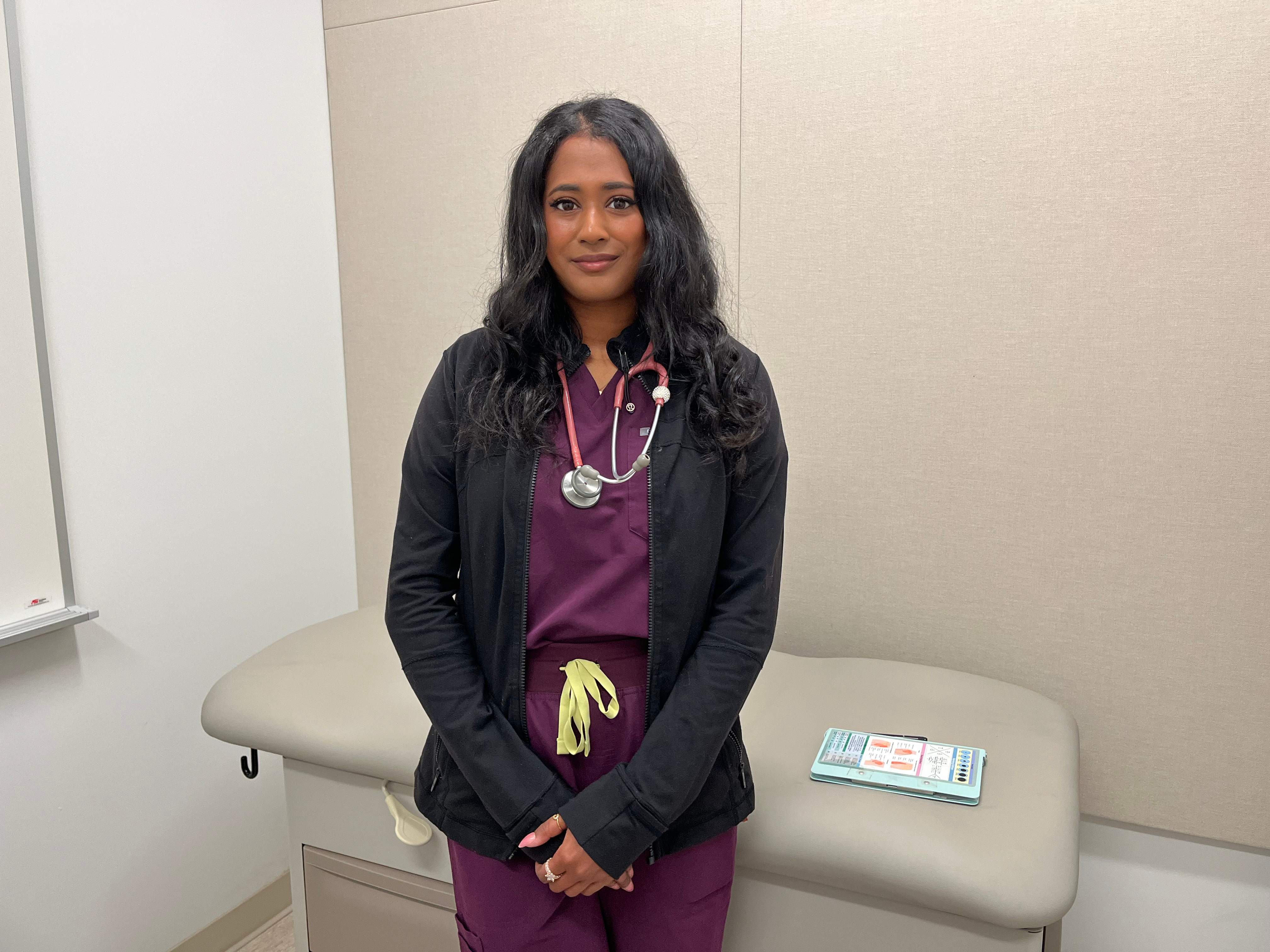
At the center of this shift is Lakshmi Asokan, a nurse practitioner student whose ties to Scarborough run deep. She is not merely studying a curriculum; she is part of a deliberate operational experiment. Thirty students make up this first-of-its-kind cohort through the Lawrence Bloomberg Faculty of Nursing. Every single one of them shares a distinct geographical background with the region. They live here. They know the transit deserts, the linguistic barriers, and the specific socioeconomic pressures that turn minor health issues into acute crises.
The Anatomy of a Medical Desert
Geographic segregation in healthcare is rarely accidental. For decades, funding formulas relied on historical utilization rates rather than actual population need or growth velocity. Scarborough absorbed immense waves of immigrants, young families, and working-class communities, yet healthcare infrastructure remained static. Clinics closed faster than they opened. Physicians burnt out or gravitated toward wealthier postal codes where private overhead was easier to manage.
When people cannot access a primary care provider, the entire system pays the penalty. Minor infections turn into sepsis. Managed chronic conditions like diabetes or hypertension spiral into renal failure or cardiac events because patients delay care until the pain demands an ambulance. The local emergency rooms do not function as emergency rooms anymore. They operate as walk-in clinics for a population with nowhere else to turn.
Nurse practitioners represent the most viable operational antidote to this crisis. Unlike traditional registered nurses, nurse practitioners possess the authority to diagnose illnesses, order diagnostic tests, prescribe medications, and manage patient care independently. They can shoulder the exact same primary caseload as a family physician. Yet, for years, institutional bottlenecks choked the supply of trained nurse practitioners. Training slots were scarce, clinical placements were difficult to secure, and the curriculum often ignored the gritty realities of marginalized suburban communities.
Redesigning the Pipeline
SAMIH aims to fix a broken engine by changing where the mechanics are trained. Too many medical and nursing programs pull talent from downtown cores, educate them in pristine downtown towers, and send them out with the expectation that they will magically scatter to the suburbs. They rarely do. Professionals tend to set up practices where they trained and where their social networks reside.
By anchoring the training ground directly inside Scarborough, U of T is betting on proximity. Students complete their clinical placements in local community health centers, long-term care facilities, and overburdened local clinics. They learn to navigate the exact systemic friction they will face upon graduation.
Consider how linguistic diversity impacts clinical outcomes. Scarborough is a mosaic of languages and cultures where standard Western intake forms frequently fail to capture the nuances of patient history. A nurse practitioner who understands cultural stigmas around mental health or chronic illness can bypass months of misdiagnosis. When the practitioner mirrors the community, trust builds faster. Compliance improves because instructions are communicated without condescension or cultural disconnect.
The Structural Hurdles Ahead
Do not mistake an inaugural cohort for a complete structural rescue. Thirty nurse practitioner students and a handful of medical trainees will not instantly fill a void that took forty years to carve out. The numbers reveal the scale of the challenge. At full operational capacity, the academy projects an output of roughly thirty nurse practitioners and forty physicians annually. It is a strong start, but against a regional population approaching a million people, it is a drop in a very large bucket.
Furthermore, training is only the first phase of retention. Graduating students face an administrative and compensation environment that often favors fee-for-service physician models over team-based nurse practitioner integration. Hospitals and community clinics must be funded adequately to actually hire these graduates into permanent, well-paying positions rather than temporary contract slots. If the province fails to adjust the operational budgets of local health networks, these newly minted professionals will face burnout within three years. They will migrate to private clinics or neighboring jurisdictions that offer better structural support.
The physical construction of a new building solves the optics of neglect, but buildings do not dispense medication or manage insulin regimens. People do. Asokan and her peers carry the weight of an entire region's expectations on their shoulders. They are expected to break barriers, challenge institutional inertia, and prove that community-rooted education yields better clinical results than top-down bureaucratic planning.
The real test will not happen inside the pristine lecture halls of the new facility. It will happen in the quiet, fluorescent-lit examination rooms where a nurse practitioner meets a patient who has waited six hours for an answer, hoping that this time, the system remembers they exist.