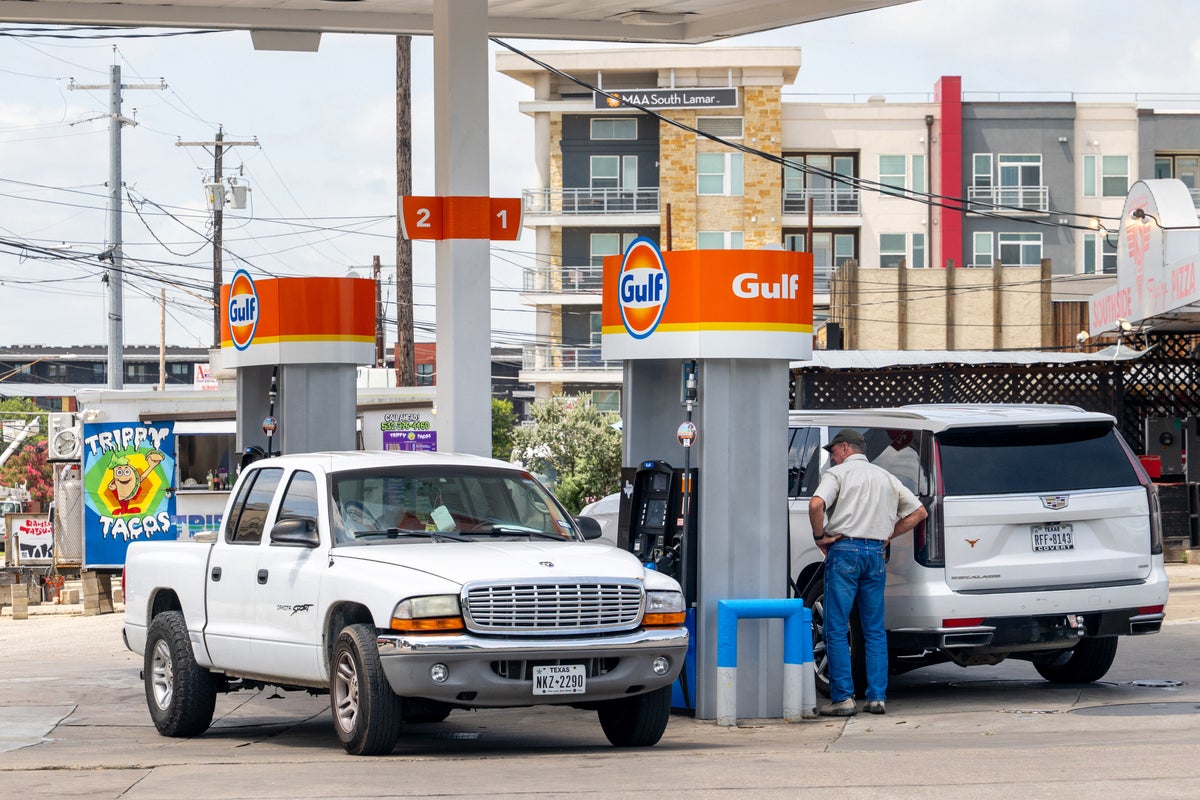
The political theater surrounding American fuel costs has returned to a familiar script, but the underlying mechanics of the global energy market remain stubborn. President Donald Trump has issued a series of blunt ultimatums to neighborhood filling stations and multinational oil giants alike, demanding that retail prices drop immediately to $2.50 a gallon following a tentative ceasefire with Iran. The administration is attempting to force a rapid correction at the pump to match the sharp drop in crude oil prices, which slid toward $68 a barrel after shipping lanes reopened in the Strait of Hormuz.
This public pressure relies on a fundamental misunderstanding of how fuel logistics operate. Drivers pulling up to the pump do not buy crude oil that was extracted yesterday. They buy finished gasoline refined weeks ago from oil purchased at peak wartime premiums. The White House is treating the retail fuel market as a simple on-off switch, ignoring the complex, lagging supply chain that dictates what Americans actually pay to fill their tanks.
The Mechanics of Rockets and Feathers
Economics has a well-documented name for this phenomenon. It is called the rockets and feathers effect.
When international crises threaten supply, wholesale prices shoot up like a rocket. Retailers immediately raise their pump prices to cover the anticipated, much higher cost of replacing their current inventory. If they fail to do so, they risk running out of capital to purchase their next shipment of fuel.
Conversely, when a conflict eases, prices fall like a feather. Retailers are stuck holding inventory that they purchased at the height of the market. Lowering pump prices too quickly, before working through that expensive inventory, means locking in a direct financial loss.
A standard barrel of oil takes weeks to travel from a drilling rig through a pipeline, sit in a refinery tank, undergo chemical transformation, and ride a tanker truck to a local station. The fuel currently sitting in underground retail tanks across the country reflects the financial reality of late May, when the conflict pushed national averages to a painful peak of $4.56 per gallon. Expecting a local small-business owner or even a major retail chain to immediately slash prices to $2.50 ignores the basic accounting rules of inventory turnover.
Political Calculations Ahead of the Midterms
The timing of this sudden executive outrage is not accidental. November congressional elections are approaching rapidly, and voters routinely punish the incumbent party for high costs at the pump.
Inflation indicators tracking the fallout of the spring military operations have put the administration on the defensive. By shifting the blame directly onto retail operators and corporate executives, the executive branch constructs a convenient adversary for an anxious public. The threat of a Justice Department investigation into alleged price gouging serves as a potent rhetorical weapon, even if the legal basis for such an inquiry remains shaky under federal law.
The reality of retail fuel margins contradicts the narrative of rampant corporate greed at the corner store. The vast majority of gas stations in the United States are owned by independent operators or franchisees, not major oil producers like ExxonMobil or Chevron. These individual business owners make their real profits on high-margin convenience store items like coffee, cigarettes, and snacks, rather than the volatile, thin-margin product flowing from the pump.
Forcing these retail outlets to artificially hit an arbitrary $2.50 target would simply drive smaller operators into financial insolvency.
Structural Hurdles Beyond Crude Oil
Crude prices are only one part of the equation. Local regulations and regional refining capacity play a massive role in creating structural price floors that executive decrees cannot change.
Consider California. The state has long maintained the highest fuel prices in the nation, driven by a combination of strict environmental mandates, a isolated refining market, and substantial state taxes. Even if crude oil dropped to zero dollars a barrel, the baseline cost of refining California’s specific clean-fuel blend, combined with its distribution hurdles, makes a $2.50 gallon mathematically impossible under current state laws.
The Long Recovery of Refining Networks
The physical infrastructure of the energy sector cannot reset instantly. Months of maritime disruptions and shifted shipping routes during the peak of the Middle East tensions forced refineries to alter their production schedules and source raw materials from more expensive, less efficient alternatives.
- Refineries must recalibrate machinery for different grades of crude.
- Shipping schedules require weeks to normalize after long bottlenecks.
- Insurance premiums for cargo transit do not drop the moment a treaty is initialed.
These operational frictions create a persistent drag on price reductions. The energy market is an ocean liner, not a speedboat, and turning it around takes substantial time.
Market Forces Overrule Ultimatums
Historically, threats of federal interventions and public shaming do little to alter the structural trajectory of commodity prices.
Market competition remains the most effective driver of lower prices at the pump. As individual stations eventually receive cheaper wholesale fuel shipments, they will naturally begin lowering their prices to undercut neighboring competitors and draw drivers into their convenience stores. This process happens organically, station by station, zip code by zip code, as cheaper fuel works its way through the physical distribution network.
The administration’s insistence on immediate, sweeping drops to a specific numerical target creates an unrealistic expectation for consumers. When prices fail to hit that artificial benchmark within days, it erodes trust and fuels suspicion of collusion where none exists. The true path to relief at the pump lies in the sustained normalization of global supply lines and the steady, quiet math of retail competition.