Defense Secretary Pete Hegseth dismissed the November 2026 impeachment push led by Republican Representative Thomas Massie as a "farce" and a "stunt" after a lame-duck House of Representatives voted 211 to 204 to shelve the resolution. While Hegseth and the White House framed the procedural victory as a total vindication of their military record in Iran, Venezuela, and the Caribbean, legal analysts and incoming House leaders view the vote as a temporary reprieve. With Democrats set to assume control of both chambers of Congress in January 2027 following sweeping midterm victories, the constitutional and legal battles over Hegseth's tenure are only entering their opening phase.
Most mainstream wire coverage treated Hegseth's November 10 Pentagon press briefing as a routine Capitol Hill shouting match. Reporters transcribed the predictable insults traded between a cabinet secretary and an outgoing Kentucky congressman who lost his primary to a Trump-backed challenger. That surface-level framing misses the structural earthquake shaking Washington. A sitting Republican lawmaker formally accused a Republican Pentagon chief of waging unlawful war, dismantling civilian casualty safeguards, and overseeing extrajudicial killings—and 203 House Democrats voted alongside him to force those charges onto the floor.
The Anatomy of the Eight Articles
When Representative Thomas Massie introduced eight articles of impeachment on November 9, 2026, he bypassed standard partisan talking points and aimed directly at constitutional war powers and the Law of Armed Conflict. Massie, who will leave Congress in January after his primary defeat, had previously attempted to force a vote before the November 3 midterm elections, prompting Speaker Mike Johnson to call an early recess to protect vulnerable incumbents.
Once voters went to the polls and handed both the House and the Senate to the Democratic Party, Massie returned to the floor. His resolution laid out specific operational allegations against Hegseth, who has rebranded the Pentagon as the "Department of War" since narrowly winning Senate confirmation in January 2025.
- Unauthorized Warfare in Iran Massie charged that Hegseth violated the 1973 War Powers Resolution and Article I of the Constitution by orchestrating major combat operations against Iran without congressional authorization. The joint campaign with Israeli forces, launched in late February 2026, killed Iranian Supreme Leader Ali Khamenei and dozens of senior officials. Iran retaliated with missile strikes against American bases across the Middle East and moved to choke off commercial shipping through the Strait of Hormuz, triggering global energy price spikes.
- Extrajudicial Maritime Strikes The articles accused Hegseth of overseeing the unlawful killing of more than 240 people aboard suspected drug-smuggling vessels in the Caribbean Sea and Eastern Pacific Ocean. Massie specifically highlighted a controversial second strike conducted against survivors clinging to the wreckage of an already-disabled boat in the Caribbean. Hegseth denied personally ordering that follow-up strike, though he publicly stated he supported the action.
- Dismantling Civilian Protections Massie alleged that Hegseth systematically weakened Pentagon rules of engagement and civilian harm mitigation protocols. Critics and international observers pointed to incidents such as the bombing of an elementary school in Minab, Iran, which reportedly killed at least 120 children, as direct consequences of relaxed targeting oversight.
- Executive Overreach and Domestic Deployment Additional provisions in the resolution targeted Hegseth's purging of senior four-star officers, his attempts to bar critical news organizations from Pentagon workspaces, and his handling of military operations in Yemen and Venezuela.
How the Lame-Duck Shield Worked
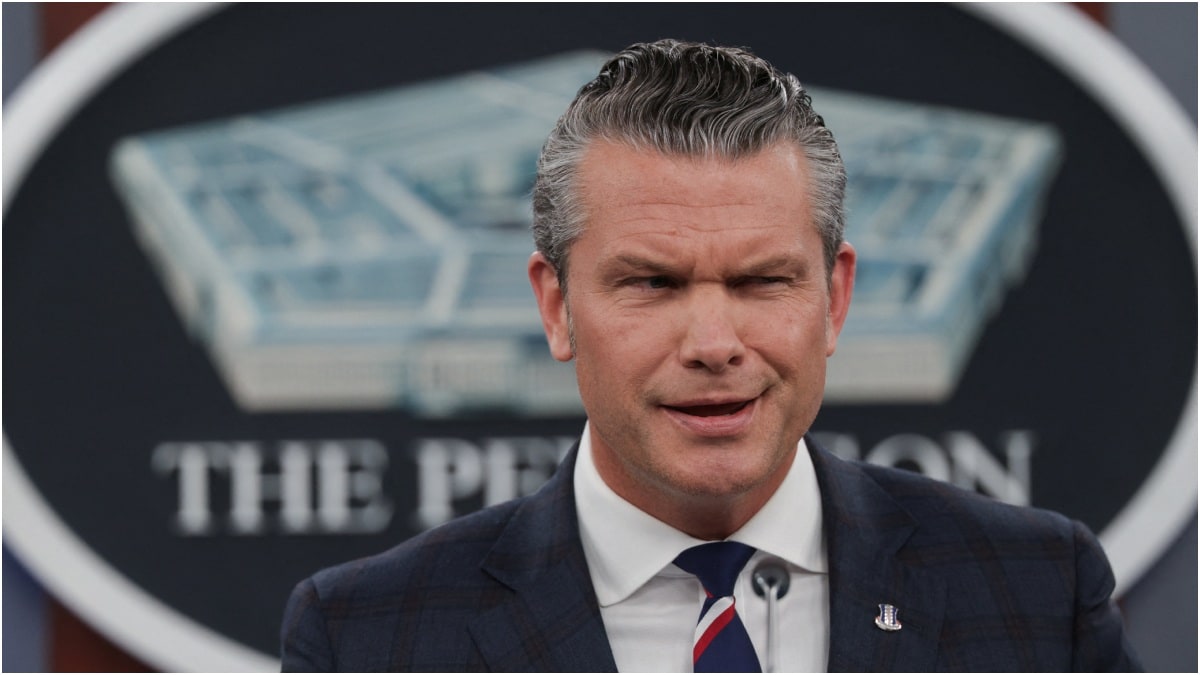
Standing at the Pentagon podium on November 10, Hegseth did not retreat from the substance of the allegations. Instead, he leaned into them. "I stand behind every one of these operations," Hegseth told reporters. "I was proud to execute them, and I would do it again tomorrow."
His communications strategy relied on fusing his personal authority with the uniform of American service members. By declaring that Massie's resolution told sailors and pilots "that their service was a crime," Hegseth sought to transform a constitutional challenge to civilian leadership into an attack on enlisted troops. He dismissed Massie as a "disgruntled and defeated congressman" staging a "political spectacle". President Donald Trump reinforced that messaging on social media and in White House briefings, praising Hegseth for cutting "woke" generals and executing a 48-minute operation in Venezuela.
Behind the cameras, Republican leadership relied on procedural mechanics rather than a substantive defense. Later that Tuesday, the outgoing GOP majority voted 211 to 204 to refer Massie's resolution to committee. In House parlance, referring privileged impeachment articles to a hostile committee kills the measure without forcing members to cast a direct vote on whether the cabinet official committed high crimes and misdemeanors.
Eleven Democrats were absent during the November 10 tally, meaning Massie fell just eight votes short of forcing an immediate floor debate. The vote saved Hegseth from becoming only the third cabinet secretary in American history to be impeached—a distinction currently held only by Secretary of War William Belknap in 1876 and Homeland Security Secretary Alejandro Mayorkas in 2024.
The Math Changes in January
Hegseth's declaration of victory rests on a political calendar that expires in weeks. The November 3 midterm elections reshaped the legislative branch, largely driven by voter backlash against the protracted conflict with Iran. Polling conducted ahead of the election showed that 44 percent of American voters were less likely to support a candidate who backed the Iran war, compared to just 13 percent who were more inclined to support one.
When the 120th Congress convenes in January 2027, the procedural shield protecting the Pentagon will vanish. Democrats are projected to hold a commanding majority in the House, easily clearing the simple majority threshold required to subpoena Pentagon records, compel testimony from purged military officers, and pass articles of impeachment. Representative Hakeem Jeffries, poised to become the next Speaker of the House, stated plainly in an NPR interview that Hegseth "has got to go".
Yet the Senate math tells a far more complicated story. Removing a cabinet official from office requires a two-thirds supermajority vote—67 senators. Even with Democrats flipping the upper chamber to hold a projected 56-to-44 majority in January, they will remain 11 votes shy of conviction unless nearly a dozen Republican senators break ranks with the White House.
Why Democratic Strategists Are Hesitating
Despite overwhelming grassroots anger over the Iran campaign and the maritime strikes, incoming Democratic leaders face a strategic dilemma. Constitutional scholars and veteran lawmakers warn that rushing into an immediate impeachment vote in January could backfire.
Legal analysts David Wippman and Glenn C. Altschuler argued that a "snap" impeachment without exhaustive public hearings would allow Hegseth and the White House to dismiss the proceedings as partisan theater, mirroring the defense Trump used during his own impeachments. Noticeably, while 203 Democrats voted against tabling Massie's resolution in November, Democratic leadership did not author the articles themselves.
A slower, methodical approach offers House committees powerful tools that do not require 67 Senate votes to draw blood:
Subpoena Power Over Targeting Rules
House Armed Services and Oversight committees will gain unilateral authority to demand internal Pentagon legal memos justifying the Caribbean boat strikes and the revised rules of engagement in Iran.
Testimony From Ousted Commanders
Hegseth's sweeping removal of senior four-star generals created a pool of experienced military leaders who are no longer bound by active-duty chain-of-command restrictions and can testify publicly about operational warnings ignored by civilian leadership.
Power of the Purse
Congress retains absolute authority over defense appropriations, enabling lawmakers to attach strict statutory riders prohibiting funds for unauthorized combat operations in the Middle East or maritime interdictions outside established rules of engagement.
Legal Exposure Beyond Capitol Hill
The most profound miscalculation in Hegseth's "farce" narrative lies outside the halls of Congress. Impeachment is strictly a political remedy designed to remove an official from public office; it carries no criminal penalties. Massie himself noted after the November vote that using the impeachment process was "being polite" compared to the criminal statutes implicated by the allegations.
Military law experts interviewed by Mother Jones emphasized that authorizing lethal strikes against shipwrecked survivors or non-combatants violates both international treaties and domestic federal law. Under the Uniform Code of Military Justice and the federal War Crimes Act, orders to fire upon helpless survivors in the water—such as the second strike on the suspected drug vessel in the Caribbean—constitute textbook unlawful orders.
While a sitting president can shield a cabinet secretary from federal prosecution during his term, state-level jurisdiction, future Justice Department investigations, and universal jurisdiction inquiries by international bodies do not disappear when a House speaker gavels a procedural motion closed. Furthermore, uniform personnel who executed contested directives in the Caribbean and the Persian Gulf lack the political immunity enjoyed by cabinet appointees.
Hegseth survived a 211-to-204 procedural vote in a lame-duck chamber controlled by his own party. Calling that narrow escape the end of the story ignores the 204 lawmakers who voted to put him on trial, the subpoena power arriving in January, and the permanent paper trail left behind by two wars.
You can watch Hegseth respond directly to reporters during his Pentagon briefing in the full press conference clip from November 10. This footage captures the exact tone and framing the Defense Secretary used to dismiss the impeachment articles before the House procedural vote.