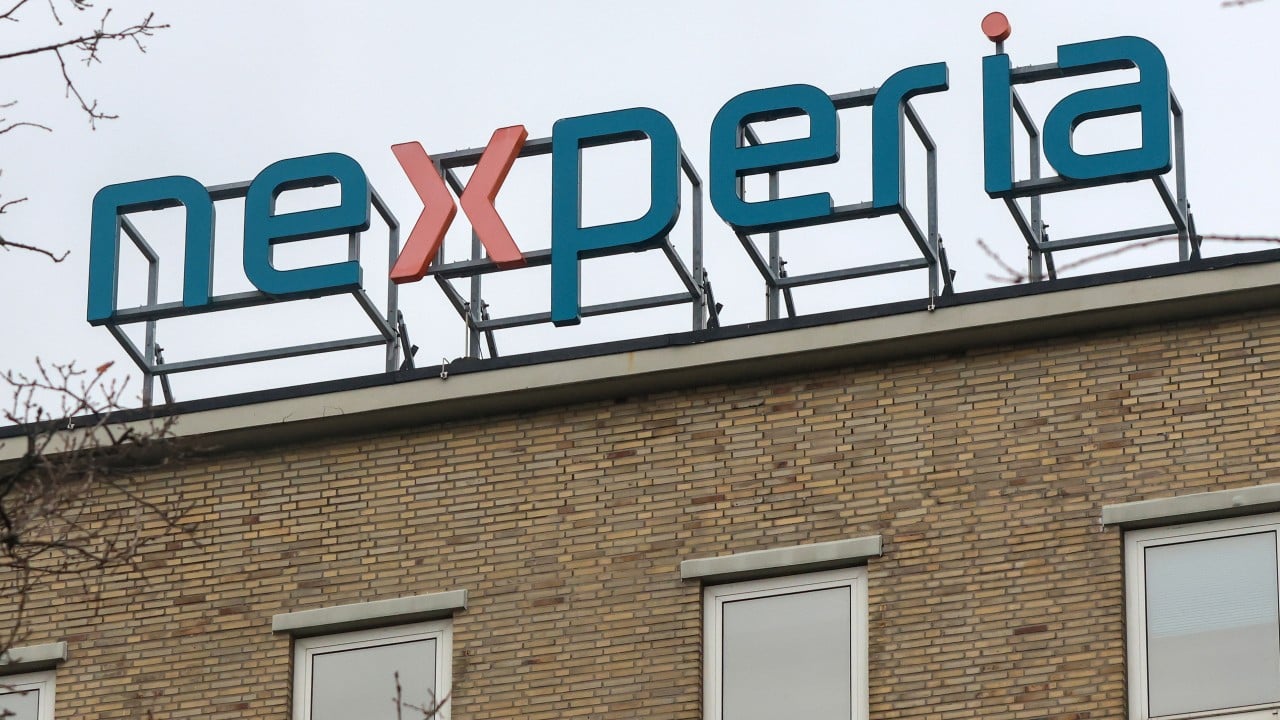
Court-appointed administrators are moving to sound out potential investors for a stake in Nexperia, the Dutch semiconductor manufacturer at the center of an escalating corporate and geopolitical battle with its Chinese parent company, Wingtech Technology. The move signals a decisive shift from boardroom gridlock to active structural intervention, placing a critical supplier of foundational automotive and industrial chips back onto the global dealmaking block.
The dispute stems from mounting friction between Nexperia's European leadership, Dutch legal and regulatory authorities, and Wingtech, which acquired the former NXP Semiconductors unit in 2019. When governance deadlocks threaten a chipmaker whose discrete components sit inside almost every modern vehicle and power management system, courts step in to protect operational continuity. By authorizing administrators to test buyer appetite, the legal process aims to resolve an ownership structure that has become a commercial liability in Western markets.
How a Legacy Chipmaker Became a Geopolitical Flashpoint
To understand why a stake in Nexperia is suddenly in play, you have to look at what the company actually makes. Nexperia does not design flashy artificial intelligence processors or sub-two-nanometer logic chips. It manufactures discretes, logic devices, and MOSFETs—the unglamorous, high-volume components that regulate voltage, switch currents, and protect circuits from electrostatic discharge.
They cost pennies. Yet without them, an assembly line in Stuttgart or Detroit grinds to a halt.
During the pandemic-era supply crunch, automotive executives learned the hard way that a missing fifty-cent power transistor stops a fifty-thousand-dollar electric vehicle just as effectively as a missing central computer. That realization transformed Nexperia from a quiet industrial supplier into an asset of strategic interest across Europe, the United States, and Asia.
Wingtech's acquisition of Nexperia initially looked like a textbook cross-border industrial marriage. Wingtech, a major Chinese original design manufacturer for smartphones and laptops, gained secure access to European semiconductor manufacturing and engineering talent. Nexperia gained capital and deeper entry into China's massive electronics and electric vehicle supply chains.
The geopolitical climate refused to cooperate. As Washington tightened export controls and European capitals drafted their own economic security strategies, Chinese ownership of European semiconductor assets shifted from routine foreign direct investment to a national security red flag.
The Anatomy of the Wingtech Governance Deadlock
Cross-border tech acquisitions rarely implode overnight. They erode through compliance audits, blocked facility expansions, and conflicting strategic mandates.
The friction between Wingtech and Nexperia's European operations intensified after regulatory interventions forced Nexperia to unwind its acquisition of Newport Wafer Fab in the United Kingdom on national security grounds. That forced divestment exposed a harsh commercial reality. Under full Wingtech control, Nexperia faced persistent skepticism from Western governments and defense-adjacent customers, limiting its ability to expand fabrication capacity in Europe or secure public semiconductor subsidies.
Inside the corporate structure, tensions over governance, capital allocation, and strategic autonomy began to fracture alignment between the parent company in China and management in Nijmegen, the Netherlands. When shareholders and local leadership cannot agree on basic operational direction—or when shareholder disputes trigger statutory intervention under Dutch corporate law—the Enterprise Chamber of the Amsterdam Court of Appeal holds broad authority to intervene.
Why Dutch Courts Appoint Administrators
Dutch corporate law contains a specific mechanism designed to prevent paralyzed companies from destroying their own value. When mismanagement or irreconcilable shareholder conflict threatens the continuity of a Dutch enterprise, the Enterprise Chamber can suspend voting rights, appoint independent supervisory directors, and place shares under the custody of court-appointed administrators.
These administrators do not answer to the parent company's board in China, nor do they act as rubber stamps for local executives. Their legal duty is to preserve the health, stability, and continuity of the Dutch company itself.
When administrators begin sounding out external investors for a stake, it means temporary governance patches are no longer enough. Bringing in new institutional or strategic shareholders dilutes concentrated control, introduces independent board oversight, and creates a buffer between daily European operations and geopolitical crossfire.
Who Would Buy Into a Contested Semiconductor Asset
Sounding out investors is far simpler than closing a transaction. Any prospective buyer evaluating a stake in Nexperia must weigh strong underlying cash flows against severe structural complications.
Nexperia remains an industrial powerhouse in its segment. Its wafers roll out of established fabrication facilities in Hamburg and Manchester, feeding assembly and testing plants in Guangdong, Penang, and Cabuyao. Its customer roster reads like a directory of global automotive and industrial manufacturing, including Bosch, Continental, and Denso. In a world rapidly electrifying everything from passenger cars to power grids, demand for power semiconductors and wide-bandgap materials like gallium nitride and silicon carbide has durable long-term tailwinds.
Yet the buyer pool faces immediate filtering criteria.
- European and American Strategic Buyers would love the customer relationships and wafer capacity, particularly the Hamburg fab. However, stepping into a minority or shared governance structure alongside Wingtech—even a diluted Wingtech—creates compliance headaches that most publicly traded Western chipmakers prefer to avoid.
- Private Equity and Infrastructure Funds have the dry powder and restructuring appetite to navigate complex cap tables. A buyout firm could frame an investment as a European industrial carve-out or partial de-risking play, provided the administrators grant clear governance rights and a credible path to an eventual exit.
- Sovereign-Backed or Regional Industrial Funds in Europe might view a minority stake as a pragmatic way to anchor semiconductor manufacturing inside the European Union without attempting a full, prohibitively expensive nationalization.
Any deal structure will hinge on valuation and control. Wingtech will inevitably contest any move that strips its economic upside or forces a sale at a distressed multiple. Administrators must therefore thread a narrow needle—offering outside investors enough governance protection to satisfy Western regulators while demonstrating to the court that the transaction reflects fair market value.
The Supply Chain Reality Nobody Wants to Admit
In policy circles, decoupling sounds clean. You draw a line on a map, separate ownership, and declare supply chains secure. On the factory floor, Nexperia's operations prove how messy separation actually is.
Nexperia operates a classic front-end and back-end split. High-precision wafer fabrication happens largely in Europe, where decades of process engineering keep yields high on legacy and power nodes. Once those wafers are produced, millions of individual chips must be diced, packaged, and tested—a labor- and capital-intensive phase heavily concentrated in Nexperia's massive assembly and test facilities in Dongguan, China, alongside sites in Malaysia and the Philippines.
You cannot simply sever the Dutch headquarters from the Chinese assembly plants without triggering an immediate global shortage of basic automotive components.
For a hypothetical European automaker assembling hybrid vehicles in Germany, the silicon wafer might start in Hamburg, travel to Guangdong for packaging, return to a Tier-1 supplier in France for integration into an engine control unit, and end up back on a German assembly line. If a legal battle or forced ownership split disrupts coordination between Nexperia's European wafer fabs and its Asian packaging hubs, the fallout would hit global automotive production within weeks.
Court-appointed administrators understand this operational interdependence better than politicians do. Their mandate to test investor interest is almost certainly aimed at stabilizing the corporate umbrella so that engineering and logistics teams can keep shipping billions of components without interruption.
What Comes Next in the Boardroom Battle
The process of sounding out investors marks the opening stage of a high-stakes financial negotiation, not a finished sale. Administrators typically use early market soundings to gauge pricing, test regulatory receptiveness in The Hague and Brussels, and determine whether a minority placement, a capital injection, or a broader restructuring is viable.
Wingtech still holds substantial legal and financial cards. Parent companies rarely surrender crown-jewel subsidiaries quietly, especially when those subsidiaries generate reliable earnings and anchor domestic supply chains. Expect parallel legal maneuvering in Dutch courts, intense scrutiny over asset valuations, and fierce debate over intellectual property licensing between the European and Chinese entities.
For the broader semiconductor industry, the Nexperia standoff serves as a blunt warning. Cross-border ownership structures built during an era of frictionless globalization are now being stress-tested in courtrooms and regulatory ministries. Whether Nexperia emerges with a new consortium of European institutional backers or remains locked in prolonged litigation, the era of quiet, unexamined foreign control over foundational chipmakers is permanently over.