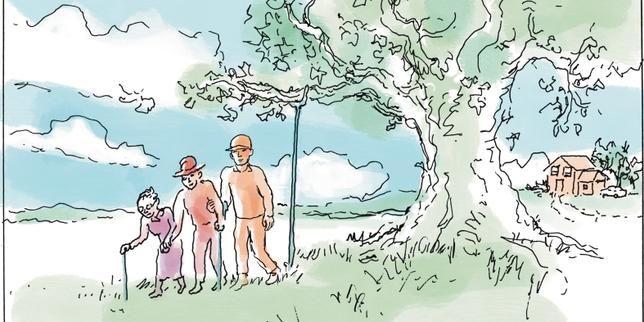
The modern American kitchen table tells a quiet story of endurance, failure, and quiet desperation. Across the country, millions of men find themselves thrust into the role of primary caregiver for an aging spouse, a parent with dementia, or a chronically ill child, only to discover a profound, suffocating isolation.
Traditional support systems were built on assumptions that no longer match demographic realities. When a man has to manage a full-time career alongside the brutal physical and emotional demands of nursing a loved one at home, he faces a wall of silence. Asking for assistance runs counter to decades of social conditioning. Admitting vulnerability feels like a breach of contract with an identity forged in self-reliance. Consequently, male caregivers suffer in silence, absorbing staggering levels of financial strain, career disruption, and physical decline without ever raising a hand for help.
The Anatomy of Isolation
Statistics paint a grim picture of this hidden demographic. Roughly three-quarters of men balancing caregiving duties with full-time employment report receiving zero outside help from family or social networks. They become prisoners of their own homes, tethered to oxygen tanks, medication schedules, and mobility lifts.
The psychological toll builds slowly. Unlike professional nurses who punch out at the end of a shift, family caregivers live at their workplace. For men, the inability to fix the underlying problem—such as a degenerative neurological disease—creates a unique brand of frustration. When the core ethos of one's life has been problem-solving, facing an unsolvable medical decline often leads to withdrawal. They stop answering phone calls. They skip social gatherings. They retreat behind closed doors, convincing themselves that endurance is the same thing as strength.
Why Mixed Support Groups Fail Men
For years, well-meaning health organizations pointed men toward traditional caregiver support circles. These spaces rarely worked. Walking into a room dominated by women sharing emotional processing techniques often alienates men who process stress through action rather than verbal confession.
Men frequently look for operational answers to logistical obstacles. They want to know how to install a wheelchair ramp efficiently, how to navigate insurance appeals, or how to handle mechanical patient lifts without injuring their own backs. When a support group spends its first hour exploring raw emotional landscapes, emotionally guarded men tend to fold inward, convinced they do not belong.
This behavioral mismatch exposed a massive gap in the public health infrastructure. If traditional, mixed-gender environments failed to pull these men out of isolation, a radical restructuring of outreach became necessary.
The Rise of Non-Mixed Spaces
Enter the segregated, men-only support network. Grassroots organizations and community initiatives across the United States have begun establishing male-only caregiver groups designed to bypass the traditional barriers of entry. These are not always sterile conference rooms with folding chairs. Some take the form of casual gatherings over food, sporting events, or structured operational workshops where the focus is anchored on shared utility.
In these non-mixed spaces, the conversational dynamic changes entirely. Men can admit, without fear of social judgment, that they feel resentful, exhausted, or sexually detached from a partner whose illness has transformed their relationship into a clinical routine. They can curse the medical billing system or joke about the absurdity of learning how to manage feminine hygiene or specialized diets as middle-aged novices.
By removing the pressure to perform stoic masculinity, these associations create a safe harbor. A man learns that admitting he is drowning does not strip away his dignity, provided he is admitting it to someone holding the exact same anchor.
The Cost of Refusing Help
The refusal to seek support exacts a devastating physical tax. Chronic stress elevates cortisol levels, accelerates cardiovascular disease, and triggers clinical depression at rates that rival the patients being cared for. Many male caregivers predecease their partners, dying of stress-induced heart attacks or strokes brought on by years of neglected personal health.
Employers often remain completely in the dark. A significant percentage of male workers conceal their caregiving responsibilities from management, terrified that taking FMLA leave or requesting flexible hours will flag them as uncommitted during performance reviews. They burn through vacation days to rush home and administer medication, all while pretending their personal lives are entirely stable.
Fixing this systemic failure requires dismantling the cultural stigma that frames male vulnerability as weakness. Corporations must actively train managers to recognize the subtle signs of caregiver burnout among male employees. Healthcare providers must stop assuming that a male family member standing silently in a hospital room is coping fine just because he isn't crying.
Until the culture normalizes the phrase "I need help" for men who have spent a lifetime giving it, the kitchen tables of America will continue to harbor quiet tragedies. The infrastructure for rescue exists, but breaking the silence remains the hardest barrier left to cross.