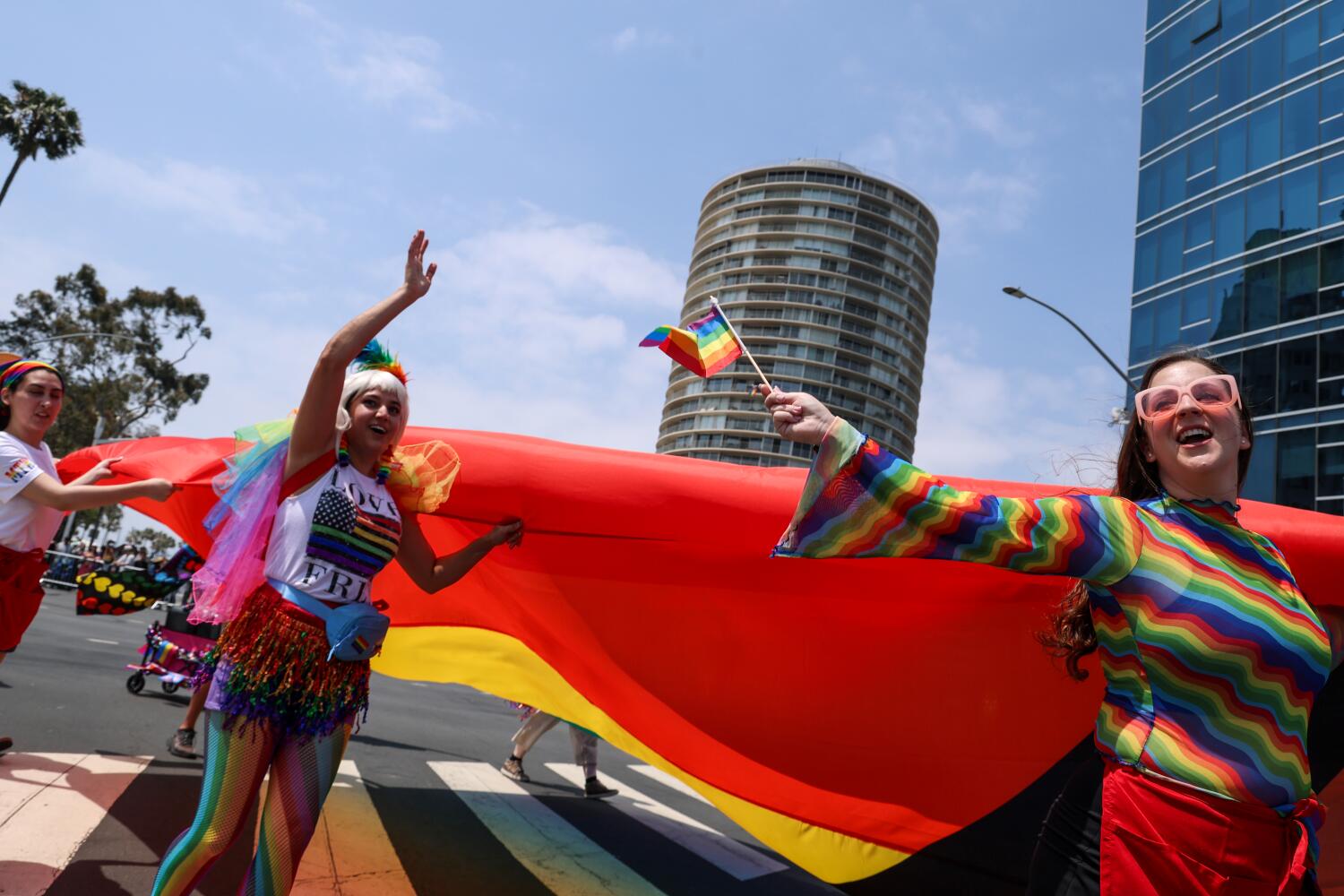
The sudden collapse of the Long Beach Pride Festival just hours before its scheduled kickoff left thousands of disappointed attendees standing outside a locked gate at Marina Green Park. While a public feud immediately erupted between city officials citing public safety and organizers pointing to political pressure, the truth is far more structural. This was not a sudden political betrayal, nor was it a simple bureaucratic mistake. It was the predictable failure of a legacy community institution struggling under immense financial weight, volunteering deficits, and a shifting operational model that separated the parade from the festival.
When the City of Long Beach issued a cease-and-desist order on Friday afternoon, it abruptly halted an event that had stood for more than four decades as a cornerstone of Southern California’s LGBTQ+ culture. The city's official narrative was unyielding. Officials stated that organizers failed to submit critical safety documentation, including approved, stamped structural plans for stages and trusses, electrical plans, and detailed emergency exit layouts.
Organizers, led by Long Beach Pride President Tonya Martin, fired back, characterizing the cancellation as a failure of leadership by city officials during a time of escalating nationwide political attacks against the queer community. But a closer look at the months leading up to the disaster reveals a timeline of operational friction, severe budget constraints, and a critical decision by the all-volunteer board to cut a major safety net.
The Production Gap That Sabotaged the Infrastructure
Large-scale music and cultural festivals require rigid, highly professionalized logistics. Historically, legacy community organizations leaned heavily on professional production companies to navigate the dense web of municipal permitting, engineering certifications, and vendor coordination.
According to internal timelines later released by Long Beach Pride, the non-profit organization made a pivotal operational change for the event. To manage escalating expenses and balance a strained budget, the board opted to move forward without hiring an outside professional production company.
Long Beach Pride Permitting Failure Timeline
├── Sept 2025: Initial notification to City Special Events office
├── Jan 2026: Official permit application submitted
├── March 2026: Request for past 2025 permitting records (unanswered)
├── May 13, 2026: City raises structural and infrastructure concerns
└── May 15, 2026: Cease-and-desist issued 30 minutes before gates open
Organizers essentially asked the Long Beach Office of Special Events and Filming to act as co-pilots in completing the dense permit packet. This choice created an immediate structural vulnerability. Voluminous municipal codes require meticulous blueprints. Stamped engineering documents for massive stage trusses cannot be substituted with good intentions or community legacy.
When the city raised concerns about structural stability and electrical configurations just days before the event, the all-volunteer staff lacked the specialized, rapid-response technical expertise to correct the deficiencies in real time. The city claimed it worked up until the final hours to review late submissions sent at 7:00 p.m. on Friday night, but the materials remained incomplete. A stage that holds heavy lighting grids and high-voltage audio equipment presents a lethal liability if it lacks certified structural stamps.
A Fractured Legacy and the Split of Parade and Festival
To understand how the festival deteriorated to this point, one must look back to 2024. That was the year the historical infrastructure of Long Beach Pride officially fractured.
Faced with deep organizational exhaustion and dwindling cash reserves, the volunteer board notified the city that it could no longer afford to fund or execute the iconic Sunday parade. Recognizing that canceling the parade would be a catastrophic public relations hit for an progressive coastal city, the City of Long Beach stepped in. The city assumed full financial and operational responsibility for the parade, turning it into a municipal production.
This intervention saved the parade, which marched successfully down Ocean Boulevard with a record 141 entries, but it left the separate Pride Festival isolated. The all-volunteer non-profit retained control of the ticketed festival at Marina Green Park as its primary annual fundraiser.
This split created an unsustainable operational dynamic:
- The Long Beach Pride Parade became a heavily subsidized, city-backed, free civic march.
- The Long Beach Pride Festival remained a risky, cash-dependent, self-funded entertainment venture.
When the festival collapsed, the city was quick to distance its own operations from the non-profit's internal management, highlighting that the parade would march onward because the city itself held the reins of that specific operation.
The Illusion of Late Venue Substitutions
In the wake of the Friday evening cancellation, city officials attempted to mitigate the fallout by offering alternative spaces. Mayor Rex Richardson offered to privately raise up to $50,000 for replacement programming, suggesting the festival move its performers and activities to the Long Beach Terrace Theater or Bixby Park.
The non-profit board flatly rejected these options, a move that drew criticism from some community members who wanted the show to go on at any cost. However, from a cold business perspective, the organizers had no real choice.
A sudden venue shift for a massive festival is logistically impossible. Under the city’s emergency compressed timeline, the alternative park spaces could not be legally fenced off, and alcohol sales were strictly prohibited. For a non-profit relying on ticket sales and high-margin beverage revenue to pay contracted performers, private security, and equipment rental vendors, a free, alcohol-free park gathering is a financial death sentence. Accepting the city's alternative would mean absorbing 100% of the festival's sunk costs while generating 0% of the projected revenue.
Instead, the city independently threw its own free alternative block party at Bixby Park, featuring local drag performers and DJs. While this provided a space for stranded tourists and locals to gather, it directly competed for the cultural attention that the non-profit desperately needed to salvage its financial future.
A Precarious Financial Outlook
The immediate future for Long Beach Pride is incredibly bleak. The organization is now trapped in a financial vice, forced to collaborate with ticketing platforms, corporate sponsors, and vendors to resolve the economic wreckage of a completely dark weekend.
Tickets must be refunded, yet equipment rental companies, stage builders, and talent contracts frequently include non-refundable clauses when an event is canceled due to a failure to secure proper permits. The organization did not just lose its weekend revenue; it is likely facing severe debt.
Blaming political headwinds or administrative malice makes for a compelling public statement, but it ignores the clear lesson of this disaster. If legacy LGBTQ+ institutions want to survive in an era of skyrocketing infrastructure costs and strict municipal regulation, they can no longer rely purely on volunteer passion. They must run with the clinical precision of a corporate entertainment promoter, or risk watching their history vanish behind a chain-link fence.