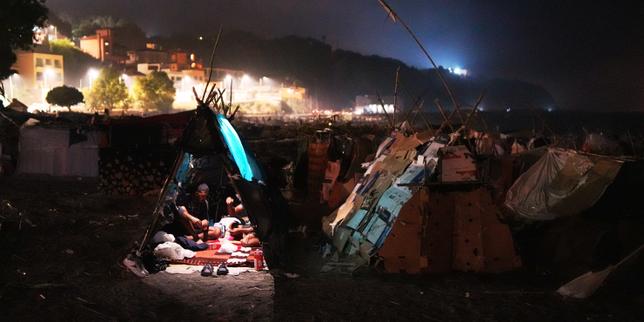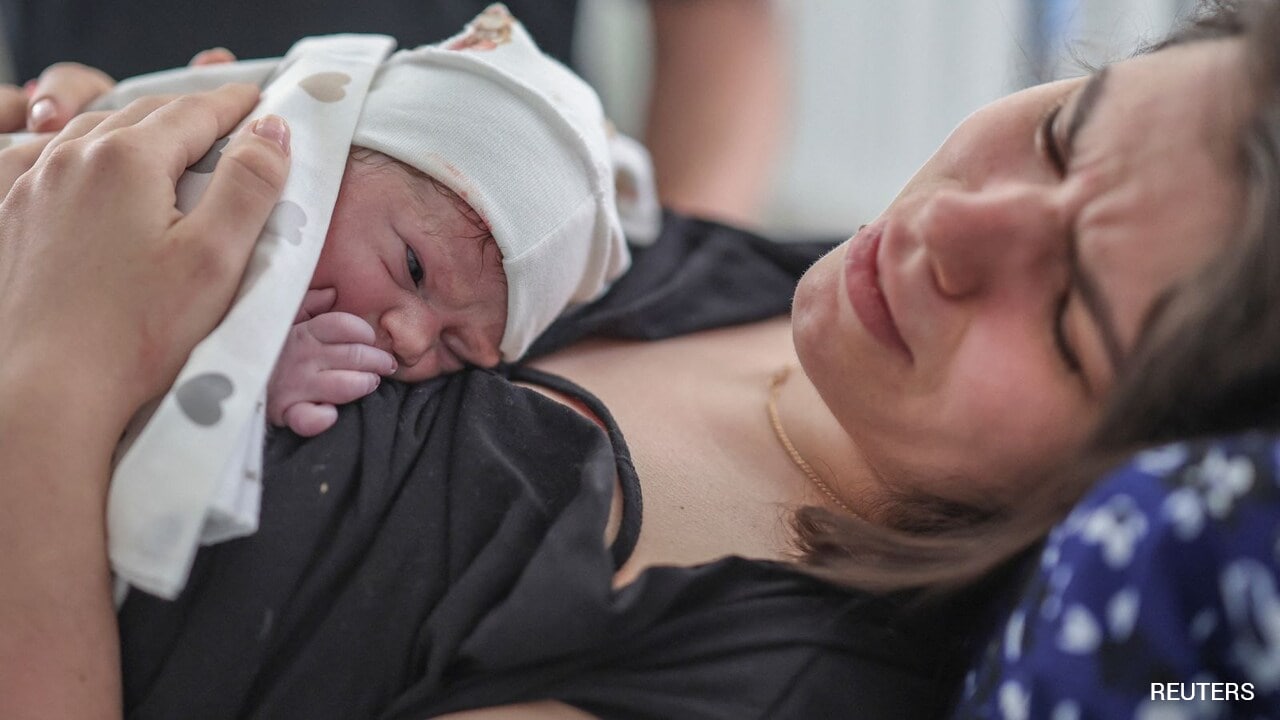
The sirens wail across the capital, a piercing, mechanical drone that signals another barrage of ballistic missiles tearing through Ukrainian airspace. Down in the subterranean corridors of a Kyiv maternity hospital, expectant mothers do not panic. They have adapted. They pack their hospital bags with medical charts, infant clothes, and noise-canceling headphones, descending three flights of concrete stairs to makeshift delivery rooms built out of bomb shelters. This is the brutal reality of childbirth in wartime Ukraine, where obstetricians perform emergency cesarean sections by the flickering glow of emergency backup lights while anti-air defense batteries thunder overhead.
Journalistic coverage often frames these scenes through a lens of temporary shock, treating the adaptation as an extraordinary anomaly. Years into a grinding war of attrition, the reality on the ground is starkly different. The medical staff at facilities like Kyiv City Maternity Hospital No. 2 have institutionalized crisis obstetrics. They have calculated risks down to the minute, balancing the physiological clock of active labor against the trajectory of incoming Shahed drones and cruise missiles. When the warning sounds, moving a woman mid-contraction is out of the question. Neonatologists, anesthesiologists, and obstetricians stay put, anchoring themselves to the operating table while the building vibrates from interceptor explosions outside.
The Logistics of Subterranean Survival
Operating a maternity ward underground requires a logistical shift that traditional medical school curricula never anticipated. Power grids fail regularly under targeted infrastructure strikes. Generators keep incubators humming, but fuel logistics remain a constant, nerve-wracking gamble. Water supplies fluctuate. Supply chains for specialized neonatal medications are perpetually strained by disrupted transport routes and border bottlenecks.
Doctors face agonizing triage decisions daily. A premature infant requires precise temperature and oxygen regulation, variables that become immensely difficult to control when an entire neonatal intensive care unit is shoehorned into a windowless basement shelter. The air is dry, recirculated, and heavy with the collective anxiety of dozens of women sheltering together. Yet, medical errors remain remarkably low due to strict protocols and a hardened discipline forged in the early months of the full-scale invasion.
The psychological toll on the medical personnel is immense, though rarely spoken of in clinical reports. Surgeons work twenty-four-hour shifts, returning home to sleep in apartments with blown-out windows before coming back to deliver the next generation of Ukrainians. Burnout is a constant threat, superseded only by an unyielding professional duty. They are witnessing a demographic catastrophe in real-time, delivering babies into a country experiencing a historic plunge in fertility rates while simultaneously dealing with mass displacement.
A Demographic Freefall
Birth rates in Ukraine have plummeted to historic lows, creating an existential demographic crisis that threatens the nation's long-term viability. Before the escalation, the country was already grappling with a declining population curve common across Eastern Europe. The war has accelerated this decline into a freefall. Millions of women of reproductive age fled to Western Europe, many of whom are starting families abroad and showing little inclination to return given the ongoing security vacuum.
Those who remain and choose to conceive are navigating a landscape of profound uncertainty. Prenatal care is frequently interrupted by air raid sirens. Expectant mothers suffer from chronic, elevated cortisol levels due to continuous sleep deprivation caused by nightly bombardments. Obstetricians report rising rates of premature births and pregnancy complications linked directly to wartime trauma and stress.
The state attempts to maintain social safety nets, but municipal budgets are heavily skewed toward defense expenditures. Maternity wards rely heavily on international humanitarian aid, private donors, and grassroots volunteer networks to secure essential equipment, from mobile ultrasound units to advanced respiratory support systems for newborns. Without these infusions of foreign aid, the healthcare infrastructure in major urban centers like Kyiv would have buckled entirely under the strain.
Psychological Adaptation and Resilience
Human beings possess an unsettling capacity to normalize the abnormal. Patients and staff alike refer to the routine of air raids with a flat, dispassionate fatigue. "You get used to it," is a phrase frequently heard in the corridors, uttered not with cynicism, but with the weary acceptance of people who have no other choice. Life refuses to pause for geopolitics. Contractions do not wait for a ceasefire.
This psychological hardening masks deeper, long-term scars. Children born in these basement shelters are entering a world defined by sirens, blackouts, and the constant shadow of conflict. Pediatricians and child psychologists in Kyiv are already preparing for a wave of developmental and behavioral challenges among war-born infants and toddlers. The environment of chronic stress experienced in utero leaves permanent physiological footprints, altering stress-response systems in developing brains.
Despite the darkness, these subterranean delivery rooms remain spaces of fierce defiance. Every successful birth is treated as a minor victory against a campaign designed to erase the future of the nation. When a newborn’s first cry cuts through the damp air of a concrete bunker, the tension in the room breaks, if only for a moment. Doctors smile behind their surgical masks, hand the infant to a trembling mother, and listen for the next siren.
Ukrainian Maternity Ward Under Siege
This short documentary captures the harrowing reality of medical staff and expectant mothers operating from underground Kyiv bomb shelters.