The ground does not keep secrets forever, no matter how deeply or carelessly they were dropped into the mud. Beneath the damp sod of a quiet provincial town in County Galway, forensic archaeology has begun to articulate what decades of institutional silence and bureaucratic evasion tried desperately to suppress.
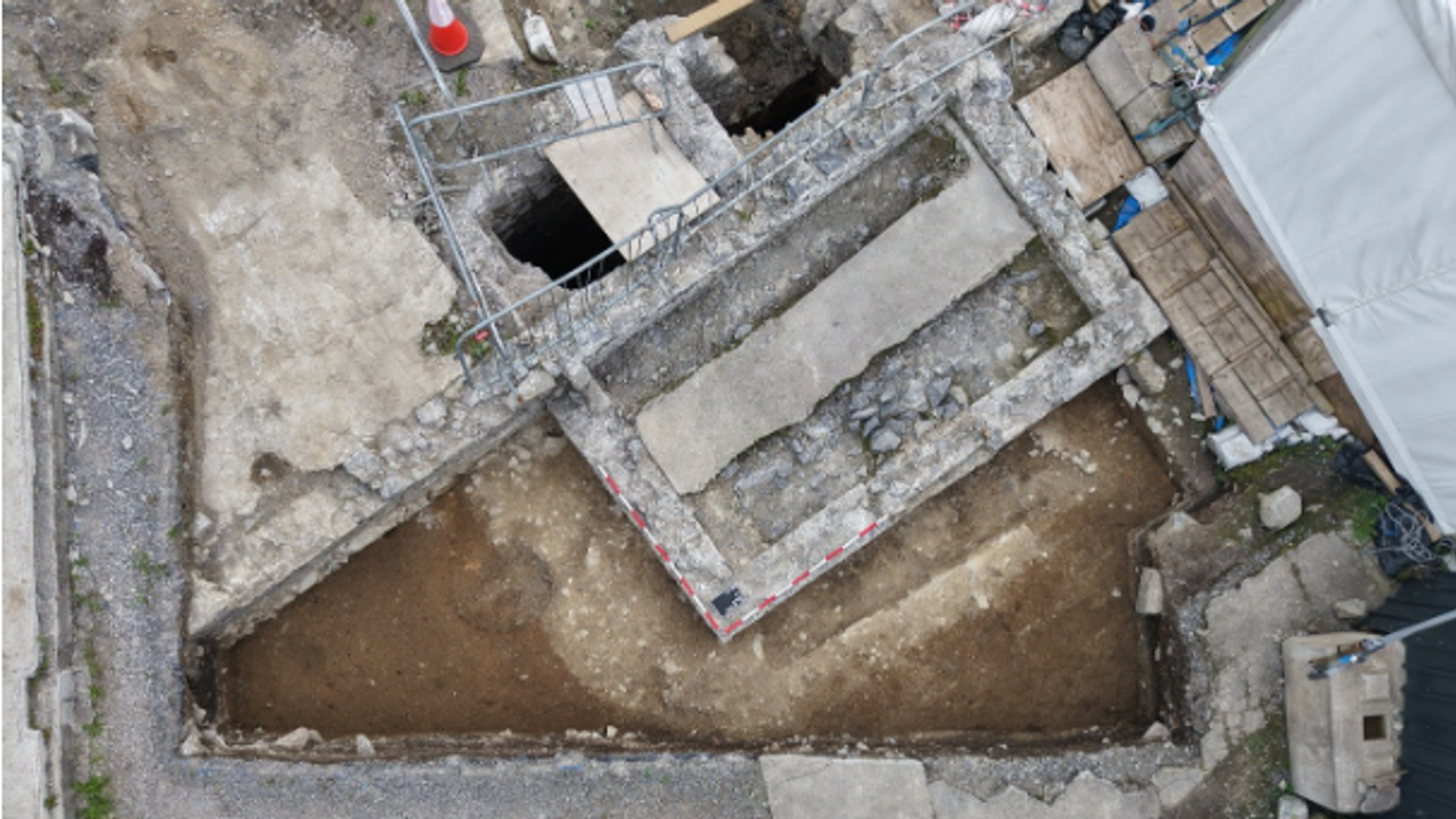
The excavation at the site of the former mother and baby home in Tuam, operated by the Bon Secours nuns until 1961, has yielded the skeletal remains of infants and young children. The grim tally continues to creep upward as hand-trowels scrape back layers of a national trauma. Ten more fragile remains pulled from the earth. Then dozens more, pushing the verified minimum past ninety. These numbers are not abstract data points on a spreadsheet. They represent tiny, un-named human beings tossed into a disused sewage structure because a morally rigid society decided that unmarried mothers and their offspring were inconvenient stains on the ledger of Catholic Ireland.
We are watching the slow, painful unspooling of an architectural crime scene disguised as charity. To understand how we arrived at this grim mechanical reality, one must strip away the sentimental myths that long insulated mid-century Ireland from self-scrutiny. The state outsourced its moral conscience to religious orders. In return, the state averted its gaze while institutions functioned as clearinghouses for human disposal, wrapped in the sanctimonious linen of holy service.
The Anatomy of Institutional Denial
For generations, the narrative offered by church and state was one of benign neglect born of impoverished times. Infant mortality was high, they argued. Times were hard. Diseases like measles, gastroenteritis, and tuberculosis cut down the vulnerable with indiscriminate fury. It was a convenient alibi. It was also a systemic fabrication.
When local historian Catherine Corless spent years cross-referencing baptismal registers against civil death records for Tuam, she exposed a terrifying discrepancy. Nearly eight hundred infants had died within the walls of that single institution. Yet, remarkably, only one single child possessed a documented burial record.
Where did the rest go? They did not vanish into thin air. They were deposited into subterranean chambers meant for waste, unremembered and unblessed by the very church that claimed a monopoly on the nation's spiritual architecture. The ongoing forensic recovery work is proving Corless right, bone by tragic bone, container by forgotten container. The denial is fracturing under the weight of empirical proof.
The Mechanics of State Complicity
To blame the religious orders alone is to let the political apparatus of the Irish Republic off the hook. The state did not merely look away; it funded the machinery. Pregnant women were funneled into these facilities by a society terrified of female sexuality and non-conformity. Once inside, they were stripped of their autonomy, their names, and frequently their children.
Labor was extracted from these women under brutal conditions. They served as unpaid domestic staff while enduring psychological torment that left permanent scars. When their babies sickened—often due to intentional underfunding, overcrowding, and rampant malnutrition—the system offered no medical salvation. Death was treated as an administrative housekeeping issue. A quick entry in a ledger, an unrecorded burial, and a cheap wooden box or no box at all.
This was not a series of isolated tragedies or bad actors losing their way. It was a structural economy of shame. The church preserved its institutional reputation while the state avoided the financial burden of supporting destitute women and children. Both entities functioned in lockstep harmony, bound by a shared interest in concealing the human cost of their ideological purity.
The Long Road to Exhumation
For years, victims' advocates fought an uphill battle just to get authorities to look into the ground at Tuam. Bureaucrats deployed procedural delays, legal tripwires, and institutional hand-wringing to stall the inevitable. They claimed exhumation was legally complex. They expressed concern over the emotional toll on survivors. They suggested that leaving the dead undisturbed might be more respectful than tearing up a historic site.
This was a transparent defense mechanism. Exhumation brings accountability. DNA profiling forces identification. When you match modern familial samples to the skeletal remains recovered from a sewage tank, the anonymity of the crime evaporates. You can no longer hide behind anonymous statistics when a genetic profile links a recovered infant to a living sibling or niece demanding answers.
The Office of the Director of Authorised Intervention was eventually established because public pressure reached a boiling point that politicians could no longer ignore. Forensic teams descended on the site with ground-penetrating radar, sifting through the earth with surgical precision. Every fragment recovered represents a restoration of identity, an aggressive pushback against an institutional design intended to erase these children from history completely.
The Global Echo of Local Cruelty
Ireland is not unique in its historical willingness to warehouse society's perceived undesirables. From the Magdalene laundries of Dublin to indigenous residential schools across North America and institutional carceral networks worldwide, the blueprint remains identical. Power structures weaponize morality to isolate the vulnerable, protect the elite, and bury the evidence of cruelty beneath layers of institutional bureaucracy.
What makes the Tuam excavations so vital is the insistence on physical truth. Documents can be burned. Ledgers can be lost in fires or altered by sympathetic archivists. But human bone is stubborn. It stays put. It retains isotopes of the water those mothers drank, the meager diets they endured, and the pathogens that swept through unventilated wards.
When forensic scientists publish their findings, they are performing an act of historical reclamation. They are dragging the victims out of the municipal drainage system and restoring them to human context.
The Uncomfortable Reckoning Ahead
As the excavation work grinds forward, the Irish state faces a reckoning it has repeatedly tried to defer. Financial redress packages, while necessary, often function as hush money designed to close chapters before the ink on the investigative reports has dried. Survivors and descendants are demanding criminal accountability. They want to know which individuals signed off on the systemic neglect, which administrators falsified records, and which state inspectors visited the facility, saw the conditions, and filed reassuring reports back to Dublin.
So far, true legal accountability remains frustratingly elusive. The wheels of justice move with glacial sluggishness when confronted with the combined institutional legacy of church and state. Aging perpetrators pass away before depositions can be completed. Files remain heavily redacted under privacy laws that frequently protect institutions rather than victims.
Yet the ground refuses to stay quiet. Every bucket of earth lifted at Tuam is a physical refutation of the institutional lie. The silence has been broken by the clatter of trowels and the hum of laboratory sequencers mapping DNA extracted from centuries-old mud. The past is no longer a foreign country where things were simply done differently; it is an open investigation scene, and the evidence is speaking for itself.