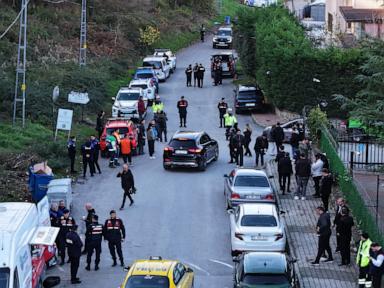
Turkish authorities have launched an intensive search operation across the forested outskirts of Istanbul following verified sightings of a loose lioness near residential districts. Law enforcement units, wildlife officials from the Ministry of Agriculture and Forestry, and drone surveillance teams are actively sweeping the northern woodland corridors—specifically targeting areas bordering Eyüpsultan and Sarıyer—to tranquilize and capture the apex predator before a human encounter occurs. While standard local reports treat the incident as an isolated public safety scare, the presence of an adult African lioness in a sprawling Eurasian metropolis points directly to a systemic enforcement breakdown in Turkey's illicit exotic wildlife market.
The immediate operational focus remains containment. Search teams are tracking paw prints, deploying thermal imaging drones over the Belgrad Forest perimeter, and alerting local municipalities to keep residents indoors during dawn and dusk hours when big cats are most active. Yet the fundamental question isn't where the animal will be found. It is how a multi-hundred-pound carnivore bypassed border controls, international CITES (Convention on International Trade in Endangered Species) regulations, and municipal zoning laws to end up roaming freely within city limits. Recently making waves in this space: Australian Politics Isn't Having a Tough Year—It's Suffering From a Terminal Case of Nostalgia.
The Logistics of an Urban Apex Predator
A lioness does not simply wander into Istanbul. Turkey has no native lion populations; the Asiatic lion disappeared from Anatolia centuries ago, and African lions (Panthera leo) exist in the country exclusively through captivity. When an adult or sub-adult lioness appears on the periphery of a city of sixteen million people, there are only two plausible points of origin. Either the animal escaped from a licensed private zoo or wildlife park with substandard containment protocols, or it was deliberately released—or escaped—from an illegal private collection.
In recent years, Turkish authorities have repeatedly raided private estates, suburban villas, and makeshift backyard enclosures across Istanbul, Ankara, and coastal provinces, confiscating lion cubs, tigers, pumas, and primates. These animals rarely enter the country as full-grown adults. Traffickers smuggle them as sedated cubs, often concealed inside modified vehicle compartments or transported via maritime routes across the Black Sea and Eastern Mediterranean, exploiting geopolitical instability in neighboring transit corridors. Additional information on this are covered by The Guardian.
Once inside Turkey, the economics of exotic animal ownership follow a predictable, grim trajectory.
- Acquisition Phase: Wealthy buyers purchase lion cubs through encrypted messaging apps and closed social media networks, treating them as status symbols or props for viral videos.
- The Growth Bottleneck: A lion cub weighs roughly three pounds at birth and consumes manageable amounts of milk and soft meat. Within eighteen months, that same animal exceeds 250 pounds, requires ten to fifteen pounds of raw meat daily, and exhibits natural territorial aggression that no domestic residence can safely contain.
- The Abandonment Crisis: Facing exorbitant feeding costs, property destruction, and the sudden realization that an adult predator cannot be kept in a reinforced basement or suburban garden, owners panic. Rather than surrendering the animal to state wildlife authorities—which triggers immediate criminal prosecution and heavy fines under Turkey's Land Hunting Law and Animal Protection Law—some owners simply load the sedated cat into a van and dump it on the edge of the nearest forest.
Why Forested Outskirts Become Dumping Grounds
The northern fringes of Istanbul offer an ideal, albeit temporary, corridor for an abandoned big cat. Districts like Eyüpsultan, Arnavutköy, and Sarıyer sit directly adjacent to dense woodland belts, water reservoirs, and fragmented agricultural plots. For an owner looking to offload an illegal predator under the cover of darkness, the highway networks cutting through the northern forests provide rapid access and minimal CCTV coverage compared to the urban core.
For the animal, however, this environment is a death trap disguised as habitat. A captive-raised lioness lacks the learned hunting skills required to take down wild boar or deer in dense temperate woodland. Captive big cats raised in urban basements often suffer from metabolic bone disease due to improper nutrition, declawing, or dulled instincts. Starvation and dehydration inevitably drive the animal toward human settlements, livestock pens, and garbage dumps, dramatically escalating the risk of a fatal confrontation with commuters, hikers, or stray dog packs.
Enforcement Gaps and Digital Status Culture
Turkey ratified CITES in 1996, legally binding the state to strict oversight of endangered species imports, exports, and domestic possession. Under Turkish law, private individuals are strictly prohibited from owning big cats. Only licensed zoos, state-run rehabilitation centers, and accredited research institutions may house them, subject to rigorous facility inspections.
Despite this clear statutory framework, enforcement remains largely reactive. Authorities typically discover illegal big cats only after a neighbor reports roaring, a veterinary clinic flags an unusual injury, or an owner posts incriminating footage on TikTok or Instagram.
Social media algorithms have inadvertently accelerated this underground market. Across the Middle East and parts of Eurasia, posing beside captive big cats in luxury vehicles or private villas has become a standardized visual shorthand for untouchable wealth. Trafficking syndicates capitalize on this demand by operating fluid digital storefronts. Accounts vanish the moment law enforcement initiates an inquiry, only to reappear days later under new handles. Because fines for illegal wildlife possession have historically been viewed by affluent buyers as a minor administrative inconvenience rather than a severe deterrent, the financial incentive to supply the market remains intact.
The Mechanics of the Search Operation
Tracking an apex predator across peri-urban terrain presents acute tactical challenges for Turkish search teams. Unlike open savanna, the outskirts of Istanbul feature thick undergrowth, steep ravines, construction sites, and sprawling industrial zones that disrupt line-of-sight tracking and neutralize standard thermal drone sweeps during daylight hours when ground temperatures rise.
Wildlife veterinarians deployed to the search perimeter rely on pneumatic dart guns loaded with potent immobilizing agents, typically combinations of medetomidine and ketamine or tiletamine-zolazepam. These darts have an effective range of barely thirty to fifty meters. Getting within that window requires flushing the animal into a predictable corridor without triggering a panic response that sends it bolting toward populated neighborhoods.
To manage this, teams employ a multi-layered containment strategy:
- Perimeter Sealing: Gendarmerie units establish checkpoints along rural access roads to prevent curious civilians and amateur photographers from entering the search zone and spooking the animal.
- Scent and Bait Stations: Wildlife specialists place raw meat carcasses near trail cameras along suspected water routes to anchor the lioness to a localized area rather than allowing her to roam across municipal boundaries.
- Aerial Thermal Reconnaissance: Drones equipped with infrared sensors conduct sweeps between midnight and 4:00 AM, when the ambient temperature of the forest floor drops enough to isolate the heat signature of a large mammal.
Even if the operation succeeds without injury to civilians or responders, capturing the lioness solves only the immediate tactical emergency. Once tranquilized, the animal cannot be returned to the wild. It will be transferred to a state-affiliated wildlife rescue and rehabilitation center—such as those operated in Bursa or Gaziantep—where taxpayers will absorb the multi-decade cost of housing, feeding, and providing veterinary care for a predator that can live over twenty years in captivity.
Systemic Blind Spots in Border and Municipal Oversight
The recurring appearance of exotic predators in major Turkish cities highlights a structural disconnect between customs enforcement, municipal policing, and wildlife agencies. Border inspection points at major ports and land crossings are heavily optimized to intercept narcotics, weapons, and untaxed commercial goods. Customs officers rarely possess the specialized zoological training required to identify sedated exotic juveniles hidden in cargo manifests or mislabeled as domestic breeds.
Furthermore, once an animal crosses the border, municipal authorities lack a centralized registry or proactive inspection mechanism to monitor high-risk properties. Unless a formal complaint is filed, gated compounds on the periphery of Istanbul operate with high degrees of privacy. Veterinary clinics, meanwhile, occasionally face ethical and legal friction; while ethical practitioners report illegal exotic animals to the Ministry of Agriculture and Forestry, an underground network of unlicensed handlers ensures that wealthy owners can access basic medical care for their illicit pets without triggering state intervention.
Until Turkish lawmakers pair aggressive digital surveillance of wildlife trafficking networks with mandatory custodial sentences and asset forfeiture for buyers, the cycle will repeat. Every cub smuggled into an Istanbul penthouse today is a potential public safety crisis waiting to be abandoned on the edge of the forest tomorrow.