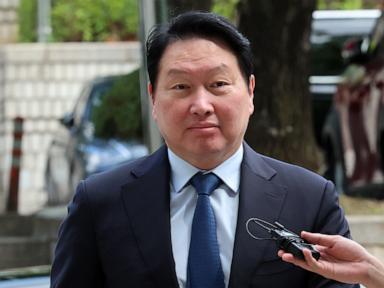
A Financial Earthquake Hits SK Group
A South Korean appellate court shocked the global corporate ecosystem by ordering SK Group Chairman Chey Tae-won to pay 1.38 trillion won (approximately $1 billion) in cash to his estranged wife, Roh Soh-yeong, as part of their record-breaking divorce settlement. The ruling drastically overturned a lower court's 2022 decision that awarded Roh roughly $50 million, instantly placing one of Asia’s largest conglomerates in an unprecedented governance crisis. Because Chey's wealth is tied up in company stock rather than liquid assets, the massive financial judgment threatens his control over SK Inc., the holding company that governs semiconductor giant SK Hynix and telecom provider SK Telecom.
The decision sent shockwaves far beyond family court. In South Korea, large family-run conglomerates known as chaebols dominate the national economy. These corporate empires rely on tightly controlled holding structures where controlling families maintain power through relatively modest direct equity stakes. When a court orders a massive wealth transfer, it directly impacts corporate control, stock stability, and executive focus.
The Roh Tae-woo Connection and the Question of Illicit Slush Funds
At the heart of the appellate court's dramatic reassessment was a historic revelation involving former South Korean President Roh Tae-woo, the father of Roh Soh-yeong. The court accepted evidence presented by Roh’s legal team indicating that her father provided roughly 30 billion won in undisclosed funds to Chey’s father, former SK Chairman Chey Jong-hyon, during the late 1980s and early 1990s.
This capital influx served as a vital springboard for SK's expansion into telecommunications and energy during a critical era of South Korean industrialization.
The judges determined that these political funds, combined with political protection provided by the former president, contributed significantly to the growth and valuation of SK Group. By recognizing that the original capital used to build the empire was partially derived from marital connections and political influence, the court concluded that Roh Soh-yeong was entitled to a substantial share of the accumulated assets.
Reevaluating Chaebol Wealth Creation
For decades, the standard narrative behind South Korea's rapid economic development focused heavily on entrepreneurial vision and corporate efficiency. This court ruling forces a public reassessment of how political connections shaped modern industrial titans.
By tying the growth of SK Group directly to state-level influence and undisclosed political capital, the legal system established a radical precedent. Marital assets now encompass indirect contributions made through family political stature and historical influence.
The Liquidity Trap and Corporate Control
Chey Tae-won faces a acute structural challenge. The vast majority of his estimated net worth exists as equity in SK Inc., the key apex entity of the conglomerate.
Selling a significant block of SK Inc. shares to raise $1 billion in liquid cash creates an immediate vector of vulnerability. Flooding the market with stock depresses share value and dilutes Chey’s voting power, opening the door for activist investors or hostile takeover attempts.
SK Inc. (Holding Company)
  ├── SK Hynix (Semiconductors)
  ├── SK Telecom (Telecommunications)
  └── SK Innovation (Energy & Petrochemicals)
To satisfy the judgment without forfeiting control, Chey must navigate several high-risk paths.
- Secured Equity Loans: Chey can pledge his shares as collateral to raise cash. However, high interest rates and margin call risks make this approach perilous if stock prices drop.
- Dividend Extraction: SK Inc. could substantially increase its dividend payouts to transfer cash directly to Chey. This strategy drains capital away from corporate research, development, and expansion projects.
- Asset Sales: Selling non-core holdings or personal real estate assets provides capital, but these holdings fall far short of the $1 billion threshold.
Impact on Global Tech and Supply Chains
The timing of this legal battle could not be worse for SK Hynix, a key player in the global artificial intelligence boom. SK Hynix currently dominates the high-bandwidth memory (HBM) chip market, supplying critical components to major AI hardware manufacturers worldwide.
When holding company leadership gets dragged into prolonged legal and financial battles, capital allocation decisions slow down. Major strategic shifts, long-term fab investments, and international joint ventures require absolute stability at the board level. If SK Group is forced to prioritize dividend payouts to resolve executive debt, research budgets could face collateral damage.
The Road to the Supreme Court
Chey's legal team immediately pledged to appeal the appellate ruling to South Korea's Supreme Court. They argue that the appellate court overreached by characterizing historical political interactions as legal contributions to marital property, and that the valuation methodology used to calculate the cash payout contained fundamental errors.
The Supreme Court will focus primarily on legal interpretations rather than re-evaluating factual claims. If the highest court upholds the $1 billion award, it will fundamentally redefine family law, corporate governance, and inheritance expectations across all major South Korean conglomerates. Executives throughout the country are now re-examining their own ownership structures to safeguard against similar legal vulnerabilities.
Chey Tae-won remains seated at the helm of SK Group, but the structural foundations beneath his presidency have shifted permanently.
.png)