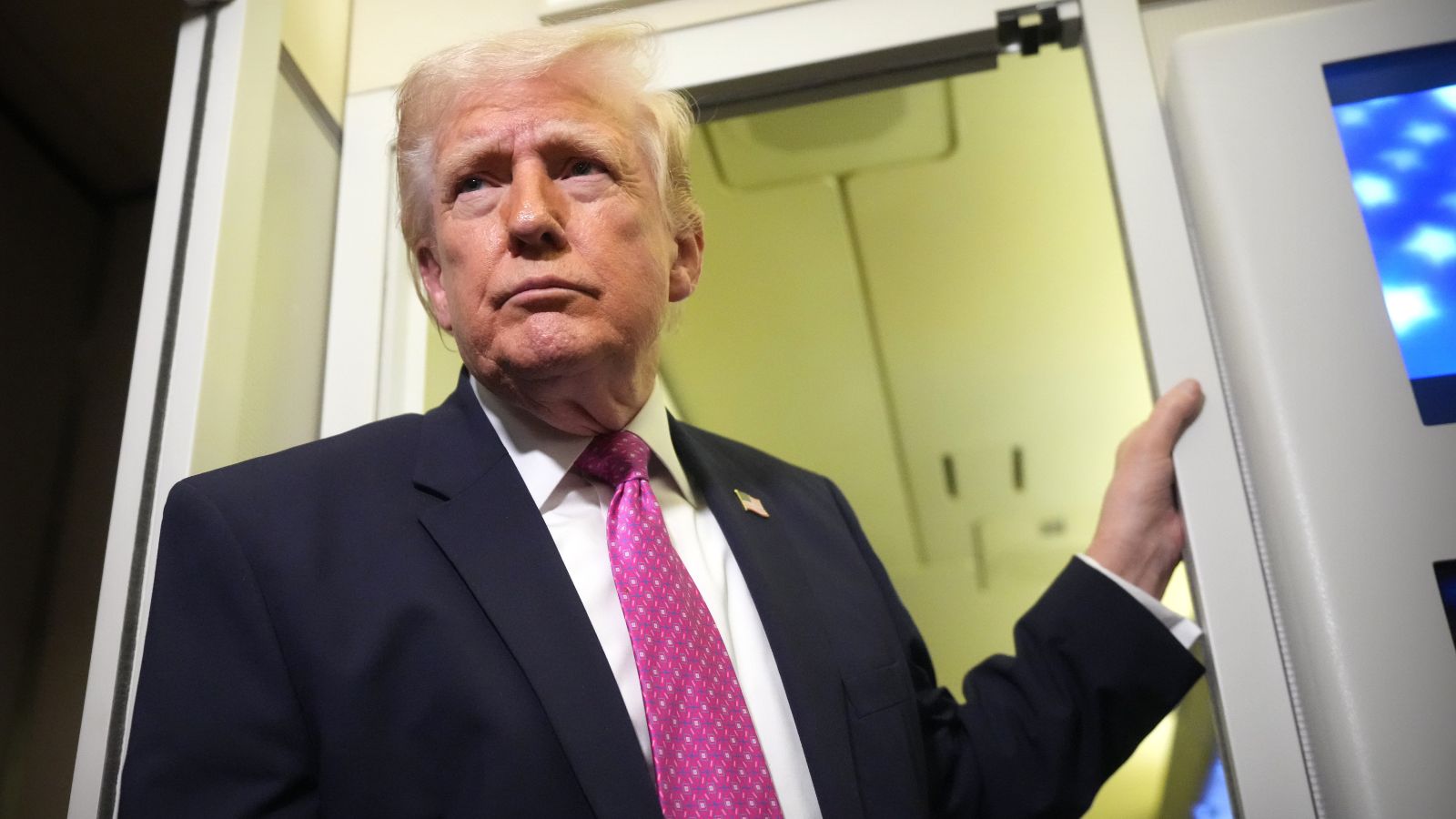
Donald Trump has officially put a face to his "regime change" narrative in Tehran. In a series of declarations from Air Force One and the New York Post, the U.S. President confirmed that Washington is negotiating directly with Iranian Parliamentary Speaker Mohammad Bagher Ghalibaf. While the White House paints a picture of a "reasonable" new leadership rising from the ashes of a month-long U.S.-Israeli air campaign, the reality on the ground suggests a far more desperate and dangerous game of survival.
The core of the strategy is simple. Trump claims the "regime of the past" is gone, replaced by a "whole new set of people" following the February 28 strike that killed Supreme Leader Ali Khamenei. By elevating Ghalibaf—a man who has spent decades as a loyalist to the very system Trump claims to have dismantled—the administration is attempting to manufacture a partner where none may truly exist.
The Mirage of the Reasonable Hardliner
Mohammad Bagher Ghalibaf is no reformer. He is a veteran of the Islamic Revolutionary Guard Corps (IRGC) and a former police chief with a record of crushing student protests. To frame him as "reasonable" is a calculated piece of political theater designed to provide an off-ramp for a conflict that has already doubled global oil prices and pushed the Middle East to the brink of total collapse.
Trump’s insistence that the U.S. is "dealing with different people" ignores the structural reality of the Islamic Republic. Ghalibaf has spent the last week publicly denying these negotiations even exist, dismissing the President's claims as "fake news" intended to manipulate financial markets. This disconnect is not just a failure of communication. It is a fundamental disagreement over what "negotiation" actually means. For Trump, it is the surrender of Iran’s enriched uranium and the reopening of the Strait of Hormuz. For Ghalibaf, it is a desperate attempt to stop American missiles from obliterating Iran’s remaining power plants and oil terminals.
The Vacuum at the Top
The urgency of these talks is driven by a massive power vacuum in Tehran. Since the killing of Ali Khamenei, his son and designated successor, Mojtaba, has vanished from public view. Trump has suggested the younger Khamenei is "gravely wounded" or in "extraordinarily bad shape." Without a clear hand at the tiller, the Iranian state is fracturing into competing fiefdoms.
By singling out Ghalibaf, the U.S. is effectively attempting to pick a winner in a civil war that hasn't fully started yet. Pakistani mediators have been the primary conduit, reportedly warning the U.S. that killing Ghalibaf or Foreign Minister Abbas Araghchi would end any hope of a negotiated settlement. This has turned the parliamentary speaker into a protected asset of sorts—a man the U.S. is simultaneously threatening to destroy and attempting to crown.
Oil as the Ultimate Lever
The economic stakes have surpassed the political ones. Trump has already floated the idea of "taking the oil" at Kharg Island, Iran's primary export terminal. He claims Ghalibaf authorized a "goodwill gift" last week: the passage of ten Pakistani-flagged ships through the blocked Strait of Hormuz.
This isn't diplomacy in the traditional sense. It is a protection racket played out on a global stage. The U.S. has issued a 30-day sanctions waiver for Iranian crude already at sea, a move that momentarily calmed the markets but did nothing to solve the underlying supply crisis. If a deal isn't reached within the week—a deadline Trump himself set—the next phase of the war will target the very infrastructure that keeps the global economy afloat.
The Ground Invasion Shadow
While the talk is of peace, the preparation is for an escalation. Thousands of U.S. Marines and Special Operations forces are arriving in the region. Vice President JD Vance has been operating a parallel diplomatic channel through Pakistan’s army chief, bypassing traditional State Department routes.
The Iranian leadership sees this as a double game. Ghalibaf has accused the U.S. of using the "negotiation" narrative as a smoke screen to prepare for a ground invasion. It is a valid concern. When Trump says he wants to "take the oil," he isn't speaking metaphorically. Controlling Kharg Island would require a sustained U.S. military presence on Iranian soil, an act that would transform a campaign of air strikes into a full-scale occupation.
Why the Ghalibaf Channel Might Fail
The primary obstacle to a deal isn't Ghalibaf’s willingness to talk; it’s his ability to deliver. Within the IRGC, Ghalibaf is viewed with deep suspicion by the "Paydari" hardliners who see any concession as a betrayal of the 1979 revolution. If Ghalibaf agrees to hand over Iran's 900-pound stockpile of highly enriched uranium, as Trump demands, he may not live long enough to see the first shipment leave the country.
Furthermore, the "regime change" Trump celebrates is largely cosmetic. The mid-level commanders of the IRGC and the intelligence apparatus remain intact. They are the ones currently directing drone strikes on Haifa and Kuwait, and they do not take orders from the Speaker of the Parliament. Trump is betting that a "top person" can command a system that is designed to be decentralized and ideologically rigid.
The Real Deadline
The clock is ticking toward a massive U.S. response to recent Iranian strikes on regional infrastructure. Trump has stated that Washington will know "within a week" if Ghalibaf can work with them. This is not just a rhetorical deadline. It is the window before the U.S. military pivots from "decapitation" strikes against leaders to "annihilation" strikes against the nation's energy and water desalination plants.
The gamble is that the sheer weight of American power will force a pragmatic surrender under the guise of a "new leadership" agreement. But if Ghalibaf cannot secure the support of the remaining security apparatus, or if Trump's demands for "all the oil" prove too toxic for even a desperate regime, the "reasonable" path will vanish as quickly as it appeared.
Would you like me to analyze the specific economic impact of a potential U.S. seizure of Kharg Island on global energy prices?