The announcement of a comprehensive framework requiring Hamas to disarm and Israeli forces to withdraw from the Gaza Strip marks a precarious pivot point in a conflict that has reshaped modern geopolitics. Brokered under a roadmap spearheaded by the United States and overseen internationally, the agreement addresses the core mechanics that stalled previous diplomatic efforts: the sequencing of weapons decommissioning versus territorial evacuation. Yet, beneath the diplomatic declarations lies a fractured reality defined by mutual mistrust, deep structural contradictions, and an absence of formal buy-in from the current Israeli government.
To understand the weight of this moment, one must move past the surface rhetoric of historic breakthroughs and examine the operational fault lines threatening to tear the accord apart before implementation even begins.
The Mechanics of the Roadmap
The architecture of the current agreement relies on a phased transition framework managed via international oversight bodies, notably the Board of Peace and its administrative subsidiary, the National Committee for the Administration of Gaza. According to details emerging from mediators in Cairo, the blueprint demands the systematic elimination of underground tunnels, arms depots, and manufacturing infrastructure.
Under the terms laid out by international mediators, light and heavy weaponry are slated to come under the administrative purview of a technocratic Palestinian civil authority, backed by an International Stabilization Force. This multinational contingent, drawing personnel from select regional and global partners, is tasked with securing humanitarian corridors, vetting a newly formed local police force, and preventing the resurgence of militant networks.
However, the sequencing remains an immediate flashpoint. Hamas leadership has signaled that while an agreement on a phased roadmap has been struck, the actual surrender of heavy weaponry is tightly coupled to broader political demands—specifically, the establishment of an independent Palestinian state. This condition creates an immediate procedural paradox. The current Israeli administration has repeatedly and explicitly rejected statehood benchmarks, creating a structural impasse where the first step of the peace process collides with an immutable political red line in Jerusalem.
The Gulf of Discontent and Regional Spillover
Diplomacy in the Middle East never occurs in a vacuum. While negotiators in Cairo hammered out the details of the Gaza accord, the broader regional theater continued to flash warning signs of chronic instability.
Hostilities involving external actors, including Iranian paramilitary actions in the Strait of Hormuz and drone interceptions over Gulf airspace, underline the constant threat of wider escalation. These parallel conflicts serve as a constant pressure valve, capable of derailing fragile local truces at a moment's notice. When maritime trade routes are choked and regional airbases face active drone threats, the security matrix required to rebuild Gaza becomes vastly more complicated. International troop contributors watch these security metrics closely. When regional risk spikes, deployment timelines for stabilization forces routinely face indefinite holds, leaving local administrators stranded without the physical security guarantees promised in whitepapers.
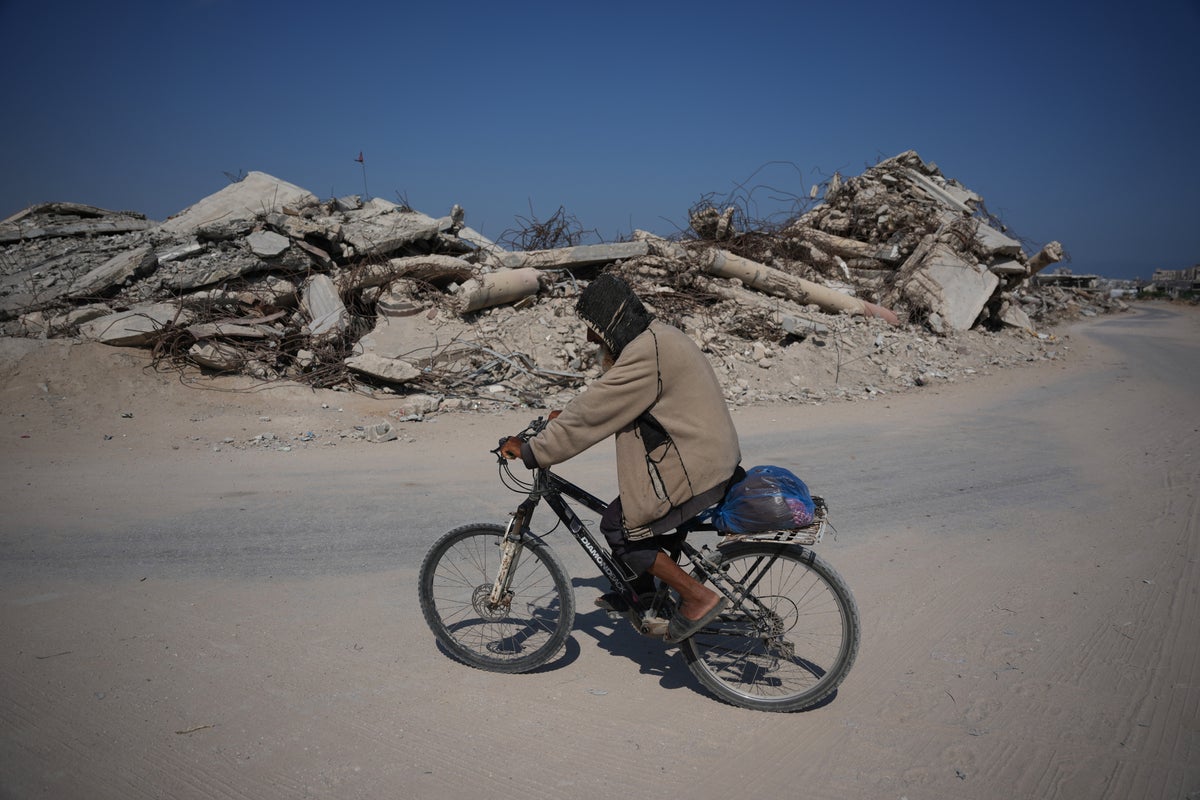
Furthermore, the scale of physical destruction in the enclave defies easy administrative fixes. Independent international assessments place the price tag for comprehensive reconstruction in the tens of billions of dollars. Pledges made during initial donor conferences have fallen woefully short of this staggering baseline. Without massive, sustained capital injections tied to demonstrable security guarantees, any civilian administration attempting to govern a demilitarized Gaza will find itself managing little more than rubble.
The Danger of Papier-Mâché Accords
History offers brutal lessons regarding agreements that rely on constructive ambiguity to bypass foundational disagreements. When text is intentionally vague to satisfy competing domestic audiences, it usually collapses upon first contact with reality.
Hamas officials maintain that their compliance is strictly conditional, asserting that any resumption of offensive military action by Israel voids their obligations under the roadmap. Simultaneously, ongoing localized airstrikes and skirmishes within the enclave demonstrate that low-intensity combat has not entirely ceased. Every civilian casualty resulting from these persistent engagements provides hardliners on both sides with the ammunition needed to torpedo the process.
The international community frames this moment as the sole viable exit ramp from a multi-year catastrophe. Yet, hope is not a strategy. True stability requires enforceable verification mechanisms, unyielding financial commitments for structural reconstruction, and a willingness to confront political realities that neither side is currently eager to address. Until the fundamental contradictions between disarmament demands and political horizons are resolved in practice rather than rhetoric, the newly announced accord remains a fragile blueprint built upon shifting sand.


