For a decade, the narrative surrounding Narendra Modi was built on absolute certainty. Political iron was forged in New Delhi, opposition voices were managed into irrelevance, and the state marched to the drumbeat of centralized authority. That era of unassailable dominance has fractured. When political analysts suggest that Modi is in trouble, they are not pointing to an imminent collapse of government. Instead, they are tracking a much deeper structural shift—the erosion of a political aura and the complicated reality of managing a country that refuses to stay scripted.
The shift became visible when the ballot boxes emptied and the arithmetic of absolute power changed. The Bharatiya Janata Party discovered that legislative majorities are rented, not owned. Dropping below the magic threshold required to govern alone meant that governance transformed overnight from an executive monologue into a messy negotiation. Regional kingmakers like Nitish Kumar and Chandrababu Naidu hold the keys to New Delhi. Every policy initiative now demands careful calibration, quiet concessions, and constant floor management. This is the unglamorous day-to-day grind of coalition politics, a space where ideological purity goes to die.
Beneath the dome of parliamentary compromises lies an economy plagued by deep structural friction. Headline GDP growth figures regularly impress international financial institutions, yet they obscure the lived reality of millions on the ground. Job creation has failed to keep pace with the massive demographic wave entering the workforce. Youth unemployment remains stubbornly high, turning what should be a demographic dividend into a pressure cooker of unfulfilled aspirations. When young voters look at macroeconomic milestones and see little reflection in their own bank accounts, the political contract begins to fray. Private consumption stays uneven, split between an affluent upper crust that spends freely and a broad middle class squeezed by inflation and stagnant wages.
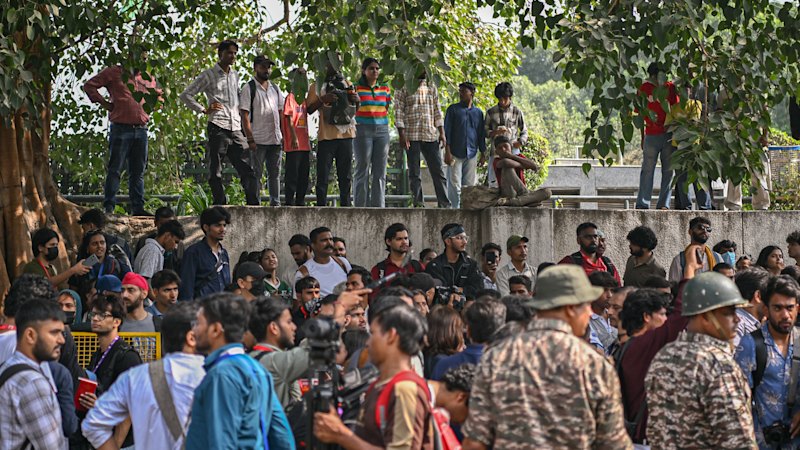
Street-level friction has also returned to the national capital. Protests over institutional integrity, voter list controversies, and administrative overreach have injected a volatile energy back into Indian public life. For years, dissent was successfully marginalized or treated as a fringe nuisance. Today, student groups, regional factions, and reinvigorated opposition networks are finding their footing. The security apparatus can lock down central Delhi, but it cannot seal off the underlying discontent. When institutional processes face fierce public scrutiny, the government is forced onto the defensive, trading its preferred agenda of sweeping transformation for reactive damage control.
Externally, the balancing act has grown equally precarious. The grand designs of trans-continental trade corridors and strategic positioning within the Global South require a delicate touch. Economic dependencies and regional rivalries—particularly the heavy trade deficit with China—place hard limits on how far India can project its diplomatic ambitions without domestic economic security. Foreign policy can no longer be decoupled from internal stability.
Modi remains one of the most astute political operators of the modern era, capable of shifting tactics when the ground moves beneath his feet. Yet the administrative machinery is no longer operating on autopilot. The aura of invincibility has been pierced by the reality of coalition friction, economic anxiety, and organized dissent. Governing a billion-plus democracy through sheer force of will has reached its physical limits. What comes next is not a sudden collapse, but a grinding test of political survival where every single vote, ally, and policy choice carries an existential weight.