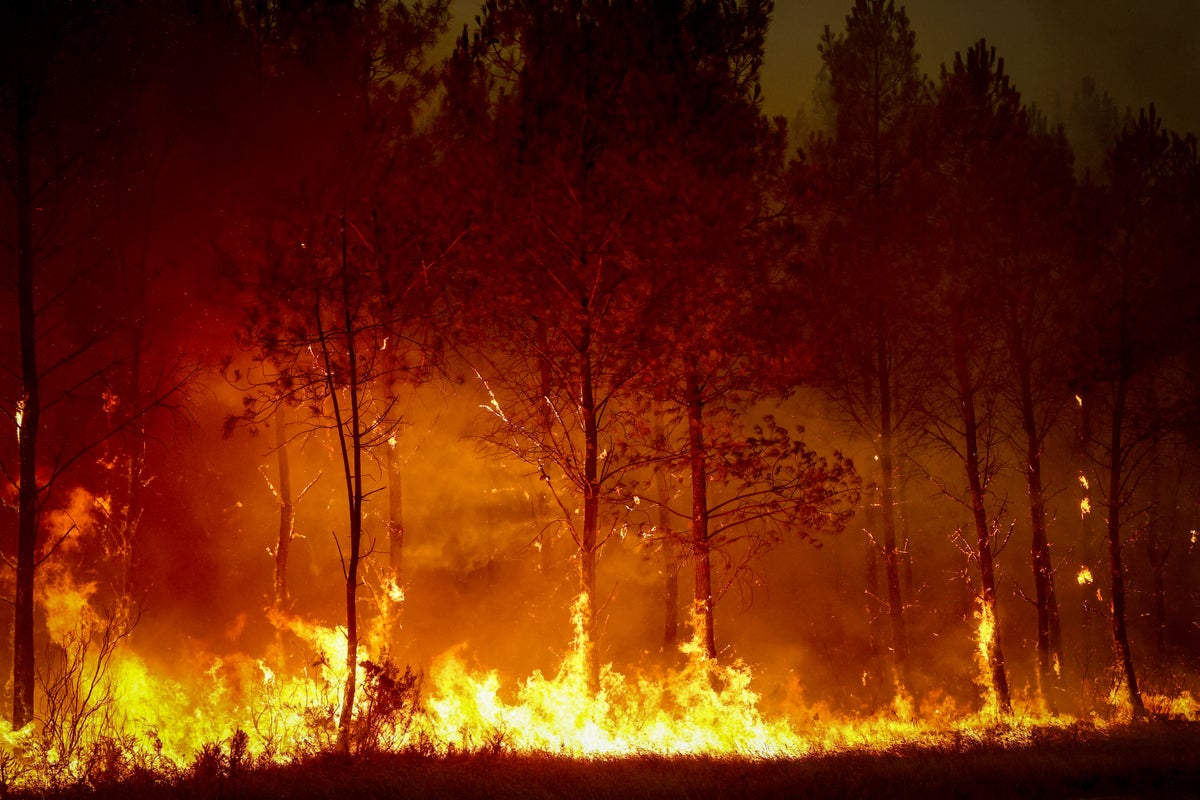
The smoke arrived before the sirens. Across the parched pine forests of southwestern France and the sun-baked hills of central Spain, a familiar dread settled over rural communities as massive wildfires erupted under the suffocating weight of an early-season heatwave. Temperatures pushed past 40 degrees Celsius, turning ancient woodlands into tinderboxes and forcing thousands of residents and vacationers to evacuate.
Yet the blazing fronts making headlines across Europe are merely the visible symptom of a deeper, systemic failure in how modern society manages land, climate volatility, and emergency response.
The Anatomy of a Thermal Anomaly
Extreme heatwaves are no longer statistical outliers. They are the new baseline. When persistent high-pressure systems trap hot air over the Mediterranean basin, relative humidity plummets and vegetation dries out within days.
Fuel moisture content drops to single digits. Under these conditions, a stray spark from agricultural machinery, a discarded glass bottle, or a lightning strike triggers explosive fire behavior.
Flames do not simply burn; they hunt. Spot fires leap hundreds of meters ahead of the main front, carried by erratic wind gusts generated by the fire's own intense thermal updraft. Firefighters are outmatched by physics. When ambient temperatures hover around 40C and humidity sits below fifteen percent, water dropped from firefighting aircraft often evaporates before it even hits the tree canopy.
The Rural Exodus and Fuel Accumulation
Decades of shifting demographics have quietly supercharged Europe's wildfire vulnerability. Rural depopulation has emptied the countryside.
Fewer small-scale farmers, shepherds, and foresters mean fewer people managing the underbrush. Historically, livestock grazing and regular, controlled clearing kept forest floors relatively clean.
Without this active management, dead wood, dry grass, and dense scrub accumulate year after year. Modern environmental policies have occasionally favored strict non-intervention in certain forested tracts, unintentionally creating continuous carpets of highly flammable biomass.
When a fire starts in an unmanaged forest with a century's worth of accumulated fuel, it burns with a ferocity that overwhelms traditional suppression tactics. The trees act as vertical matchsticks. The canopy ignites. A surface fire transforms instantly into a crown fire, moving faster than any evacuation convoy can drive.
Beyond the Water Drop
Governments reach for the same playbook during every crisis. More water bombers. More deployment of civil protection forces. More press conferences urging vigilance.
These measures treat the injury while ignoring the disease. Air tankers buy time, but they do not stop fires. Ground crews cutting firebreaks and back-burning strategically are the only units that truly alter a fire's trajectory.
European nations are spending billions of euros on emergency response while underfunding long-term prevention. Prescribed burns—deliberately setting low-intensity fires during cooler months to clear out hazardous undergrowth—remain politically contentious and chronically underfunded due to public fear and strict air quality regulations.
Communities resist smoke in the winter, only to choke on catastrophic smoke in the summer.
The Economic and Tourism Toll
The economic fallout extends far beyond scorched timber and destroyed rural properties. Tourism represents a massive pillar of the regional economies in southern France and Spain.
When regional authorities issue mass evacuation orders during peak holiday season, local hospitality businesses face ruin. Campgrounds, hotels, and family-run restaurants lose their entire annual revenue in a matter of days.
Insurance markets are beginning to reevaluate risk exposure. As property loss claims mount, premiums for rural homes in high-risk zones are skyrocketing or disappearing altogether. Insurers are quietly pulling back from coverage in regions deemed high-risk for recurrent wildfires, leaving property owners financially exposed and local housing markets unstable.
The Path Forward Requires Radical Adaptation
If southern Europe hopes to survive the coming decades of climate intensification, the strategy must pivot from emergency reaction to structural transformation.
Forested landscapes must be redesigned. Planting monocultures of highly flammable eucalyptus or pine trees must give way to mixed-species woodlands that resist rapid burning. Firebreaks need to be expanded around every rural settlement, treated not as optional infrastructure, but as critical civil defense lines.
Local fire brigades need greater autonomy and year-round funding rather than seasonal panic infusions. Rural economies must be revitalized to bring people back to the land, ensuring that forests have stewards who know every trail, ridge, and valley.
The heatwaves will return. The thermometers will cross 40C again. Whether the forests burn to ash or withstand the heat depends entirely on choices made long before the first spark is struck.


