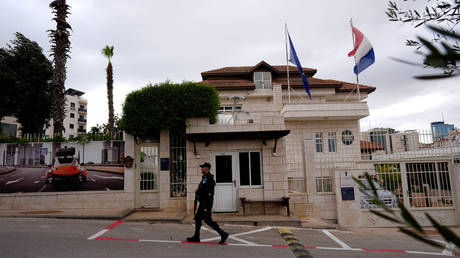
The friction between Jerusalem and European capitals has transitioned from quiet diplomatic friction into an open confrontation over credentials, trade policy, and sovereignty in the occupied territories. When Israel revoked the accreditation of Dutch diplomats stationed in Ramallah following Amsterdam’s import restrictions on goods originating from illegal West Bank settlements, it signaled more than a bilateral disagreement. It marked an inflection point in how European nations manage their official presence in the Palestinian territories under mounting pressure from domestic electorates and deteriorating field conditions.
For decades, the mechanics of foreign representation in Ramallah operated on a delicate administrative compromise. European states maintained consular offices that interacted with the Palestinian Authority while technically relying on accreditation managed through relations with the Israeli government. That operational architecture is cracking. As trade disputes widen and unilateral measures against settlement expansion gather political momentum across Europe, Jerusalem has demonstrated zero appetite for business-as-usual diplomacy with nations implementing economic penalties.
The immediate trigger for the Dutch diplomatic penalty points to a broader structural transformation in European foreign policy. Several capitals that previously relied on slow multilateral consensus within Brussels are now taking independent legislative steps. When individual nations introduce barriers against goods produced in West Bank settlements, they cross a bright line from diplomatic critique into active economic signaling. Israel's decision to strip credentials functions as a direct deterrent, raising the cost of European economic divergence.
Yet, this defensive maneuver risks producing the exact opposite of its intended effect. Rather than silencing European dissent, punitive credential revocations harden positions within foreign ministries in The Hague, Brussels, and Madrid. Former European diplomats and mid-level policy planners have increasingly argued that passive diplomacy is no longer tenable when field operations are actively obstructed.
This institutional hardening was underscored during the olive harvest season in the West Bank. Incidents involving European consular officials—such as the confrontation near Taybeh where masked settlers targeted delegations including French and Belgian representatives—transform abstract policy debates into visceral security crises. When European flags and diplomatic plates provide zero immunity against aggressive interference on the ground, the nature of consular presence changes from administrative representation to frontline monitoring.
The European Union's diplomatic service faces a fractured internal landscape. While countries like Germany and Italy historically urge caution against aggressive sanction regimes, public pressure and repeated violations involving European assets and personnel erode the diplomatic center. Domestic political parties across the continent face mounting scrutiny over why diplomatic channels remain open while protections for cooperative frameworks evaporate.
Israel's strategy relies on asserting absolute sovereign control over access to the territories, treating consular accreditations not as an international right, but as a revocable privilege tied to political alignment. By penalizing nations that implement trade restrictions, Jerusalem attempts to erect a firewall against creeping European involvement in West Bank commerce.
However, containment through credential stripping fails to account for the velocity of institutional memory inside foreign ministries. Bureaucrats who spend decades managing Middle Eastern portfolios view administrative retaliation not as a settlement of accounts, but as evidence of a shrinking diplomatic horizon. Every revoked pass and delayed visa pushes European policy desks closer to collective measures that bypass bilateral negotiations entirely.
The breaking point will arrive not in the ornate halls of multilateral summits, but on the arterial roads of the West Bank, where trade enforcement, settler movements, and consular oversight collide daily. As long as economic divergence meets administrative retaliation, the traditional tools of diplomacy will continue to erode, leaving behind a colder, more transactional reality where representation is measured solely by the friction it creates.
EU Condemns Settler Attacks on Diplomats in Occupied West Bank
This video report details the rising tensions on the ground in the West Bank, focusing on the security incidents involving European diplomats and local communities during the harvest season.